Tabla de contenidos
Introducción
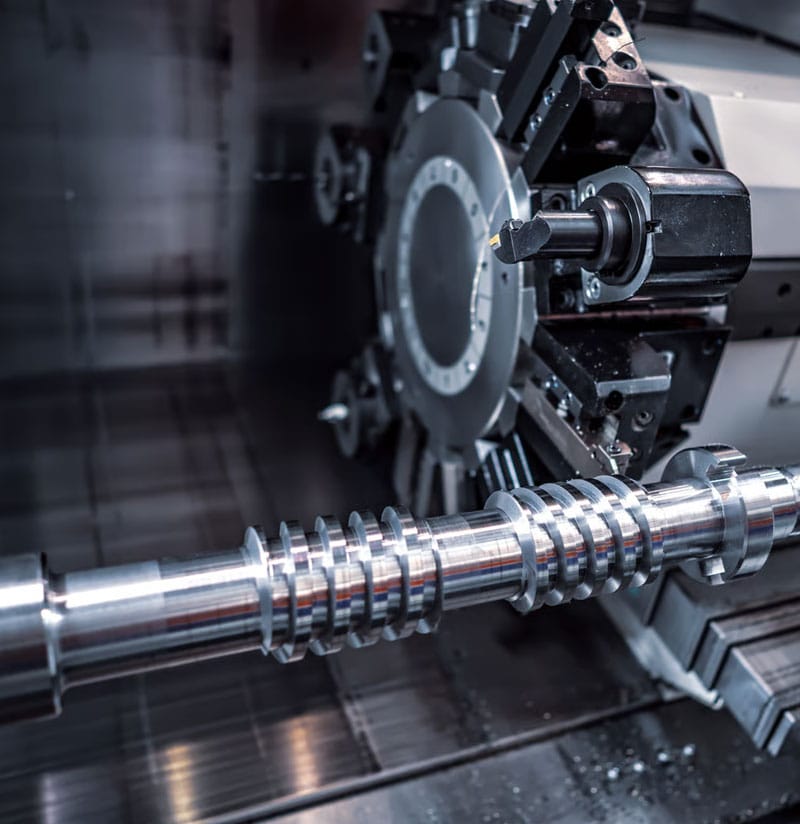
In modern manufacturing, product performance often depends on the accuracy and reliability of individual components. A small dimensional error in a mechanical part can affect assembly performance, equipment lifespan, and overall product quality. This is why industries such as aerospace, automotive, medical equipment, electronics, and industrial automation increasingly rely on precision CNC machining.
Precision CNC machining is an advanced manufacturing technology that uses computer-controlled equipment to produce highly accurate metal components based on digital engineering designs. Compared with traditional machining methods, CNC technology provides better repeatability, improved production efficiency, and the ability to manufacture complex geometries that would be difficult to achieve manually.
For companies sourcing custom components, choosing the right machining partner requires more than comparing prices. Engineering capability, quality control systems, material expertise, production flexibility, and experience with similar applications all influence the final manufacturing result.
Linametalworks provides professional precision machining capabilities y custom metal fabrication solutions for customers requiring reliable industrial components, prototypes, and customized production parts.
¿qué es el mecanizado CNC de precisión?
Precision CNC machining is a subtractive manufacturing process where computer-controlled machines remove material from a workpiece to create a finished component according to specific engineering requirements.
The CNC system controls the movement of cutting tools, machining speed, tool paths, and production sequences. This allows manufacturers to produce parts with consistent dimensions and repeatable quality across different production batches.
Unlike conventional machining, where operators manually control many machining parameters, CNC machining relies on programmed instructions generated from CAD/CAM software. This digital workflow improves production accuracy and reduces the possibility of human error.
The main advantages of precision CNC machining include:
- Alta precisión dimensional
- Repeatable manufacturing results
- Complex part production capability
- Faster prototype development
- Reducción del desperdicio de material
- Flexible production volume options
For industrial buyers, CNC machining is especially valuable because it supports both prototype manufacturing and large-scale production without requiring expensive dedicated tooling.
How the Precision CNC Machining Process Works
A professional CNC machining project involves several important stages. Each stage affects the quality, cost, and performance of the final component.
Engineering Design and Manufacturing Analysis
The process begins with customer drawings, CAD models, and technical specifications.
Before production, engineers analyze:
- Part geometry
- Requisitos materiales
- Dimensional tolerances
- Surface finishing requirements
- Production quantity
- Assembly requirements
Experienced manufacturers often perform Design for Manufacturing (DFM) analysis to identify possible improvements before machining begins.
For example, unnecessary tight tolerances or complex internal structures may increase machining difficulty and cost. A knowledgeable machining supplier can recommend design adjustments that maintain performance while improving manufacturability.
Companies looking for complete manufacturing support can also combine CNC machining with custom metal fabrication services to create finished assemblies and customized industrial components.
CNC Programming and Machine Setup
After design approval, engineers convert CAD data into CNC programs.
The programming stage determines:
- Cutting paths
- Tool selection
- Machining sequence
- Cutting speed
- Feed rate
- Workpiece positioning
Proper programming is essential because even advanced CNC equipment depends on accurate instructions to achieve the required results.
Professional CNC manufacturers also consider tool life, machining stability, and production efficiency when developing machining strategies.
CNC Machining Operations
Different machining processes are selected depending on component requirements.
| Machining Process | Description | Aplicaciones típicas |
|---|---|---|
| CNC Milling | Uses rotating cutting tools to remove material | Housings, brackets, complex components |
| CNC Turning | Rotates the workpiece while cutting tools shape it | Shafts, bushings, cylindrical parts |
| Perforación | Creates precise holes and openings | Mechanical assemblies |
| Threading | Produces internal and external threads | Fasteners and connectors |
| Multi-Axis Machining | Allows complex three-dimensional machining | Aerospace and precision components |
For highly complex parts, multi-axis machining can reduce setups and improve accuracy by completing multiple operations in one process.
According to manufacturing research from the National Institute of Standards and Technology (NIST), digital manufacturing data management and process traceability are becoming increasingly important for modern production systems. (NIST manufacturing research)
Materials Used in Precision CNC Machining
Material selection plays an important role in determining machining performance, durability, and final application results.
Different industries select materials based on strength, weight, corrosion resistance, temperature resistance, and cost.
| Material | Ventajas clave | Aplicaciones comunes |
|---|---|---|
| Aluminio | Lightweight, corrosion resistant, easy machining | Aerospace parts, electronic housings |
| Acero inoxidable | Strong and corrosion resistant | Medical equipment, industrial machinery |
| Acero al carbono | High strength and economical | Mechanical components |
| Latón | Excellent machinability and conductivity | Electrical parts and fittings |
| Cobre | Excellent thermal and electrical properties | Electrical components |
| Titanio | High strength-to-weight ratio | Aerospace and advanced engineering |
Por ejemplo:
- Aerospace manufacturers often prefer aluminum and titanium because of weight considerations.
- Medical equipment manufacturers frequently select stainless steel because of corrosion resistance.
- Electrical industries often use copper and brass because of conductivity advantages.
Material selection should always consider the complete operating environment rather than only the initial manufacturing cost.
Manufacturers commonly reference international material specifications such as ASTM standards when selecting and verifying engineering materials. (ASTM International standards)
CNC Machining Tolerances and Quality Control
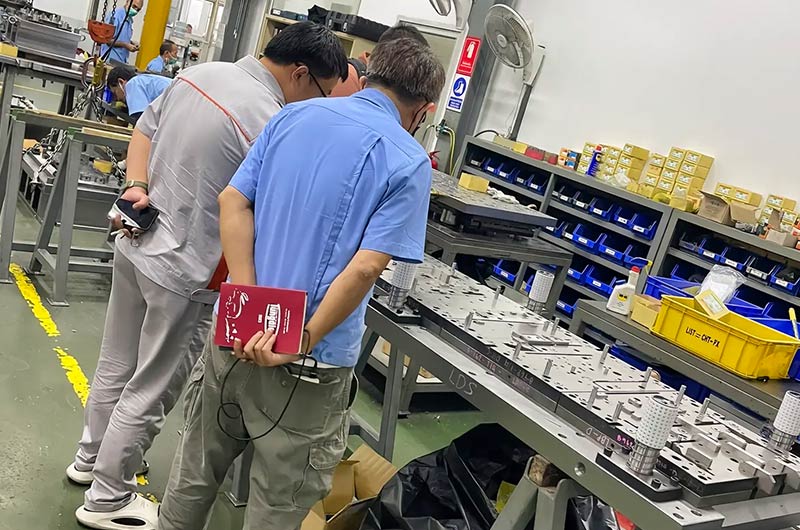
Precision machining is not only about producing parts; it is about producing parts that consistently meet engineering requirements.
Tolerance defines how much variation is acceptable in a component dimension. The tighter the tolerance, the more demanding the machining process becomes.
Factors affecting CNC machining accuracy include:
- Machine capability
- Cutting tool condition
- Material stability
- Programming accuracy
- Environmental conditions
- Inspection equipment
A reliable machining manufacturer should have a complete quality control system that includes:
- Inspecție de material întrerupere
- First article inspection
- In-process measurement
- Final dimensional inspection
- Production documentation
Quality management systems such as ISO 9001 help manufacturers establish controlled processes for production consistency, inspection management, and continuous improvement. (ISO 9001 Quality Management Systems)
For buyers evaluating suppliers, quality systems provide confidence that production processes are controlled rather than relying only on final inspection.
Precision CNC Machining Applications
Precision CNC machining supports a wide range of industries because it provides flexibility and accuracy for customized components.
Fabricación de automóviles
Automotive companies use CNC machined parts for:
- Engine components
- Transmission parts
- Suspension components
- Custom prototypes
- Production assemblies
CNC machining allows automotive engineers to quickly develop prototypes and optimize designs before mass production.
Industria aeroespacial
Aerospace manufacturing requires strict quality control and lightweight yet strong materials.
Common CNC machined aerospace components include:
- Aircraft fittings
- Componentes estructurales
- Precision brackets
- Engine-related parts
Aerospace suppliers often require advanced quality systems such as AS9100 aerospace quality requirements for production environments.
Equipo médico
Medical manufacturers depend on precision components because product reliability directly affects safety and performance.
Aplicaciones incluyen:
- Surgical instruments
- Medical device housings
- Diagnostic equipment components
Maquinaria Industrial
Industrial equipment manufacturers use CNC machining for:
- Replacement parts
- Machine components
- Custom mechanical assemblies
- Automation equipment parts
For companies developing specialized machinery, custom CNC machining provides greater flexibility compared with standard off-the-shelf components.
CNC Machining Compared With Other Manufacturing Methods
Different manufacturing processes are suitable for different production requirements.
| Manufacturing Method | Ventajas | Best Used For |
|---|---|---|
| Mecanizado CNC | High precision and design flexibility | Custom precision parts |
| Metal Casting | Complex shapes and large production quantities | Industrial cast components |
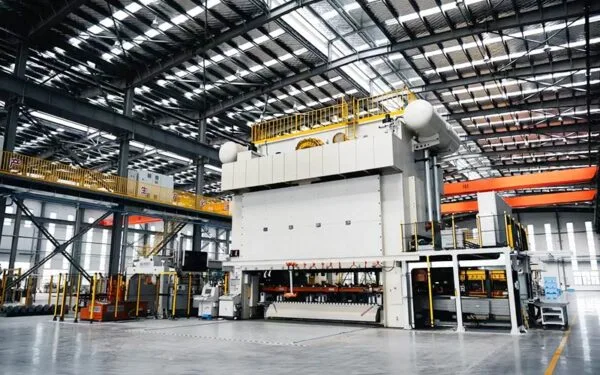
| Estampado de metales | High-volume efficient production | Sheet metal parts |
| Forja | Excellent mechanical strength | Heavy-duty components |
CNC machining is usually the preferred choice when companies require:
- Customized designs
- Fast prototype production
- Tolerancias estrictas
- Medium production volumes
- Complex geometries
Many manufacturers combine multiple processes to achieve complete solutions. For example, CNC machining may be combined with metal stamping solutions or other fabrication processes depending on product requirements.
Factors Affecting CNC Machining Cost
Understanding CNC machining costs helps purchasing teams make better decisions.
Selección de materiales
Different materials require different machining strategies.
Harder materials may require:
- Specialized cutting tools
- Slower machining speeds
- Additional finishing processes
Part Complexity
Complex designs usually require:
- More programming time
- Additional machining operations
- More inspection procedures
Production Quantity
Prototype projects usually have higher unit costs because setup expenses are distributed across fewer parts.
Higher production quantities can reduce average costs through optimized workflows.
Surface Finishing Requirements
Additional finishing processes such as:
- Anodizado
- Polishing
- Coating
- Tratamiento térmico
may affect total project costs.
A professional CNC machining manufacturer can help optimize designs to achieve the best balance between performance and cost.
How to Choose a Reliable CNC Machining Manufacturer?
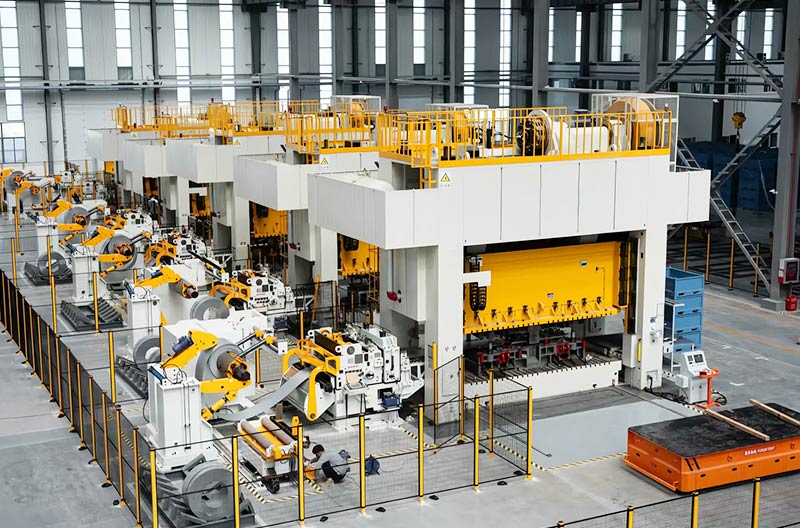
Selecting a CNC machining supplier is an important decision for OEM companies and engineering teams.
Before choosing a supplier, consider the following factors.
Manufacturing Capability
Evaluar:
- CNC equipment range
- Machining experience
- Material capability
- Production capacity
- Industry experience
Engineering Support
A strong supplier should help with:
- Design optimization
- Selección de materiales
- Production planning
- Prototype improvement
Quality Control System
Ask suppliers about:
- Inspection equipment
- Quality documentation
- Material traceability
- Process control
Communication and Delivery Reliability
A reliable manufacturing partner should provide:
- Clear project communication
- Accurate quotations
- Realistic delivery schedules
- Technical support
Linametalworks focuses on providing customized manufacturing support from prototype development to production requirements, helping customers reduce risks and improve production efficiency.
Why Custom CNC Machining Is Important for OEM Projects
OEM manufacturers often require unique components that cannot be purchased as standard products.
Custom CNC machining allows companies to develop:
- Specialized mechanical parts
- Functional prototypes
- Production components
- Replacement parts
The biggest advantage is flexibility. Engineers can modify designs, test performance, and move toward production without investing in expensive molds or dedicated tooling.
For businesses developing new products, partnering with an experienced custom metal parts manufacturing provider can shorten development cycles and improve product reliability.
Frequently Asked Questions About Precision CNC Machining
What is precision CNC machining used for?
Precision CNC machining is used to manufacture accurate components for aerospace, automotive, medical, electronics, and industrial equipment applications.
What materials can CNC machines process?
CNC machines can process aluminum, stainless steel, steel, brass, copper, titanium, plastics, and many other engineering materials.
How accurate is CNC machining?
Accuracy depends on machine capability, material properties, design complexity, and inspection procedures. High-quality CNC manufacturers can achieve extremely tight tolerances for demanding applications.
Is CNC machining suitable for prototypes?
Yes. CNC machining is widely used for prototypes because it allows engineers to test real production materials before full-scale manufacturing.
How can companies reduce CNC machining costs?
Companies can reduce costs by optimizing part design, selecting appropriate materials, avoiding unnecessary tolerances, and planning production quantities effectively.
What should I ask a CNC machining supplier before ordering?
Important questions include:
- What materials can you machine?
- What tolerances can you achieve?
- What inspection methods do you use?
- Can you support prototype and production quantities?
Conclusión
Precision CNC machining has become a critical manufacturing solution for companies that require accurate, reliable, and customized metal components.
From engineering design and material selection to machining operations and quality inspection, every stage affects the final performance of a component. Choosing an experienced CNC machining partner helps businesses reduce production risks, improve product quality, and accelerate development cycles.
Linametalworks provides professional precision machining and custom manufacturing solutions for industrial customers requiring dependable components and flexible production support.
If you need customized CNC components or manufacturing assistance, contact Linametalworks for a machining quote and discuss your next project with an experienced engineering team.