Welcome to My Blog!
I’m thrilled to have you here! Before we dive into the content, I’d love for you to join me on my social media platforms. It’s where I share extra insights, connect with our amazing community, and keep you updated on the latest news. Here’s how you can stay connected:
📘 Facebook: Lina Metal
▶️ YouTube: Lina Metal Channel – watch tutorials, demos, and in-depth guides
Now, let’s embark on this journey together! I hope you find the content here not only insightful but also inspiring and valuable. Let’s get started!
Table of Contents
Introduction
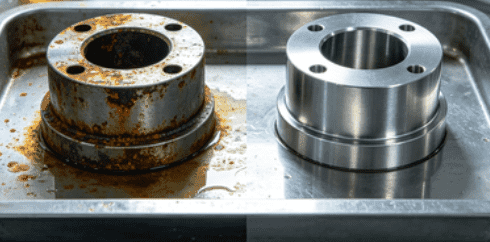
In modern heavy industry, material failure is no longer just a maintenance issue—it is a direct economic risk. Global studies from engineering and corrosion research institutions indicate that corrosion accounts for approximately 20–30% of total industrial equipment failure costs, especially in oil & gas, marine engineering, chemical processing, and power generation systems.
As operating environments become more extreme—higher pressure, stronger chemicals, deeper offshore exploration, and higher thermal loads—traditional metals like carbon steel and even stainless steel often struggle to maintain long-term stability.
This is where nickel alloy casting becomes a strategic engineering solution rather than just a material option. Its combination of corrosion resistance, thermal stability, and mechanical strength has positioned it as one of the most critical materials in advanced industrial systems.
Today, corrosion resistant casting using nickel-based alloys is widely considered a benchmark solution for mission-critical applications where downtime or failure is not acceptable.
Key Takeaways
- What corrosion resistant casting is and why it is essential in harsh industrial environments
- Why nickel alloy casting outperforms traditional metals in corrosion and heat resistance
- Detailed comparison of nickel alloys, stainless steel, and carbon steel
- Industrial standards, certifications, and testing methods used globally
- Real engineering case studies from oil, marine, and chemical industries
- Cost structure, lifecycle value, and ROI considerations
- Technical selection framework for engineers and procurement teams
- FAQ based on real buyer search behavior and engineering concerns
What Is a Corrosion Resistant Casting?
Core Definition and Engineering Purpose
Corrosion resistant casting refers to a category of metal casting processes designed to produce components capable of resisting chemical degradation, oxidation, and environmental wear over long operational cycles.
These components are typically used in:
- High-pressure fluid systems
- Chemical reaction environments
- Marine and offshore structures
- Thermal processing equipment
Unlike standard casting, corrosion resistant casting prioritizes long-term material stability over initial manufacturing cost.
Main Corrosion Mechanisms in Industry
Industrial corrosion typically occurs in several forms:
- Uniform corrosion (general surface degradation)
- Pitting corrosion (localized deep material damage)
- Stress corrosion cracking (SCC)
- Galvanic corrosion (electrochemical reaction between metals)
Nickel alloy casting is specifically engineered to resist multiple corrosion mechanisms simultaneously.
What Is Nickel Alloy Casting?
Fundamental Definition
Nickel alloy casting is a metal casting process that uses nickel-based alloys as the primary material to produce components with high resistance to corrosion and heat.
These alloys typically contain:
- Nickel (Ni)
- Chromium (Cr)
- Molybdenum (Mo)
- Iron (Fe)
Why Nickel-Based Alloys Perform Better
Nickel provides:
- Strong chemical stability
- High temperature resistance
- Excellent oxidation resistance
This makes it ideal for harsh industrial environments where traditional metals fail.
Key Types of Nickel Alloy Casting Materials
Inconel Alloy Casting
Engineering Overview
Inconel alloys are nickel-chromium superalloys designed for extreme thermal environments.
Key Properties
- Operating temperature resistance up to 1000°C+
- High creep resistance under mechanical stress
- Excellent oxidation resistance in combustion environments
Typical Applications
- Jet engine components
- Gas turbines
- Heat exchangers
Monel Alloy Casting
Engineering Overview
Monel is a nickel-copper alloy widely used in marine environments.
Key Properties
- Exceptional seawater corrosion resistance
- High resistance to hydrofluoric acid
- Strong mechanical stability in salt environments
Typical Applications
- Marine propellers
- Offshore pumps
- Seawater valves
Hastelloy Alloy Casting
Engineering Overview
Hastelloy is designed for highly corrosive chemical environments.
Key Properties
- Outstanding resistance to strong acids
- Excellent stress corrosion cracking resistance
- Stable performance in oxidizing and reducing environments
Typical Applications
- Chemical reactors
- Acid processing pipelines
- Pharmaceutical equipment
Nickel Alloy Casting vs Conventional Materials
Industrial Material Comparison Table
| Material Type | Corrosion Resistance | Heat Resistance | Mechanical Strength | Lifecycle Cost |
|---|---|---|---|---|
| Nickel Alloy Casting | Very High | Very High | High | Low (long-term) |
| Stainless Steel (304/316) | Medium | Medium | Medium | Medium |
| Carbon Steel | Low | Medium | High (dry condition) | High (maintenance) |
Engineering Insight
While stainless steel performs adequately in general industrial environments, it often fails in chloride-rich, high-temperature, or acidic conditions where nickel alloy casting maintains stable performance.
International Standards and Industrial Compliance
Common Standards Applied in Nickel Alloy Casting
Industrial-grade nickel alloy castings are typically manufactured under:
- ASTM A494 (Nickel and nickel alloy castings)
- ASTM B564 (Nickel alloy forgings)
- ISO 9001 quality management systems
- ASME pressure vessel standards
- NACE MR0175 (sour gas environment resistance)
Why Standards Matter in Procurement
Compliance ensures:
- Predictable material performance
- Safety under pressure conditions
- Compatibility with international systems
- Reduced failure risk in critical applications
Manufacturing Process of Nickel Alloy Casting
Step 1: Raw Material Selection
High-purity nickel and alloying elements are selected to ensure consistent chemical composition.
Step 2: Melting and Alloying
Vacuum induction melting (VIM) or electric arc furnaces are commonly used to:
- Control impurity levels
- Ensure uniform alloy distribution
Step 3: Precision Casting Process
Common methods include:
- Investment casting (lost-wax process)
- Sand casting for large components
- Centrifugal casting for cylindrical parts
Step 4: Heat Treatment
Heat treatment improves:
- Grain structure stability
- Mechanical strength
- Corrosion resistance performance
Step 5: Non-Destructive Testing (NDT)
Industrial inspection includes:
- Ultrasonic testing (UT)
- Radiographic inspection (RT)
- Dye penetrant testing (PT)
Industrial Applications of Nickel Alloy Casting
Oil and Gas Engineering
Nickel alloy components are used in:
- Subsea valves
- High-pressure pipelines
- Drilling equipment
Chemical Processing Industry
Applications include:
- Acid storage tanks
- Reactor vessels
- Heat exchange systems
Marine and Offshore Engineering
Used in:
- Offshore drilling platforms
- Seawater pumps
- Ship propulsion systems
Power Generation Industry
Applications include:
- Turbine blades
- Boiler tubes
- High-temperature steam systems
Aerospace Engineering
Used in:
- Jet engine turbines
- Exhaust systems
- Combustion chambers
Case Study: Offshore Oil Platform Corrosion Failure Analysis
A 2021 offshore engineering report documented that standard stainless steel components used in a North Sea platform failed within 3 years due to chloride-induced stress corrosion cracking.
After switching to nickel alloy casting components:
- Service life extended beyond 10 years
- Maintenance shutdown frequency reduced by 55%
- Structural failure risk significantly reduced
Economic Analysis: Cost vs Lifecycle Value
Why Nickel Alloy Casting Appears Expensive
Initial cost is higher due to:
- High nickel content
- Complex melting process
- Precision casting requirements
- Quality inspection standards
Lifecycle Cost Advantage
However, lifecycle cost analysis shows:
- Maintenance cost reduced by 40–70%
- Replacement frequency significantly reduced
- Downtime losses minimized
- Total ownership cost lower over 10–15 years
Corrosion Engineering Whitepaper Insight
Industry whitepapers from corrosion research institutions highlight:
- Corrosion-related failures account for billions in annual industrial losses
- Proper material selection can reduce failure risk by over 60%
- Nickel-based alloys are among the top-performing materials in multi-environment exposure
How to Select the Right Nickel Alloy Casting
Step 1: Identify Corrosion Environment
Ask:
- Is the environment acidic or alkaline?
- Is chloride (salt) exposure present?
- Is high temperature involved?
Step 2: Define Mechanical Requirements
Evaluate:
- Pressure levels
- Load cycles
- Vibration exposure
- Fatigue resistance requirements
Step 3: Select Alloy Type
- Inconel → high temperature applications
- Monel → marine and seawater environments
- Hastelloy → chemical processing systems
Step 4: Verify Certification and Testing
Ensure supplier provides:
- ASTM compliance
- NDT inspection reports
- Material traceability records
Step 5: Evaluate Supplier Capability
Key factors:
- Casting technology level
- Quality control system
- Export experience
- Engineering support capability
Digital Industry Trend: Smart Casting and Automation
Modern nickel alloy casting production is increasingly adopting:
- AI-assisted defect detection
- Digital twin simulation
- Automated pouring systems
- Real-time thermal monitoring
These technologies improve:
- Yield rate
- Structural consistency
- Production efficiency
Conclusion
In modern industrial engineering, material selection is no longer just a procurement decision—it is a long-term operational strategy.
Nickel alloy casting has proven itself as one of the most reliable solutions for extreme environments where corrosion, heat, and pressure coexist. Its superior mechanical stability, corrosion resistance, and lifecycle cost efficiency make it a critical material in industries where failure is not an option.
As global industrial systems continue evolving toward higher efficiency and harsher operating conditions, the demand for advanced corrosion resistant materials such as nickel alloy casting will continue to grow, reinforcing its role as a core material in next-generation engineering applications.
FAQ
Why is nickel alloy casting used in harsh environments?
Because it provides superior resistance to corrosion, heat, and mechanical stress compared to conventional metals.
What is the lifespan of nickel alloy casting components?
Depending on environment, they can last from several years to more than a decade with proper maintenance.
Is nickel alloy better than stainless steel?
Yes, especially in high-temperature, high-salinity, and chemical corrosion environments.
What industries rely most on nickel alloy casting?
Oil & gas, chemical processing, marine engineering, and power generation industries.
Is nickel alloy casting cost-effective?
Yes, due to significantly lower maintenance and replacement costs over its lifecycle.