Welcome to My Blog!
I’m thrilled to have you here! Before we dive into the content, I’d love for you to join me on my social media platforms. It’s where I share extra insights, connect with our amazing community, and keep you updated on the latest news. Here’s how you can stay connected:
📘 Facebook: Lina Metal
▶️ YouTube: Lina Metal Channel – watch tutorials, demos, and in-depth guides
Now, let’s embark on this journey together! I hope you find the content here not only insightful but also inspiring and valuable. Let’s get started!
Table of Contents
Key Takeaways in This Blog
- Understanding automotive metal stamping parts in EVs.
- Key materials used and their mechanical properties.
- Differences between EV stamping parts and traditional vehicles.
- Applications across body, chassis, powertrain, interior, and safety systems.
- Manufacturing methods, precision techniques, and QA standards.
- Cost, efficiency, and sustainability considerations.
- Industry trends and real-world case studies.
- FAQs to address common buyer and engineer concerns.
Understanding Automotive Metal Stamping Parts in EVs

Definition and Concept
Automotive metal stamping parts are precision-engineered components formed by stamping, pressing, or punching metal sheets. In electric vehicles (EVs), they are essential for structural integrity, crash safety, and lightweight design.
Key Functions
- Structural Support: Maintains vehicle rigidity and supports high-voltage battery packs.
- Connection and Mounting: Provides secure attachment for suspension, chassis, and drive components.
- Crash Protection: Reinforced beams and plates absorb energy during collisions, safeguarding passengers and EV systems.
Importance in EVs
EVs require stamping parts with higher fatigue resistance and lower weight compared to traditional vehicles, especially for battery enclosures, motor mounts, and high-strength chassis components.
Material Selection for Automotive Metal Stamping Parts
Common Materials and Their Properties
| Material | Strength | Weight | Corrosion Resistance | Typical EV Application |
|---|---|---|---|---|
| Low-Carbon Steel | Medium | Heavy | Medium | Body panels, door brackets |
| High-Strength Steel (HSLA/DP/TRIP) | High | Medium | Medium | Chassis, suspension |
| Aluminum Alloy | Medium-High | Light | High | Battery supports, body frame |
| Stainless Steel | Medium | Heavy | High | Chassis parts, exhaust supports |
| Nickel-Based or Special Alloys | Very High | Medium | Very High | Engine mounts, transmission components |
Material Selection Guidelines
- Low-Carbon Steel: Cost-effective for general support and body panels.
- High-Strength Steel: Required for critical load-bearing chassis and suspension parts.
- Aluminum Alloy: Ideal for lightweight body structures and battery supports.
- Stainless Steel: Used where corrosion resistance is essential, like chassis or exhaust supports.
- Nickel or Special Alloys: Required for engine and transmission components with high thermal or wear demands.
Differences Between EV and Traditional Vehicle Stamping Parts
Weight Considerations
EVs prioritize lightweight materials to maximize battery range, often using aluminum or mixed-metal designs instead of traditional steel.
Structural Complexity
EVs integrate batteries, motors, and cooling systems, necessitating complex stamping geometries and precise tolerances.
Safety Standards
EV stamping parts must maintain crashworthiness while protecting high-voltage battery systems.
| Feature | ICE Vehicles | EVs |
|---|---|---|
| Material Weight | Moderate | High priority for reduction |
| Complexity | Medium | High due to battery/motor integration |
| Safety Focus | Standard | Enhanced for battery protection |
| Material Types | Mainly steel | Steel, aluminum, nickel alloys |
Applications of Automotive Metal Stamping Parts in EVs
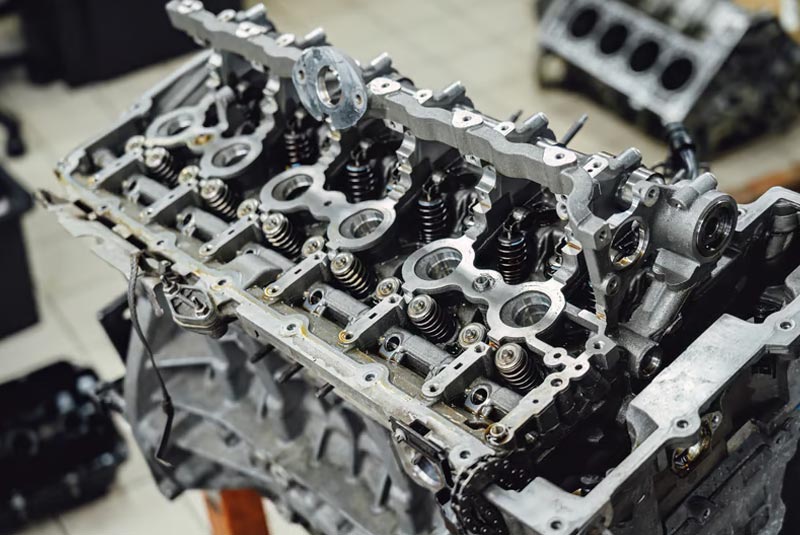
Automotive metal stamping parts are at the core of EV design, providing the structural foundation, supporting critical components, and ensuring passenger safety. These parts are carefully engineered to balance strength, weight, and durability, which is crucial for electric vehicles where battery protection, lightweight design, and crash safety are paramount.
Body Structure Components
Body structure components include door brackets, hood supports, roof frames, and side beams. These parts are essential for maintaining vehicle rigidity while minimizing overall weight.
- Door Brackets: Serve as the main attachment points for vehicle doors. They are engineered to handle repeated opening and closing cycles without deformation. High-strength steel or aluminum alloys are commonly used to ensure durability and weight efficiency.
- Hood Supports: Critical for maintaining front-end structural integrity, hood supports often include energy-absorbing features that help mitigate impact forces during collisions.
- Roof Frames and Side Beams: Roof frames and side beams are designed to prevent roof crush during rollover accidents. Using lightweight aluminum alloys can reduce the vehicle’s center of gravity and improve EV handling dynamics.
Data Insight: According to SAE studies, lightweight body structures using high-strength aluminum alloys can reduce overall EV weight by 12–15%, directly improving battery range and energy efficiency.
Chassis and Suspension Components
Chassis and suspension components include longitudinal beams, crossbeams, and mounting brackets. These parts support battery packs, electric motors, and drive units, ensuring stability and crash protection.
- Longitudinal Beams: Provide the primary structural support for the chassis, bearing vertical and longitudinal loads during driving and impacts.
- Crossbeams: Distribute loads evenly across the chassis, enhancing torsional rigidity.
- Mounting Brackets: Secure suspension elements, battery packs, and high-voltage components, requiring precise dimensions and high fatigue resistance.
Technical Note: Modern EVs integrate battery enclosures into the chassis, meaning stamped components must meet both mechanical load requirements (tensile strength ≥ 500 MPa) and thermal expansion constraints to maintain long-term reliability.
Powertrain and Battery Components
Powertrain and battery components are some of the most critical and high-precision applications for automotive metal stamping parts.
- Battery Enclosures: Protect high-voltage battery packs from impacts, vibrations, and environmental exposure. They often use aluminum alloys for lightweight yet strong protection and may incorporate energy-absorbing structures in strategic zones.
- Transmission and Motor Mounts: These supports must handle torque, vibration, and thermal cycling while maintaining precise alignment to ensure powertrain efficiency.
- Cooling System Supports: Stamped brackets and frames hold radiators, heat exchangers, and thermal management components in place, ensuring proper heat dissipation and battery temperature stability.
Industry Standard Reference: Automotive OEMs require that battery enclosure components meet ISO 6469-3 electrical safety and mechanical integrity tests, including impact and crush performance, to ensure EV safety compliance.
Interior Structural Components
Interior structural components maintain passenger comfort, safety, and stability.
- Seat Brackets: Stamped components secure seats to the floor pan, must withstand crash forces, and integrate with safety systems such as seatbelt anchors and airbags.
- Dashboard Supports: Provide a rigid base for instrument panels and infotainment systems, reducing vibrations and enhancing cabin comfort.
- Door Panel Mounts: Keep door trims and panels aligned, contributing to both aesthetics and safety by supporting side-impact energy absorption.
Design Tip: Using high-strength steel for seat brackets allows for thinner components without compromising crashworthiness, contributing to weight savings and battery efficiency.
Safety and Protection Components
Safety and protection components are engineered to absorb energy, protect passengers, and safeguard sensitive EV systems.
- Energy-Absorbing Beams: Front and rear crush zones are often formed with stamped, high-strength steel beams that deform predictably to dissipate crash energy.
- Protective Plates: Battery underbody shields and skid plates protect against road debris, punctures, and minor impacts.
- Impact Structures: Side sills, reinforcements, and pillars are strategically stamped to manage energy during collisions and rollover events.
Case Study: In a recent NCAP crash test, vehicles using high-strength stamped side sills combined with aluminum battery enclosures demonstrated 20–30% better energy absorption than conventional designs.
Manufacturing Methods
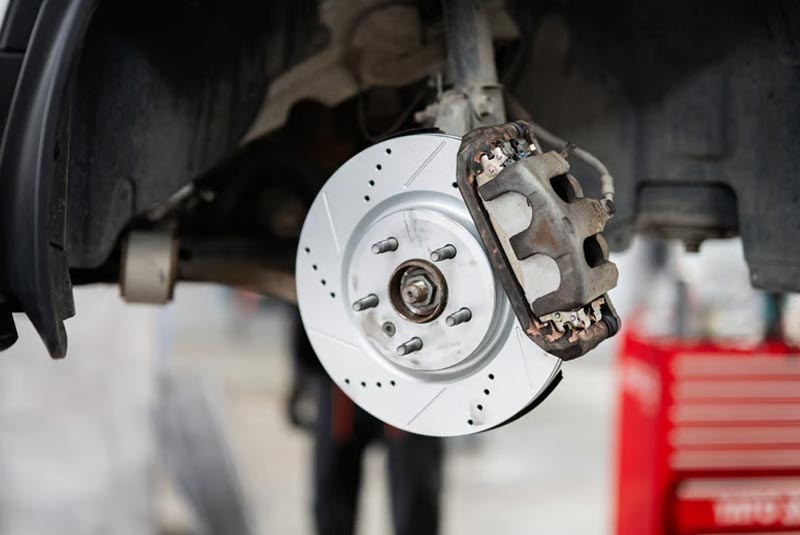
Precision Stamping
High-precision stamping ensures tight tolerances and minimal material waste. Critical for battery enclosures and load-bearing parts.
CNC Machining
Used for complex shapes or prototype parts. Ensures surface finish and dimensional accuracy.
Casting Techniques
- Sand Casting: Cost-effective for large structural components.
- Investment Casting: Ideal for thin-walled, high-precision parts.
Quality Control
- Incoming Material Inspection to ensure raw materials meet specs.
- CMM Dimensional Measurement for precise geometry verification.
- Surface Finish Inspection ensures smoothness and corrosion resistance.
- Hardness Testing for mechanical performance validation.
- Visual Inspection for 100% critical part verification.
Cost, Efficiency, and Sustainability
Cost-Benefit Analysis
| Material | Cost per kg | Weight Reduction | Performance Impact |
|---|---|---|---|
| Low-Carbon Steel | $0.80 | Moderate | Medium |
| High-Strength Steel | $1.20 | High | High |
| Aluminum Alloy | $2.50 | Very High | High |
| Stainless Steel | $2.20 | Medium | Medium |
| Nickel Alloy | $5.50 | Medium | Very High |
Efficiency Improvements
- Automated stamping lines improve production speed by 20–30%.
- High-durability dies reduce downtime and maintenance costs.
Environmental Considerations
- Recyclable metals and energy-efficient presses align with sustainability goals.
- Reduced weight increases EV energy efficiency, lowering overall carbon footprint.
Industry Trends and Case Studies
The automotive metal stamping industry for EVs is evolving rapidly. As electric vehicles gain market share, manufacturers are adopting innovative technologies, lightweight materials, and sustainable processes to meet performance, safety, and environmental demands.
Trends
- Smart Manufacturing: IoT sensors, predictive maintenance, and digital twins reduce defects and optimize production.
- Lightweighting: Multi-material designs combine aluminum, steel, and alloys for optimized EV performance.
- Sustainability: Closed-loop recycling and low-emission manufacturing processes.
Case Studies
Tesla Model 3

- Application: The Model 3 uses aluminum for its chassis and battery supports, combined with high-strength steel for key load-bearing zones.
- Results:
- 15% weight reduction compared to traditional steel-dominated designs.
- 12% improved range due to lower vehicle mass.
- Aluminum stamping allows complex battery enclosure shapes, ensuring both protection and cooling efficiency.
- Engineering Insight: Tesla integrates stamping with laser welding and adhesive bonding, enhancing stiffness while maintaining a lightweight structure.
BYD Tang EV

- Application: The Tang EV uses high-strength steel stamped battery enclosures and chassis reinforcements to achieve crash safety standards.
- Results:
- Achieved top side-impact crash rating in NCAP testing.
- Stamped components provide high energy absorption while keeping battery modules secure.
- The design balances structural strength and manufacturability for mass production.
- Technical Note: High-strength steel enables thinner stamped sections without sacrificing crashworthiness, helping reduce overall vehicle weight and cost.
Additional Trends Highlighted in the Industry
- Volkswagen ID.4: Uses a hybrid structure combining aluminum body panels with steel reinforcement, achieving improved torsional stiffness and crash performance.
- NIO ES6 EV: Employs aluminum battery enclosures integrated with stamped high-strength steel side rails, optimizing energy absorption in side collisions.
- Ford Mustang Mach-E: Lightweight stamping combined with robotic assembly reduces production errors and maintains high dimensional accuracy for battery mounts.
Conclusion
Automotive metal stamping parts are essential for electric vehicles, ensuring structural integrity, crash safety, and lightweight design. By carefully selecting materials, applying precision stamping processes, and following strict quality control standards, manufacturers can produce EV components that meet performance, safety, and sustainability requirements.
Whether for body panels, battery enclosures, or chassis supports, these components are at the heart of modern EV engineering and innovation.
FAQ
1. What materials are preferred for EV stamping parts?
High-strength steel and aluminum alloys are preferred for weight reduction and battery safety.
2. How do EV stamping parts differ from ICE vehicles?
They integrate batteries, motors, and cooling systems, requiring precise, complex geometries.
3. Can stamping parts be prototyped?
Yes, CNC machining and sample stamping allow pre-production testing.
4. How to ensure quality in critical EV components?
CMM inspections, hardness testing, surface finish checks, and visual inspections are standard.
5. Are these parts recyclable?
Yes, steel and aluminum components are recyclable, supporting EV sustainability goals.
6. How do stamping parts affect EV efficiency?
Lightweight stamping parts reduce vehicle weight, improving battery range and energy efficiency.