Welcome to My Blog!
I’m thrilled to have you here! Before we dive into the content, I’d love for you to join me on my social media platforms. It’s where I share extra insights, connect with our amazing community, and keep you updated on the latest news. Here’s how you can stay connected:
📘 Facebook: Lina Metal
▶️ YouTube: Lina Metal Channel – watch tutorials, demos, and in-depth guides
Now, let’s embark on this journey together! I hope you find the content here not only insightful but also inspiring and valuable. Let’s get started!
Table of Contents
Introduction
Investment casting stainless steel is widely used when manufacturers need complex geometry, corrosion resistance, repeatable dimensions, and a cleaner near-net-shape component than many conventional casting methods can economically provide.
For OEM buyers, however, choosing investment casting involves much more than selecting “stainless steel” on a drawing.
The final quality of a casting depends on alloy selection, wax pattern accuracy, shell preparation, gating design, melting control, solidification, heat treatment, dimensional allowance, machining requirements, and inspection strategy.
This is why successful stainless steel investment casting projects usually begin with manufacturing engineering rather than tooling alone.
Lina Metalworks provides custom casting services covering investment casting, sand casting, metal mold casting, centrifugal casting, and other metal forming solutions for complex industrial parts. Secondary precision machining can also be integrated when cast surfaces alone cannot meet final tolerance or functional requirements.
Key takeaways:
- Investment casting is well suited to stainless steel parts with complex shapes, internal features, thin sections, and detailed geometry.
- Stainless steel grade selection should follow corrosion, strength, temperature, machining, and service requirements.
- Casting tolerances should be separated into as-cast dimensions and machined critical dimensions.
- Gating, shrinkage, shell quality, and solidification strongly influence casting defects.
- CNC machining should be planned before tooling rather than added after casting problems appear.
- Heat treatment and surface finishing can significantly influence final performance.
- Inspection requirements should match the actual risk and function of the component.
- OEM buyers should provide drawings, annual quantity, material specification, critical dimensions, and operating conditions before tooling begins.
What Is Investment Casting Stainless Steel?
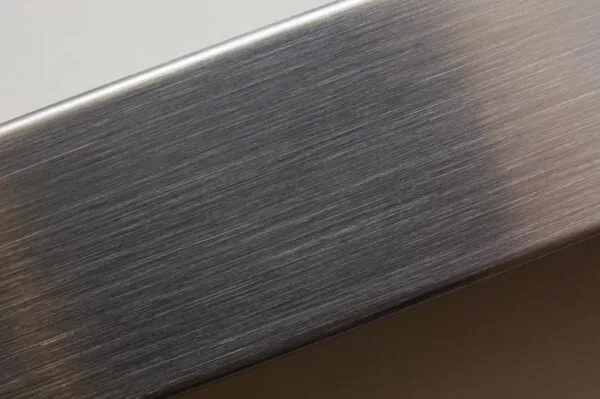
Investment casting stainless steel refers to producing stainless steel components using the investment casting process, also commonly known as precision casting or lost-wax casting.
A wax pattern is first produced in the shape of the required component. Multiple wax patterns may then be assembled onto a central runner system to create a casting tree.
The wax assembly is repeatedly coated with ceramic slurry and refractory material until a sufficiently strong shell is formed.
The wax is then removed, leaving a hollow ceramic cavity.
Molten stainless steel is poured into this cavity, where it solidifies into the required shape.
After cooling, the ceramic shell is removed and individual castings are separated from the runner system.
Further operations may include:
- heat treatment
- shot blasting
- grinding
- CNC machining
- polishing
- passivation
- dimensional inspection
- non-destructive testing
The basic principles and historical development of the process are explained in the investment casting overview.
Investment casting is valued for its ability to manufacture intricate shapes with good repeatability and surface quality across a wide range of metals and alloys.
Why Use Investment Casting for Stainless Steel?
Stainless steel can be machined, forged, stamped, welded, or cast.
The right process depends on the geometry and functional requirements.
Investment casting becomes particularly useful when the component contains features that would require significant machining if manufactured from solid material.
Complex Geometry
Investment casting can reproduce shapes such as:
- curved surfaces
- ribs
- bosses
- irregular profiles
- mounting features
- internal passages
- thin sections
- complex transitions
This can reduce the number of separate components required in an assembly.
Instead of machining several pieces and joining them later, designers may be able to consolidate multiple features into one casting.
Near-Net-Shape Manufacturing
A well-designed investment casting can closely approximate the finished component.
This reduces unnecessary material removal.
For stainless steel parts, this can be particularly valuable when machining would otherwise remove substantial amounts of relatively expensive material.
Better Surface Quality Than Many Conventional Castings
Investment casting generally provides finer surface quality than traditional sand casting because the ceramic shell reproduces the wax pattern in greater detail.
This does not mean every surface will automatically meet final functional requirements.
Bearing seats, sealing surfaces, threaded areas, precision bores, and tight assembly interfaces may still require secondary machining.
Design Flexibility
Investment casting is suitable for many shapes that would be difficult to produce using forging or conventional machining alone.
That flexibility is one reason Lina Metalworks includes precision casting within its broader metal casting capabilities, alongside sand casting and other processes.
Factor 1: Choose the Right Stainless Steel Casting Alloy
“Stainless steel” describes a large family of alloys rather than a single material.
Choosing the correct grade is therefore one of the first decisions in an investment casting stainless steel project.
Lina Metalworks works with stainless steel alongside carbon steel, iron, copper, aluminum, and nickel-based alloys across its manufacturing services.
Austenitic Stainless Steel
Austenitic stainless steels are commonly selected when corrosion resistance and general durability are important.
They are frequently considered for:
- fluid-handling components
- food-related equipment
- medical equipment structures
- industrial hardware
- marine-related components
- chemical processing parts
Grades related to the 300-series family are widely recognized in industrial manufacturing.
Martensitic Stainless Steel
Martensitic grades may be considered where hardness, wear resistance, or mechanical strength plays a larger role.
Heat treatment becomes particularly important when final hardness and mechanical performance are critical.
Precipitation-Hardening Stainless Steel
Precipitation-hardening stainless steels can provide a combination of corrosion resistance and high strength.
They may be considered for more demanding mechanical components where conventional stainless grades do not provide the required strength.
Corrosion-Resistant Cast Steels
When material performance is critical, buyers should not simply specify a generic stainless designation.
Applicable material standards, chemical composition, heat treatment condition, mechanical properties, and corrosion requirements should be clearly identified.
ISO maintains standards specifically addressing corrosion-resistant cast steels for general applications.
Material Selection Checklist
Before choosing an alloy, ask:
- Will the part operate indoors or outdoors?
- Will it contact water, salt, chemicals, acids, or other corrosive media?
- What mechanical load will it experience?
- Is wear resistance important?
- Will it operate at elevated temperature?
- Does the part require welding after casting?
- Will critical surfaces require CNC machining?
- Is polishing or passivation required?
These questions are more useful than choosing an alloy based purely on material name.
Factor 2: Design the Part for the Investment Casting Process
One of the biggest mistakes in custom casting is sending a finished CAD model to the foundry without considering how the component will actually solidify.
A part that is easy to model is not automatically easy to cast.
Avoid Unnecessary Heavy Sections
Very thick local sections can cool more slowly than surrounding areas.
This creates differences in solidification behavior and may increase the risk of internal shrinkage.
Where possible, designers should aim for more balanced wall distribution.
Use Gradual Transitions
Abrupt transitions between thin and thick sections can create:
- stress concentration
- inconsistent cooling
- feeding difficulties
- distortion
- localized defects
Gradual transitions and appropriate radii can improve manufacturability.
Add Fillets Where Appropriate
Sharp internal corners are often undesirable in casting design.
Fillets can improve metal flow and reduce stress concentration.
They can also make wax pattern production and ceramic shell formation more reliable.
Consider Part Consolidation
Investment casting can sometimes combine several fabricated or machined components into one piece.
For example, a bracket with bosses, mounting lugs, curved supports, and reinforcing ribs might otherwise require several machining and welding operations.
Casting these features together may simplify assembly.
However, consolidation should only be used when it genuinely improves manufacturing and performance.
Creating unnecessary complexity simply because investment casting can reproduce it is rarely good design practice.
Factor 3: Understand Investment Casting Tolerances
Investment casting is a precision casting process, but “precision” does not mean every dimension should be assigned CNC-level tolerances.
This distinction is critical for OEM procurement.
As-Cast Dimensions
Many non-critical features can remain in the as-cast condition.
Examples include:
- external profiles
- non-functional ribs
- general housing surfaces
- structural transitions
- clearance areas
Maintaining realistic as-cast tolerances helps control production complexity.
Machined Dimensions
Critical functional features should be identified separately.
These may include:
- bearing seats
- shaft bores
- sealing faces
- mating surfaces
- threads
- precision holes
- locating surfaces
These features can be produced with machining allowance and finished using CNC machining.
Lina’s machining capabilities include milling, turning, drilling, boring, grinding, and other precision operations for components that require tighter final dimensions.
Do Not Over-Tolerance the Drawing
Applying excessively tight tolerances to every dimension can lead to:
- additional machining
- more inspection
- higher rejection risk
- more complicated tooling
- increased production cost
A better drawing distinguishes between:
Critical-to-function dimensions
and
General casting dimensions.
This allows the manufacturer to apply the appropriate process to each feature.
Investment Casting vs Sand Casting for Stainless Steel
Investment casting is not automatically the best casting method for every stainless steel component.
Sand casting remains valuable for many larger or less geometrically demanding parts.
| Factor | Investment Casting | Sand Casting |
|---|---|---|
| Complex geometry | Excellent | Good |
| Fine details | Excellent | Moderate |
| Surface finish | Better | Rougher |
| Dimensional consistency | Higher | Moderate |
| Large part capability | Moderate | Excellent |
| Tooling complexity | Higher | Generally lower |
| Thin-wall capability | Better | More limited |
| Secondary machining | Often reduced | Often greater |
| Prototype flexibility | Moderate | Good |
| Typical use | Detailed precision components | Larger structural castings |
Lina Metalworks supports both investment casting and sand casting, allowing manufacturing strategy to follow the component rather than forcing every project into one process.
Choose Investment Casting When
Consider investment casting when the part requires:
- intricate external geometry
- fine details
- relatively thin sections
- improved surface quality
- repeatable dimensions
- reduced machining
- feature consolidation
Choose Sand Casting When
Sand casting may be more suitable when:
- the component is large
- surfaces will be extensively machined anyway
- geometry is relatively simple
- production quantity is limited
- tooling flexibility is important
- surface finish requirements are moderate
The casting process should therefore be selected from the drawing and application rather than from a preferred manufacturing method.
Factor 4: Control Gating and Solidification
Many casting quality problems originate before molten metal enters the mold.
The gating and feeding system influences how metal reaches the cavity, how air and gases escape, and how the component solidifies.
Gating System
The gating system typically includes channels that guide molten material into the casting cavity.
Its design affects:
- filling speed
- turbulence
- temperature distribution
- solidification sequence
- inclusion risk
- shrinkage feeding
Poorly designed gating can produce defects even if the alloy and shell are otherwise correct.
Shrinkage
Metal contracts as it cools.
The manufacturing process must account for this behavior from pattern design through solidification.
Different stainless steel alloys may exhibit different casting characteristics, which means tooling cannot be designed solely from finished dimensions.
Hot Spots
Heavy sections can remain molten longer than surrounding areas.
These regions may become potential shrinkage locations if they are not properly fed.
Casting simulation, foundry experience, section optimization, and gating design can all help reduce this risk.
Factor 5: Prevent Common Stainless Steel Casting Defects
Zero-defect casting is the objective, but casting is a thermal manufacturing process involving molten metal, ceramic molds, gases, solidification, and dimensional change.
Understanding common defects helps buyers create more realistic inspection plans.
Porosity
Porosity refers to voids within the casting.
Possible influences can include:
- gas
- shrinkage
- feeding conditions
- melt quality
- process control
The significance of porosity depends on where it occurs and what the component must do.
A cosmetic casting and a pressure-containing casting do not necessarily require the same acceptance criteria.
Shrinkage Defects
Shrinkage may occur where molten material cannot adequately feed a region during solidification.
Design and gating strategy are central to controlling this problem.
Inclusions
Foreign material can become trapped within the casting.
Melt cleanliness, shell integrity, pouring conditions, and process discipline influence inclusion risk.
Misruns
A misrun occurs when molten metal does not completely fill the mold cavity.
Thin sections and complex flow paths deserve particular attention.
Cracks
Cracking can result from several metallurgical or thermal factors.
Geometry, alloy behavior, cooling rate, residual stress, and post-casting handling may all contribute.
Surface Defects
Surface irregularities may be related to:
- wax pattern quality
- ceramic shell quality
- shell damage
- metal penetration
- cleaning
- finishing operations
For critical steel castings, visual and non-destructive inspection methods may be defined by applicable specifications. ISO maintains standards addressing visual testing and radiographic testing of steel and iron castings.
Factor 6: Plan Secondary Machining Before Tooling
One of the most important principles in precision casting is:
Do not design the casting first and think about machining later.
Machining allowance, datum strategy, clamping surfaces, and inspection references should be considered during casting design.
Why Castings Need Machining
Even highly accurate investment castings may require machining when a component contains:
- precision bores
- threads
- bearing fits
- sealing surfaces
- controlled flatness
- highly accurate hole positions
- critical assembly interfaces
Casting + CNC Machining
A hybrid manufacturing workflow may look like:
Wax Pattern
↓
Ceramic Shell
↓
Stainless Steel Casting
↓
Heat Treatment
↓
Cleaning
↓
CNC Machining
↓
Surface Treatment
↓
Final Inspection
This approach allows the casting process to create the complex bulk geometry while machining focuses only on critical functional areas.
It can be much more efficient than machining the complete component from solid stainless steel.
Lina Metalworks combines casting with precision machining, which is especially relevant for pump bodies, valve-type components, flanges, housings, structural components, and other complex metal parts requiring both formed geometry and precision interfaces.
Investment Casting vs CNC Machining From Solid
OEM buyers frequently ask whether a stainless steel component should be investment cast or machined from bar or billet.
Neither process is universally better.
| Requirement | Investment Casting | CNC From Solid |
| Complex external geometry | Excellent | Possible but may require long cycle time |
| Internal cast features | Strong advantage | Often difficult |
| Very low quantities | May be less attractive | Often attractive |
| Repeat production | Strong | Strong |
| Material utilization | High for near-net shapes | More material may be removed |
| Design changes | Requires tooling consideration | Easier to reprogram |
| Tight precision surfaces | Usually secondary machining | Excellent |
| Highly complex curved parts | Strong | Depends on machine and access |
| Large machining allowance | Usually unnecessary | Inherent to process |
| Part consolidation | Excellent | More limited |
For many industrial projects, the correct answer is not casting or machining.
It is casting plus machining.
Factor 7: Build the Right Quality Control Plan
A high-quality investment casting project needs a defined inspection strategy.
Inspection should be based on function and risk rather than simply performing every available test.
Material Verification
Material control can include:
- chemical composition verification
- material certificates
- heat traceability
- alloy identification
The exact requirements depend on customer specifications and applicable standards.
ASTM A957/A957M covers common requirements for steel investment castings where metallurgical compliance with relevant steel casting specifications is required.
Dimensional Inspection
Dimensional inspection may involve:
- calipers
- micrometers
- gauges
- fixtures
- coordinate measuring machines
- profile inspection
Critical dimensions should be agreed before production begins.
Visual Inspection
Surface inspection can identify visible issues such as:
- cracks
- incomplete fill
- abnormal surface conditions
- excessive grinding
- obvious inclusions
- deformation
Non-Destructive Testing
Depending on part function, NDT methods may include:
- radiographic testing
- magnetic particle inspection
- penetrant inspection
- ultrasonic testing
Not every casting requires every method.
The inspection plan should reflect application risk.
Mechanical Testing
Where required, mechanical testing may evaluate properties such as:
- tensile strength
- yield behavior
- hardness
- elongation
- impact properties
Requirements depend on alloy and customer specification.
Stainless Steel Investment Casting Standards
Standards should be selected according to material, application, industry, and contractual requirements.
One relevant international reference is ISO 16468, which specifies technical requirements for steel, nickel-alloy, and cobalt-alloy investment castings.
ASTM also maintains specifications related to steel investment castings, including general metallurgical requirements.
Standards should not simply be added to a drawing for marketing purposes.
The buyer and manufacturer should identify:
- required material specification
- acceptance criteria
- inspection level
- dimensional standard
- heat treatment condition
- surface requirements
- NDT requirements
- documentation requirements
before production begins.
What Affects Investment Casting Cost?
OEM buyers often focus on casting weight, but weight is only one factor.
Tooling Complexity
More complicated wax tooling can increase initial project investment.
Features such as slides, cores, unusual parting strategies, and difficult pattern extraction can affect tooling design.
Alloy
Different stainless steel grades have different raw material and processing requirements.
Special alloys may also require more controlled melting or heat treatment.
Part Geometry
Complex geometry may increase:
- shell-making difficulty
- gating requirements
- casting risk
- finishing time
Quantity
Production volume affects how tooling and setup costs are distributed.
A project requiring 200 parts annually should not necessarily use the same manufacturing strategy as one requiring 100,000.
Machining
Machining can become a significant cost driver when a drawing assigns tight tolerances to many surfaces.
Designing more features in the as-cast condition can reduce unnecessary machining.
Inspection
Advanced inspection adds value when required, but unnecessary inspection also adds cost.
Quality requirements should match function.
Surface Finish
Polishing, passivation, blasting, coating, and other secondary treatments should be identified early.
Investment Casting Stainless Steel vs Forged Stainless Steel
Forging is another important manufacturing process for stainless steel components.
Forging generally uses compressive force to shape solid metal, while investment casting fills a mold cavity with molten material.
Investment Casting Advantages
Investment casting is particularly strong when:
- geometry is complex
- multiple features can be consolidated
- internal or curved forms are required
- near-net shaping reduces machining
Forging Advantages
Forging may be preferable for components where:
- directional mechanical properties are critical
- extremely high loading is involved
- geometry is compatible with forging dies
- material flow and grain structure are major design priorities
The two processes should therefore be evaluated according to functional requirements rather than competing on a simple “which is stronger?” question.
A future casting content cluster can connect this topic directly to casting vs forging, forged steel, casting design, and post-casting machining articles.
Applications of Investment Casting Stainless Steel
Investment casting is used across many industrial sectors because it can produce complex metal components rather than one particular finished product.
Common manufacturing applications can include:
Pump and Valve Components
Complex flow passages, housings, impellers, valve structures, and connecting components may benefit from near-net-shape casting followed by machining.
Machinery Components
Industrial machinery may use cast:
- brackets
- housings
- levers
- mounting components
- structural connectors
Energy Equipment
Stainless steel and special alloy castings may be selected where corrosion, temperature, strength, or environmental exposure requires more capable materials.
Medical and Precision Equipment
Complex stainless components can be cast and subsequently machined, polished, or finished according to application requirements.
Automotive and Transportation
Investment casting can support complex mechanical components where repeatability and geometry justify tooling.
These application examples should be viewed as demonstrations of manufacturing capability rather than fixed product categories.
Lina Metalworks serves multiple manufacturing sectors through integrated casting, machining, stamping, forging, bending, and brazing capabilities.
How Investment Casting Fits Into One-Stop Metal Manufacturing
Many OEM castings are not finished when they leave the mold.
A complete supply chain may include:
Casting
→ Heat Treatment
→ CNC Machining
→ Grinding
→ Welding or Brazing
→ Surface Treatment
→ Inspection
→ Assembly
This is why evaluating a supplier only by foundry capability can be limiting.
OEM buyers should also ask whether the supplier can manage downstream operations.
Lina Metalworks combines casting with machining and other metalworking services, supporting projects from custom design and tooling through manufacturing and secondary processing.
The company’s existing article Custom Art Casting: Complete Guide to Precision Metal Casting Solutions also explains how investment casting, sand casting, machining, and finishing can be combined within a single casting workflow.
What Should You Send an Investment Casting Manufacturer?
A professional RFQ should contain more than a 3D model.
Ideally, provide:
- 2D drawing
- STEP or other 3D model
- stainless steel grade
- heat treatment requirements
- annual demand
- batch quantity
- dimensional tolerances
- critical characteristics
- surface finish
- machining requirements
- inspection requirements
- operating temperature
- corrosion environment
- applicable standards
- packaging requirements
If material selection is not finalized, provide the operating conditions instead.
An experienced casting supplier can then help evaluate whether stainless steel, carbon steel, nickel alloy, aluminum, or another material better matches the project.
Questions to Ask a Stainless Steel Investment Casting Supplier
Before approving a manufacturing partner, OEM buyers should ask:
Which investment casting process do you use?
Different shell systems and foundry processes can provide different combinations of precision, surface quality, and production economics.
Which stainless steel alloys can you cast?
Make sure the supplier understands the required alloy rather than simply accepting the material designation.
Which dimensions should remain as-cast?
A capable supplier should help distinguish casting tolerances from machining requirements.
Can you provide secondary CNC machining?
Integrated machining can simplify datum control, logistics, inspection, and supplier coordination.
How do you control casting defects?
Ask about process control rather than accepting a generic statement such as “100% quality.”
What inspections can you provide?
Inspection capability should match project requirements.
Can you support low-volume and production quantities?
Different programs require different tooling and production strategies.
Lina Metalworks’ Casting Service supports custom components from individual or small-volume requirements through larger production programs, using different casting methods according to part structure and volume.
Conclusion
Investment casting stainless steel is most valuable when a component needs more than corrosion resistance alone.
Its real advantage comes from combining stainless steel material performance with the ability to produce complex near-net-shape geometry.
For OEM buyers, seven factors deserve particular attention:
- stainless steel alloy selection
- casting-friendly part design
- realistic tolerance allocation
- gating and solidification control
- casting defect prevention
- planned secondary machining
- application-specific quality control
A successful casting project should therefore be engineered as an integrated manufacturing process.
The foundry must consider how the wax pattern will be produced, how molten metal will flow, how the casting will solidify, which areas require machining, how the surface will be finished, and how the component will ultimately be inspected.
For parts where investment casting alone cannot provide every final feature, combining custom casting with precision machining can provide a more practical path from complex raw geometry to finished OEM components.
Rather than asking only, “Can this part be cast?”, buyers should ask a more useful question:
“What combination of casting, machining, heat treatment, finishing, and inspection will produce this component reliably at the required production volume?”
That approach leads to stronger DFM decisions, more realistic tolerances, and a more scalable manufacturing process.
FAQ
Is investment casting good for stainless steel?
Yes. Investment casting is widely used with stainless steel because it can reproduce complex geometry with good dimensional repeatability and surface quality while taking advantage of stainless steel’s corrosion resistance and mechanical properties.
What stainless steel grades can be investment cast?
A variety of stainless and corrosion-resistant cast steel grades can be produced depending on foundry capability and project requirements. The correct alloy should be selected according to corrosion, strength, heat treatment, temperature, and mechanical performance requirements.
Is investment casting more precise than sand casting?
Investment casting generally provides better dimensional accuracy and finer surface detail than conventional sand casting. Sand casting, however, can be more practical for larger components, simpler geometries, and certain low-volume projects.
Does investment casting eliminate CNC machining?
Not always. Many dimensions can remain as-cast, but precision bores, bearing seats, threads, sealing surfaces, locating features, and tight-tolerance interfaces commonly require secondary machining.
Can investment casting make complex shapes?
Yes. Complex geometry is one of the main reasons manufacturers choose the investment casting process, particularly when a component contains detailed features that would otherwise require extensive machining or multi-part fabrication.
What causes defects in stainless steel investment castings?
Potential causes can involve gating, feeding, melt quality, ceramic shell condition, material behavior, solidification, geometry, or process control. The root cause depends on the specific defect and casting design.
What is the difference between precision casting and investment casting?
In industrial usage, “precision casting” is commonly used to refer to investment casting because the process is capable of reproducing complex shapes with relatively high dimensional accuracy.
Can investment cast parts be heat treated?
Yes. Depending on alloy and required mechanical properties, cast components may undergo suitable heat treatment after casting.
Can investment casting handle low-volume OEM orders?
It can, but economic suitability depends on tooling, geometry, alloy, quantity, and expected future demand. For some very low-volume or large components, sand casting or machining may be more appropriate.
What information should I provide for a casting quotation?
Provide drawings, 3D files, material specification, quantities, critical tolerances, machining requirements, heat treatment, surface finish, inspection requirements, and operating conditions. This allows the manufacturer to evaluate the complete process rather than simply quote the casting weight.