Welcome to My Blog!
I’m thrilled to have you here! Before we dive into the content, I’d love for you to join me on my social media platforms. It’s where I share extra insights, connect with our amazing community, and keep you updated on the latest news. Here’s how you can stay connected:
📘 Facebook: Lina Metal
▶️ YouTube: Lina Metal Channel – watch tutorials, demos, and in-depth guides
Now, let’s embark on this journey together! I hope you find the content here not only insightful but also inspiring and valuable. Let’s get started!
Table of Contents
Key Takeaways for This Blog
- Fundamentals and principles of broaching metalworking
- Key types of broaching tools and machines
- Broaching advantages: precision, speed, and surface finish
- Comparison with milling, drilling, and grinding
- Material selection, hardness, and tooling considerations
- Step-by-step broaching process and best practices
- Maintenance, safety, and troubleshooting guidelines
- Real-world case studies in automotive, aerospace, and industrial applications
- Industry standards, certifications, and emerging innovations
- FAQ addressing common questions from engineers and machinists
Introduction
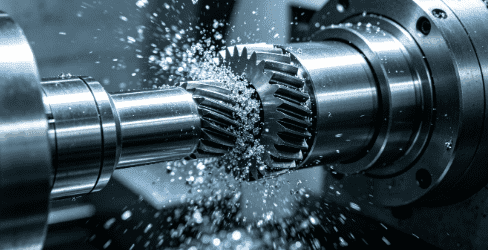
Broaching metalworking is a cornerstone of modern machining, combining high precision, repeatability, and efficiency. It is widely employed in producing keyways, splines, holes, and com-plex profiles in automotive, aerospace, and industrial components. Unlike traditional milling or drilling, broaching allows linear material removal using a specially designed broach, which significantly reduces machining time and post-processing.
According to the 2024 report by the International Journal of Advanced Manufacturing, broaching metalworking can improve production efficiency by up to 40% in high-volume applications, providing tolerances within ±0.02 mm for critical components. As global manufacturing demands increase, mastering broaching techniques has become essential for engineers, machinists, and production managers seeking cost-effective, precise solutions.
Advantages of Broaching Metalworking
High Precision and Repeatability
Broaching delivers highly repeatable results, making it ideal for mass production of complex components. Accuracy can reach ±0.01–0.02 mm, ensuring reliable assembly and fit in critical systems like gearboxes or aerospace assemblies.
Efficient Material Removal
Broaching can remove significant amounts of material in a single pass, reducing cycle times by 20–50% compared to milling or drilling for similar geometries. Multi-stage broaches can cut progressively, enhancing surface finish while maintaining speed.
Superior Surface Finish
The linear cutting motion of broaches produces smooth surfaces with minimal burrs, reducing the need for secondary finishing. For instance, automotive transmission keyways often achieve surface roughness below Ra 0.8 μm after broaching.
Cost Efficiency
Despite higher initial tooling costs, broaching reduces labor and post-processing, providing a lower cost-per-part over large production runs. Studies from CNC Manufacturing Insights 2023 indicate a potential 30% reduction in total machining cost for high-volume broached parts.
Types of Broaching Metalworking
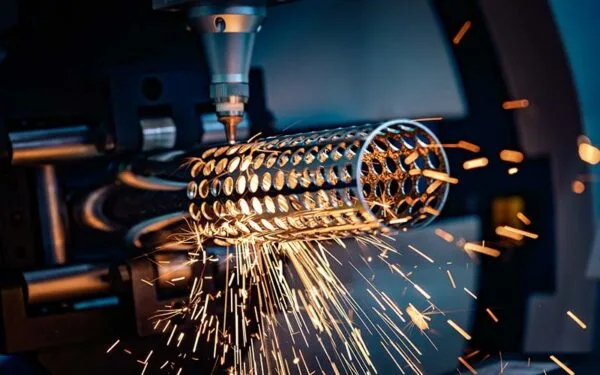
Pull Broaching vs Push Broaching
- Pull Broaching: Broach is pulled through the workpiece; commonly used for internal features like holes, keyways, and splines.
- Push Broaching: Broach is pushed through the material; ideal for external profiles like gear teeth or flats.
Broach Design Options
- Straight-tooth Broaches: Effective for soft metals like aluminum or brass.
- Serrated Broaches: Designed for harder metals such as hardened steel, reducing chip load.
- Specialty Broaches: Customized profiles for gears, splines, turbine blades, and automotive components.
Single-Stage vs Multi-Stage Broaches
- Single-Stage: Removes material in one pass; faster but suitable for moderate precision.
- Multi-Stage: Progressive cutting reduces stress, produces smoother surfaces, and extends tool life.
Materials and Workpiece Considerations
Suitable Metals
Broaching metalworking is compatible with:
- Steel (hardened or soft)
- Aluminum alloys
- Copper and bronze
- Titanium (with specialized tooling)
Hardness Guidelines
| Material | Typical Hardness (HRC) | Recommended Broach Type | Notes |
|---|---|---|---|
| Mild Steel | 15–25 | Straight-tooth | Fast cutting, low wear |
| Hardened Steel | 45–60 | Serrated or carbide-tipped | Progressive cutting recommended |
| Aluminum Alloy | 80–120 HB | Straight-tooth | Lightweight components |
| Bronze | 60–100 HB | Serrated | High wear resistance |
| Titanium Alloy | 35–45 RC | Specialty broaches | Requires coolant, slower feed |
Surface Finish and Lubrication
- Proper lubrication minimizes heat buildup, reduces tool wear, and improves surface finish.
- Cutting fluids or oils are commonly used, particularly for steel and titanium components.
Step-by-Step Broaching Process
Material Preparation
- Select a compatible workpiece material.
- Pre-drill holes if performing internal broaching.
- Clean surfaces to prevent debris interference.
Machine Setup
- Calibrate stroke length and feed rates to match broach design.
- Secure the workpiece to minimize vibration.
- Check alignment to prevent uneven wear or tool breakage.
Cutting Process
- Gradually feed the broach; multi-stage broaches should follow the designed sequence.
- Monitor cutting forces; ensure lubrication reaches all teeth.
- Remove chips regularly to prevent clogging and overheating.
Post-Broaching Inspection
- Measure critical dimensions using micrometers or CMMs.
- Check surface finish against specifications (typically Ra 0.8–1.6 μm).
- Document quality for traceability and continuous improvement.
Comparative Analysis: Broaching vs Other Techniques
| Technique | Precision | Material Removal | Cycle Time | Best Use Case |
|---|---|---|---|---|
| Broaching | High | Fast | Short | Keyways, splines, internal holes |
| Milling | Medium | Moderate | Medium | Flat surfaces, custom profiles |
| Drilling | Medium | Moderate | Long | Circular holes |
| Grinding | Very High | Slow | Long | Tight tolerance finishing |
| Electrical Discharge Machining (EDM) | Very High | Very Slow | Very Long | Complex geometries, hard metals |
Observation: Broaching excels in linear features requiring high precision and repeatability, while milling offers flexibility for 3D shapes and EDM is reserved for highly complex or hard-to-machine parts.
Real-World Applications
Automotive Industry
- Production of transmission splines, gear keyways, and hub assemblies.
- Example: Broached splines in a 2023 BMW drivetrain reduced assembly variability by 15%.
Aerospace Industry
- Manufacturing of turbine shafts, landing gear components, and aerospace fasteners.
- Example: Rolls-Royce Trent engine parts use broaching for spline alignment with tolerances ±0.02 mm.
Industrial Machinery
- Broaching bushings, pulleys, and hydraulic components enhances efficiency in mass production.
- Case study: Siemens factory in Germany reduced machining time by 35% using broaching for pump shafts.
Safety Considerations
Operator Safety
- Always wear protective eyewear, gloves, and hearing protection.
- Keep hands clear of moving broach teeth.
Machine Safety
- Ensure emergency stops are functional.
- Inspect machine guards and alignment regularly.
Ergonomics and Environmental
- Automated feeds reduce operator strain.
- Use proper coolant and ventilation to manage heat and fumes.
Industry Standards and Certifications
- ISO 2768-1 & ISO 2768-2: General tolerances for metal components.
- BS EN 124: Applicable for load-rated broaching fixtures in industrial applications.
- ASTM A48/A536: For cast iron components used in broaching machine construction.
- ISO 9001 & ISO 14001: Quality and environmental management standards for manufacturing facilities.
Innovations in Broaching Metalworking
Smart Monitoring
- Integration of force sensors and CNC feedback for predictive maintenance.
- Reduces unplanned downtime and improves process consistency.
Advanced Coatings
- Carbide or diamond-coated broaches extend tool life for high-hardness metals.
- Reduces wear in high-volume production environments.
Automation
- Robotic loading and unloading for high-throughput broaching lines.
- Enhances safety, precision, and repeatability.
Maintenance and Troubleshooting
Routine Inspection
- Examine teeth for chipping or deformation.
- Check machine alignment and lubrication systems.
Lubrication and Cleaning
- Regularly clean broaches to prevent chip accumulation.
- Apply cutting fluids as per manufacturer recommendations.
Replacement Guidelines
- Track cycles and material hardness to predict tool replacement.
- Avoid cutting past recommended usage to maintain surface finish quality.
Table: Broaching Process Parameters for Common Metals
| Metal Type | Feed Rate (mm/rev) | Cutting Speed (m/min) | Lubrication Type | Tool Life (Cycles) |
|---|---|---|---|---|
| Mild Steel | 0.03–0.05 | 10–15 | Oil-based cutting fluid | 50,000–70,000 |
| Hardened Steel | 0.01–0.02 | 5–10 | Synthetic coolant | 30,000–50,000 |
| Aluminum Alloy | 0.05–0.08 | 20–25 | Oil-based or water-soluble fluid | 70,000–100,000 |
| Bronze | 0.04–0.06 | 15–20 | Oil-based cutting fluid | 50,000–80,000 |
| Titanium Alloy | 0.01–0.03 | 5–8 | Synthetic coolant | 20,000–35,000 |
Observation: Correct feed rate, speed, and lubrication significantly affect tool life and surface quality. Using multi-stage broaches for hard materials reduces wear and improves precision.
Emerging Trends and Innovations in Broaching Metalworking
Integration with CNC Systems
Modern broaching machines often incorporate CNC control to adjust feed rates, stroke length, and cutting forces in real-time. This allows adaptive cutting, optimized efficiency, and consistent part quality, particularly in aerospace and automotive manufacturing.
Smart Sensors and Predictive Maintenance
Sensors monitor vibration, temperature, and cutting force. Data analytics predict tool wear and prevent unexpected breakdowns, reducing downtime and improving operational reliability.
Hybrid Materials and Coatings
Carbide, diamond-coated, or ceramic inserts on broaches increase tool life and maintain performance when machining hard alloys. Coated broaches also reduce friction and heat generation, allowing faster cutting speeds.
Automation and Robotic Handling
Automated loading and unloading reduce labor costs and enhance safety. Robotic systems can handle large-scale broaching lines, improving throughput while minimizing human exposure to cutting operations.
Case Studies Demonstrating Broaching Metalworking Efficiency
Automotive Transmission Components
A major European car manufacturer adopted broaching for gear keyways in production lines. Switching from traditional milling reduced cycle times by 35% and improved tolerance consistency from ±0.05 mm to ±0.02 mm.
Aerospace Turbine Shafts
Rolls-Royce utilized broaching to manufacture spline shafts for turbine engines. Precision achieved was ±0.015 mm, ensuring seamless assembly and longer service life under high thermal and mechanical stress.
Industrial Hydraulic Components
Siemens Germany implemented internal broaching for pump shafts, reducing machining steps and tool changes. Production efficiency improved by 30%, and rework rates fell below 1% per batch.
Best Practices for Optimizing Broaching Metalworking
Tool Selection
- Match broach type to material hardness and geometry.
- Use multi-stage broaches for hard metals to improve surface finish and reduce tool wear.
Machine Setup
- Ensure proper alignment, clamping, and stroke calibration.
- Monitor vibration and cutting forces to avoid tool failure.
Lubrication and Cooling
- Apply appropriate cutting fluids based on metal type.
- Maintain coolant flow to reduce heat and extend tool life.
Inspection and Quality Control
- Implement in-process measurement using micrometers or coordinate measuring machines (CMM).
- Maintain historical data to track tool wear and machining performance.
Environmental and Economic Considerations
Sustainable Practices
- Recyclable broaching tools and eco-friendly cutting fluids reduce environmental impact.
- Efficient material removal minimizes scrap and energy consumption.
Cost-Benefit Analysis
- Although initial tooling cost is higher, reduced labor, cycle time, and post-processing deliver significant savings over medium-to-large production runs.
- ROI is maximized in high-volume operations, particularly for precision components.
Conclusion
Mastering broaching metalworking techniques is essential for modern manufacturing efficiency, precision, and cost-effectiveness. From automotive gear systems to aerospace turbine shafts, broaching delivers high repeatability, superior surface finish, and minimal post-processing.
By carefully selecting materials, broach types, lubrication methods, and adhering to industry standards, manufacturers can maximize tool life, reduce production costs, and maintain top-tier component quality. Innovations such as CNC integration, sensor-based monitoring, and hybrid tool coatings continue to advance broaching efficiency and sustainability.
Investing in high-quality broaching processes ensures reliable, precise, and scalable production for today’s high-demand industrial applications.
FAQ
What is the difference between broaching and milling?
Broaching is linear and highly repeatable, ideal for keyways and splines. Milling is versatile for complex 3D surfaces but slower for repetitive linear features.
Can broaching be used on hardened steel?
Yes, with serrated or carbide-tipped broaches and appropriate lubrication, hardened steel can be efficiently broached.
How often should broach tools be inspected?
After every production shift for high-volume operations; otherwise, a minimum weekly inspection is recommended. Look for tooth wear, chipping, and alignment issues. Early detection prevents poor surface finish and potential machine damage.
What materials are best suited for broaching metalworking?
Broaching works well on a wide range of metals including steel, aluminum, copper, bronze, and titanium alloys. Selection depends on hardness, thickness, and surface finish requirements. Hardened steel requires specialty broaches and proper lubrication.
Is broaching cost-effective for small production runs?
Broaching is highly efficient for medium to high-volume production. For small runs, initial tooling cost may be higher than milling or drilling, but for precision parts with repetitive features, the long-term efficiency often outweighs initial investment.
Can broaching produce complex geometries?
Yes, but primarily linear or rotational symmetric profiles like keyways, splines, gear teeth, and holes. Highly complex 3D surfaces may require complementary processes such as CNC milling or EDM.
How does broaching metalworking compare with other cutting techniques for tolerances?
Broaching typically provides tighter tolerances (±0.01–0.02 mm) than milling or drilling. For extremely critical components, grinding or EDM may achieve higher precision, but broaching balances accuracy, speed, and cost effectively.