Welcome to My Blog!
I’m thrilled to have you here! Before we dive into the content, I’d love for you to join me on my social media platforms. It’s where I share extra insights, connect with our amazing community, and keep you updated on the latest news. Here’s how you can stay connected:
📘 Facebook: Lina Metal
▶️ YouTube: Lina Metal Channel – watch tutorials, demos, and in-depth guides
Now, let’s embark on this journey together! I hope you find the content here not only insightful but also inspiring and valuable. Let’s get started!
Table of Contents
In modern manufacturing, precision is no longer optional—it is a core requirement that determines product quality, production efficiency, and cost competitiveness. Among all metal fabrication processes, sheet metal bend techniques play one of the most critical roles in transforming flat metal sheets into functional, load-bearing, and aesthetically finished components.
From automotive body panels to aerospace brackets, HVAC systems, electrical enclosures, and industrial frames, nearly every engineered product relies on some form of sheet metal bending. What makes this process particularly important is its balance between simplicity and engineering complexity: while the concept is straightforward—applying force to deform metal—the actual execution requires deep understanding of material behavior, machine control, tooling geometry, and industrial standards.
According to global metal fabrication industry reports, the sheet metal processing market is expected to exceed hundreds of billions USD in value by 2030, driven largely by automation, CNC press brake adoption, and demand for lightweight structural materials in transportation and construction sectors. Within this ecosystem, sheet metal bend operations account for a significant portion of fabrication workflows, often exceeding 40% of total forming operations in medium to heavy manufacturing plants.
- Understand what sheet metal bending is and how it works in manufacturing
- Learn key bending methods used in industrial production
- Compare different sheet metal bend techniques for accuracy, cost, and efficiency
- Explore tooling systems, CNC machines, and engineering calculations
- Understand material behavior under deformation stress
- Review international engineering standards and tolerances
- Analyze real industrial case studies and production data
- Learn defect control and quality optimization methods
- Use structured tables for better technical decision-making
- Get detailed FAQs based on real buyer and engineer search behavior
What Is Sheet Metal Bend?
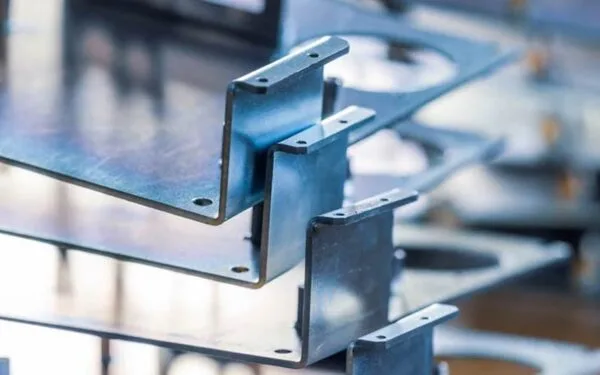
Sheet metal bend refers to the controlled plastic deformation of a flat metal sheet into a specific angular or curved shape without material removal. It is one of the most widely used metal forming processes in industrial production.
In practical applications, sheet metal bend operations are performed using press brakes, hydraulic bending machines, or CNC-controlled forming systems. The process is essential for producing structural components, housings, brackets, and mechanical assemblies.
Industrially, sheet metal bending is valued because it:
- Preserves material integrity
- Reduces manufacturing waste
- Enables mass production consistency
- Supports complex geometric design
Engineering Principles Behind Sheet Metal Bend Techniques
Plastic Deformation Behavior
Plastic deformation occurs when a material is stressed beyond its elastic limit, causing permanent shape change.
In sheet metal bending, this is the core physical principle that allows flat sheets to retain new shapes after force removal.
Modern engineering design uses stress-strain curves to calculate deformation thresholds for different metals.
Neutral Axis Positioning Theory
During bending, the metal sheet experiences both compression (inner radius) and tension (outer radius). Between these two zones lies the neutral axis, where stress is theoretically zero.
Accurate prediction of neutral axis shift is critical for calculating bend allowance and final part dimensions.
Springback Compensation Mechanism
Springback refers to the partial return of material toward its original shape after bending force is removed.
Typical springback values:
- Mild steel: 1°–3°
- Stainless steel: 3°–6°
- Aluminum alloys: 2°–5°
Modern CNC systems compensate automatically by over-bending based on material databases.
Main Sheet Metal Bend Techniques in Industry
Air Bending Technique
Air bending is the most flexible and widely used sheet metal bend method. In this process, the punch presses the sheet into a die without fully bottoming out.
Key characteristics:
- Low force requirement
- High angle flexibility
- Tool versatility
It is commonly used in mass production environments where multiple angles are required using the same tooling set.
Bottoming Technique
Bottoming involves pressing the sheet fully into the die cavity, creating a more precise and repeatable angle.
Advantages include:
- Higher dimensional accuracy
- Reduced springback
- Better consistency in batch production
However, it requires higher tonnage and more rigid tooling systems.
Coining Technique
Coining is the most precise but also the most force-intensive sheet metal bend method.
It applies extreme pressure to permanently deform the material surface, eliminating springback almost entirely.
Typical applications include:
- Aerospace components
- Precision electronic housings
- High-tolerance mechanical parts
Tool wear is significantly higher due to extreme pressure levels.
Sheet Metal Bend Techniques Comparison (Engineering Perspective)
| Technique | Precision Level | Force Requirement | Springback Control | Tool Life | Industrial Use |
|---|---|---|---|---|---|
| Air Bending | Medium | Low | Moderate | High | General fabrication |
| Bottoming | High | Medium | Low | Medium | Precision parts |
| Coining | Very High | Very High | Minimal | Low | Aerospace / precision engineering |
| Roll Bending | Medium | Continuous | Low | High | Cylindrical structures |
Machines Used in Sheet Metal Bend Processes
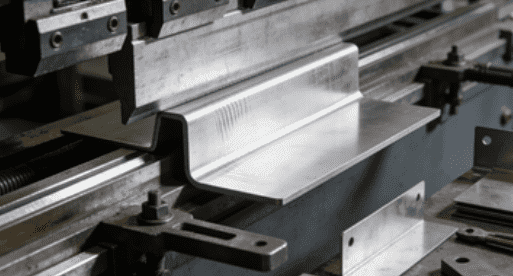
CNC Press Brake Systems
CNC press brakes dominate modern sheet metal bend production lines.
Technical capabilities include:
- Multi-axis control (up to 8-axis systems)
- Real-time angle correction
- Automatic tool positioning
- Digital twin simulation
Modern systems can achieve ±0.1° bending accuracy under controlled conditions.
Hydraulic Press Brake Machines
Hydraulic systems provide stable force distribution and are widely used in medium-to-heavy fabrication industries.
Operating pressure often ranges between 20–35 MPa depending on machine capacity.
Servo-Electric Press Systems
Servo-driven machines offer:
- Energy savings up to 30%
- Faster cycle times
- High repeatability
They are increasingly used in precision sheet metal bending factories.
Material Behavior in Sheet Metal Bend
Carbon Steel Sheets
Carbon steel is widely used due to its balance of strength and ductility.
Typical yield strength ranges:
- Mild steel: 250–350 MPa
- High-strength steel: 600–980 MPa
Higher strength requires increased bending force.
Aluminum Alloys
Aluminum is lightweight and highly formable.
It is widely used in:
- Aerospace
- Automotive lightweight structures
However, it has higher springback compared to steel.
Stainless Steel
Stainless steel offers corrosion resistance but is more difficult to bend due to work hardening.
It requires:
- Higher tonnage
- Larger bend radius
- Precision tooling
Sheet Metal Bend vs Sheet Metal Forming
Conceptual Difference
Sheet metal bending is a linear deformation process focused on angular shaping.
Sheet metal forming includes:
- Deep drawing
- Stretch forming
- Embossing
Industrial Usage Difference
Bending is used for:
- Brackets
- Frames
- Panels
Forming is used for:
- Complex shells
- Automotive body parts
- Curved housings
Cost Efficiency Comparison
Bending is generally 30–50% more cost-efficient than full forming processes for simple geometries.
Industrial Applications of Sheet Metal Bend Techniques
Automotive Manufacturing
Used extensively in:
- Door frames
- Chassis components
- Structural reinforcements
Automotive plants often rely on fully automated sheet metal bend lines for high-volume production.
Construction Industry
Applications include:
- HVAC ducting
- Roofing systems
- Structural brackets
Construction-grade bending prioritizes durability over micro-precision.
Electronics and Appliance Industry
Used for:
- Control panel enclosures
- Refrigerator shells
- Server cabinets
Focus is on appearance quality and dimensional consistency.
Sheet Metal Bend Quality Standards and Compliance
ISO 2768 Tolerance Standard
Defines general machining tolerances for linear and angular dimensions.
Typical angular tolerance: ±1° to ±2°
DIN 6935 Standard
Specifies bending radius requirements and forming behavior for steel sheets.
ASTM Engineering Guidelines
Provide material-specific bending data including minimum bend radius recommendations.
Example:
- Mild steel: minimum radius = material thickness
- Stainless steel: 1.5–2x thickness
- Aluminum: 1–2x thickness
Real Industrial Case Studies
Case Study 1: Automotive Plant (Germany)
A European automotive manufacturer implemented CNC sheet metal bend automation.
Results:
- 22% reduction in production cycle time
- 18% decrease in material waste
- Improved angle accuracy consistency
Case Study 2: HVAC Manufacturing (USA)
HVAC duct production optimized bending processes using servo-electric press brakes.
Outcome:
- Energy consumption reduced by 28%
- Output capacity increased by 35%
Case Study 3: Industrial Cabinet Production (Asia)
Switching from manual to CNC bending improved defect rate from 6% to under 1.5%.
Common Defects in Sheet Metal Bend
Cracking at Bend Line
Occurs when bend radius is too small for material ductility.
Springback Deviation
Angle deviation after unloading force.
Wrinkling
Caused by compressive instability in thin sheets.
Surface Marking
Often caused by poor tooling finish or incorrect die selection.
Sheet Metal Bend Process Optimization
Bend Allowance Calculation
Accurate bend allowance improves dimensional precision.
Tool Selection Strategy
Proper punch and die selection reduces defect rate significantly.
CNC Programming Optimization
Digital simulation reduces trial-and-error setup time.
Conclusion
Sheet metal bend techniques form the backbone of modern manufacturing, enabling efficient, precise, and scalable metal part production across industries. Understanding the differences between air bending, bottoming, and coining—as well as material behavior, machine capabilities, and international standards—allows manufacturers to significantly improve product quality and reduce production costs.
As automation continues to advance, CNC-controlled sheet metal bend systems are becoming the global standard, pushing the industry toward higher precision, lower waste, and smarter production workflows.
FAQ
What is sheet metal bending used for?
It is used to create angular or structural metal components in manufacturing industries.
What is the most accurate sheet metal bend method?
Coining offers the highest precision but requires the most force.
Why does sheet metal spring back after bending?
Because of elastic recovery after stress removal.
What machines are used for sheet metal bending?
CNC press brakes, hydraulic presses, and servo-electric bending systems.
What is the minimum bend radius?
It depends on material type, typically 1–2 times material thickness.
Is sheet metal bending expensive?
It is generally cost-efficient compared to other metal forming methods.