¡bienvenidos a Mi Blog!
¡estoy encantado de tenerte aquí! Antes de sumergirnos en el contenido, me encantaría que te unieras a mí en mis plataformas de redes sociales. Es donde comparto ideas adicionales, me conecto con nuestra increíble comunidad y te mantengo actualizado sobre las últimas noticias. Así es como puedes mantenerte conectado:
📘 Facebook: Lina Metal
¡Ahora embarquémonos juntos en este viaje! Espero que el contenido aquí no sólo te resulte revelador sino también inspirador y valioso. ¡Empezemos!
Tabla de contenidos
Introducción
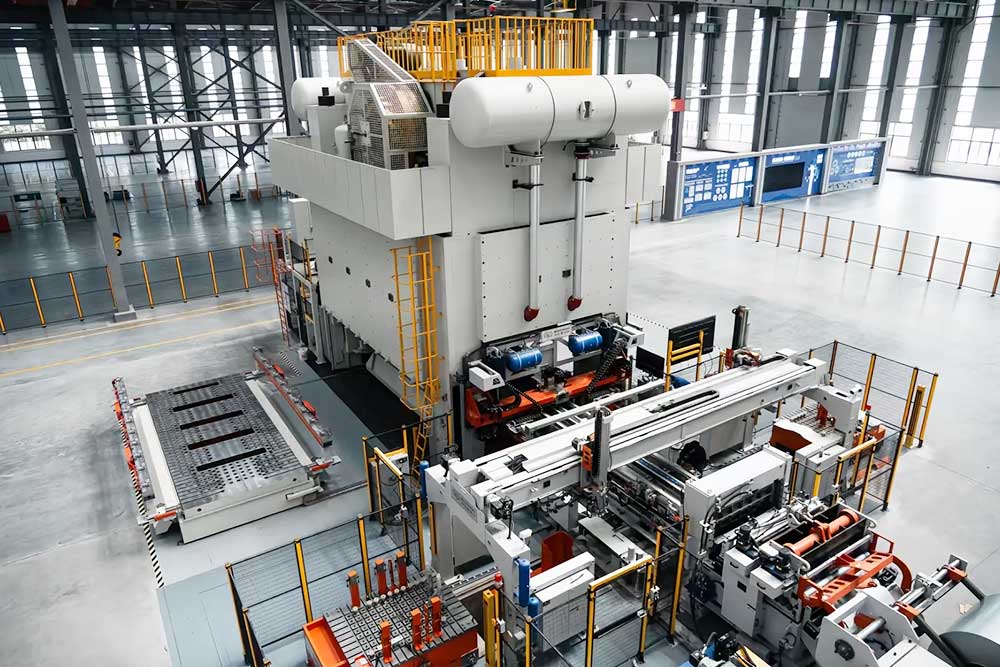
En el competitivo entorno de fabricación actual, lograr una alta precisión y una calidad constante en piezas metálicas ya no es un lujo, sino un requisito. Ya sea que se produzcan componentes de automoción, piezas aeroespaciales, dispositivos médicos o maquinaria industrial, masterización mecanizado metalúrgico las técnicas pueden reducir significativamente los costos, mejorar la vida útil del producto y aumentar la eficiencia de la producción.
Según informes de la industria, las empresas que implementan las mejores prácticas modernas de mecanizado de metales pueden reducir las tasas de chatarra hasta en 30% y mejorar el rendimiento del mecanizado en más de 25% dentro del primer año de optimización. Con la creciente demanda de piezas personalizadas y de alta tolerancia, comprender estos consejos y conceptos es esencial para maquinistas, ingenieros y gerentes de producción.
Esta guía completa explora metodologías, ejemplos del mundo real, consejos de optimización de procesos, errores comunes, consideraciones de materiales y estrategias de toma de decisiones para el mecanizado de metales moderno.
Conclusiones clave de este artículo
- Aprenda las técnicas esenciales de mecanizado de metales utilizadas en la industria
- Comprender los materiales y su impacto en el rendimiento del mecanizado
- Compare las soluciones de mecanizado de metalurgia tradicionales y modernas
- Descubra recomendaciones de seguridad y eficiencia
- Explore datos y estudios de casos del mundo real
- Responda preguntas frecuentes comunes tanto para principiantes como para profesionales
Procesos de mecanizado de metales
Mecanizado metalúrgico es una disciplina amplia que abarca una variedad de técnicas de eliminación de materiales. Los más comunes incluyen:
Girando
El torneado es un proceso en el que una pieza de trabajo gira mientras una herramienta de corte se mueve a lo largo de su superficie para eliminar material. Las aplicaciones típicas incluyen ejes, pasadores y componentes cilíndricos.
Características clave:
- Excelente para piezas rotacionales
- Puede alcanzar tolerancias estrictas (±0,01 mm)
- Frecuentemente utilizado con tornos
Caso industrial: en la producción de cigüeñales para automóviles, las operaciones de giro a menudo alcanzan tiempos de ciclo inferiores 10 minutos por pieza con tornos CNC manteniendo el acabado superficial debajo Ra 0,8 μm.
Fresado
El fresado utiliza una o más herramientas de corte giratorias para eliminar material de una pieza de trabajo. Es especialmente eficaz para superficies planas, ranuras y geometrías complejas.
Características clave:
- Altamente versátil
- Funciona sobre piezas prismáticas
- Ideal tanto para prototipo como para mecanizado de producción
Ejemplo: Los componentes estructurales aeroespaciales a menudo requieren fresado de 3 o 5 ejes para lograr características complejas y mantener la integridad estructural.
Perforación y roscado
La perforación produce agujeros utilizando brocas rotativas, mientras que el golpe corta las roscas dentro de esos orificios para pernos y tornillos.
Caso de uso: En los componentes del sistema de frenos de ferrocarril, las operaciones de perforación y roscado se secuencian para mantener la tolerancia de alineación dentro de ±0,02 mm.
Guía para el mecanizado de metales de materiales específicos
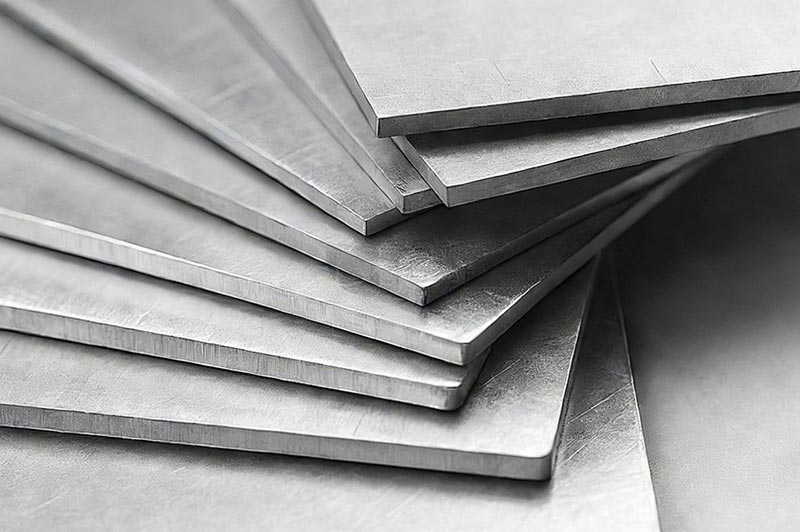
Los materiales dictan la elección de herramientas, velocidades de corte, métodos de lubricación y acabado superficial esperado. A continuación se muestran comparaciones clave para materiales comunes:
Aluminio
Características:
- Peso ligero
- Buena conductividad térmica
- Fácil de mecanizar
Mejores prácticas:
- Mayores velocidades de corte (hasta 500 m/min)
- Herramientas de carburo con revestimientos pulidos
- Refrigerante contra inundaciones para evitar la soldadura por virutas
Acero
Características:
- Fuerte y duradero
- Endurecedores durante el mecanizado
- Requiere herramientas más robustas
Mejores prácticas:
- Velocidades de corte más bajas (60-180 m/min)
- Uso de insertos recubiertos de carburo o cerámica
- Velocidades de alimentación controladas para reducir la vibración
Aceros Inoxidables
Características:
- Resistente a la corrosión
- Tendencia al endurecimiento por trabajo
- Desafiante para la máquina
Mejores prácticas:
- Velocidades moderadas con alimentación alta
- Fijación rígida para reducir la vibración
- Refrigerante de alta presión para limpiar las virutas
Ejemplo de caso « Mecanizado de metalurgia de titanio
Las piezas de titanio (utilizadas en el sector aeroespacial) son notoriamente difíciles de mecanizar debido a su baja conductividad térmica. Las mejores prácticas incluyen:
- Uso de herramientas rígidas y afiladas
- Tiempo de participación de herramientas minimizado
- Enfriamiento criogénico en algunos centros de mecanizado avanzados
Comparación de mecanizado de metales tradicional y moderno
| Característica | Mecanizado Tradicional | Mecanizado CNC moderno |
|---|---|---|
| Precisión | Mediu (±0,05 mm) | Alto (±0,005 mm) |
| Repetibilidad | Moderado | Excelente |
| Velocidad | Más lento | Más rápido |
| Flexibilidad | Limitado | Altamente flexible |
| Automatización | Manual | Controlado por computadora |
| Dependencia Laboral | Alto | Inferior |
3.1 Cuándo utilizar el mecanizado tradicional
- Tiradas por lotes pequeños
- Proyectos de bajo presupuesto
- Geometrías simples
El mecanizado tradicional todavía juega un papel vital en las operaciones de mantenimiento, creación de prototipos y ajustes manuales especializados.
3.2 Cuándo utilizar el mecanizado CNC
- Producción de gran volumen
- Requisitos de tolerancia estricta
- Geometrías de partes complejas
Los centros de mecanizado CNC permiten trayectorias de herramientas automatizadas, corrección de errores en tiempo real e integración con sistemas CAD/CAM para obtener resultados optimizados.
Selección de herramientas y equipos
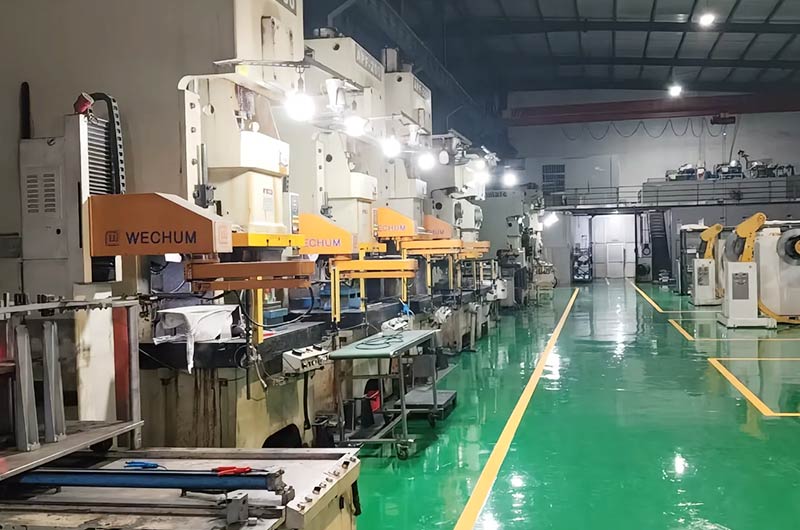
Elegir las herramientas y el equipo adecuados es una de las decisiones más impactantes en el mecanizado de metales. A continuación se presentan consideraciones esenciales:
Herramientas de corte
- Acero de alta velocidad (HSS): bueno para perforación y roscado básicos
- Carburo: Lo mejor para fresado y torneado de alta velocidad
- Cerámica/PCD/CBN: Ideal para materiales duros y acabados de precisión
Recubrimientos de herramientas
Los recubrimientos comunes incluyen:
- TiN (nitrură de titan): Mejora la resistencia al desgaste
- TiAlN (nitruro de titanio y aluminio): Lo mejor para aplicaciones de alta temperatura
- Recubrimientos tipo diamante: Se utiliza para materiales abrasivos como compuestos
Máquinas herramienta
Los centros de mecanizado modernos suelen integrarse:
- Control multieje (3 ejes, 4 ejes, 5 ejes)
- Cambiadores automáticos de herramientas
- Sistemas de retroalimentación de alta precisión
Control de Procesos y Garantía de Calidad
Lograr precisión en el mecanizado de metales depende en gran medida de los sistemas de medición y retroalimentación:
5.1 Equipos de Metrología
Las herramientas comunes utilizadas incluyen:
- Pinzas y micrómetros
- Máquinas de medición de coordenadas (CMM)
- Probadores de rugosidad superficial
5.2 Control Estadístico de Procesos (SPC)
SPC ayuda a monitorear mediciones clave y reducir la variación. Un gráfico SPC típico rastrea las dimensiones de las piezas a lo largo del tiempo para garantizar la estabilidad.
5.3 Estudio de caso « Reducción de chatarra en la producción
Un taller de mecanizado que producía engranajes personalizados implementó SPC y redujo la chatarra 28% en un plazo de tres meses, ajustando las tarifas de alimentación y los intervalos de inspección.
Protocolos de seguridad en el mecanizado de metalurgia
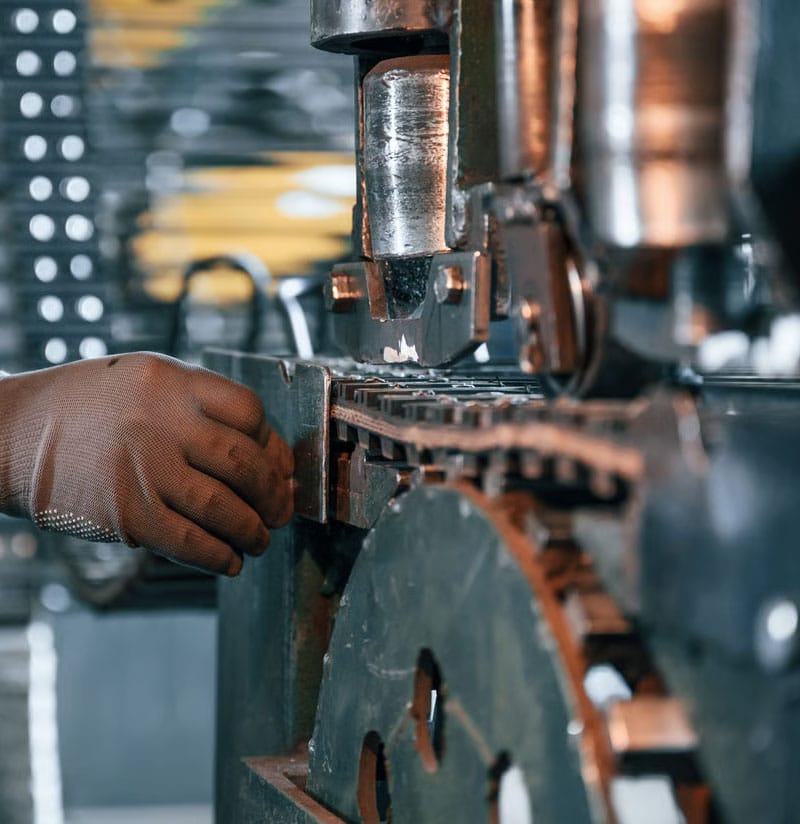
Las prácticas de seguridad adecuadas protegen a los trabajadores y evitan costosos tiempos de inactividad.
6.1 Equipos de Protección Personal (EPI)
Ppe esențial include:
- Gafas de seguridad
- Guantes resistentes a cortes
- Protección auditiva
6.2 Protección de máquinas
Asegúrese de que todas las protecciones estén instaladas y entrelazadas correctamente. La protección evita el contacto accidental con las piezas móviles.
6.3 Gestión de chips
Las virutas calientes y afiladas pueden provocar lesiones. El uso de transportadores de virutas, refrigerante de alta presión y una limpieza regular reduce los peligros.
Errores comunes y cómo solucionarlos
Incluso los profesionales experimentados enfrentan desafíos. A continuación se muestran errores frecuentes con las soluciones:
Error 1: Mala selección de herramientas
Soluție: Haga coincidir el material de la herramienta y la geometría con la pieza de trabajo. Por ejemplo, utilice herramientas CBN para aceros endurecidos.
Error 2: ignorar la calibración de la máquina
Soluție: Calibre ejes y husillos con regularidad para mantener la precisión.
Error 3: Parámetros de mecanizado incorrectos
Soluție: Haga referencia a gráficos de datos de corte y ajuste velocidades/alimentaciones según las propiedades del material.
Glosario « Términos clave para el mecanizado de metales
- Rata de pisiu: La distancia que avanza una herramienta por revolución o por minuto
- Velocidad de corte: Velocidad superficial entre herramienta y pieza de trabajo, normalmente en m/min
- Tolerancia: Variación permitida en la dimensión parcial
- Acabado de superficie: Textura de la superficie mecanizada, a menudo medida como Ra
Conclusión
Dominar mecanizado metalúrgico es esencial para producir componentes metálicos de precisión y alta calidad en todas las industrias. Al comprender el comportamiento de los materiales, las estrategias de herramientas, los controles de procesos y los protocolos de seguridad, los fabricantes pueden lograr un mejor rendimiento, costos reducidos y una mayor competitividad. Ya sea que sea un principiante o un profesional experimentado, el aprendizaje continuo y la mejora de procesos mantendrán sus operaciones a la vanguardia del mecanizado de metales moderno.
Preguntas frecuentes
¿Cuál es la mejor manera de empezar a aprender mecanizado metalúrgico?
Comience con máquinas herramienta básicas (torno y molino), comprenda los fundamentos del corte y practique con materiales más blandos como el aluminio antes de pasar a aceros más duros.
¿cómo elijo entre fresado y torneado?
Utilice fresado para superficies planas, ranuras y formas complejas; El torneado es mejor para piezas cilíndricas simétricas.
¿Es necesaria la automatización para los pequeños comercios?
La automatización ayuda a mejorar la repetibilidad y reducir los errores, pero los talleres pequeños pueden equilibrar el costo y la complejidad combinando operaciones manuales y CNC.
¿cómo reduzco el desgaste de herramientas en el mecanizado de metales?
Utilice recubrimientos adecuados, refrigerante adecuado y parámetros de corte correctos alineados con las propiedades del material.