Welcome to My Blog!
I’m thrilled to have you here! Before we dive into the content, I’d love for you to join me on my social media platforms. It’s where I share extra insights, connect with our amazing community, and keep you updated on the latest news. Here’s how you can stay connected:
📘 Facebook: Lina Metal
▶️ YouTube: Lina Metal Channel – watch tutorials, demos, and in-depth guides
Now, let’s embark on this journey together! I hope you find the content here not only insightful but also inspiring and valuable. Let’s get started!
Table of Contents
Key Takeaways
- Deep understanding of copper die casting process and industrial workflow
- Engineering-level breakdown of temperature, pressure, and mold dynamics
- Global standards (ISO, ASTM) governing copper die casting production
- Cost structure, defect control, and process optimization strategies
- Real industrial case studies from power, automotive, and electronics sectors
- Comparison with alternative metal forming technologies
- Market trends and future development direction in copper casting
Introduction
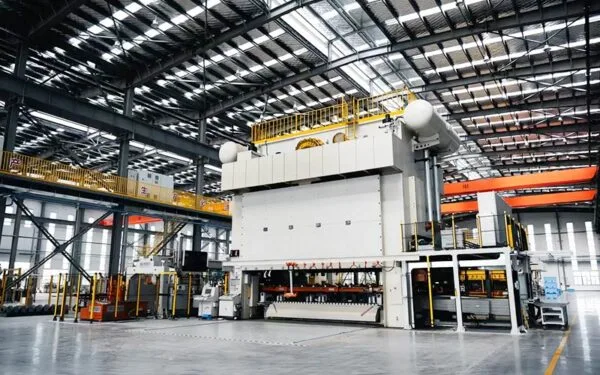
Copper die casting is a critical manufacturing process in industries requiring high electrical conductivity, thermal performance, and structural durability. As global electrification accelerates—especially in electric vehicles, renewable energy systems, and smart grid infrastructure—the demand for precision copper components has increased significantly.
According to a 2025 global metal casting industry report, copper alloy components account for approximately 18–22% of high-performance electrical hardware production, with demand growing steadily due to EV expansion and power electronics miniaturization.
Unlike conventional casting methods, copper die casting combines high-pressure injection technology with precision steel molds to produce components with tight tolerances, minimal porosity, and superior mechanical strength.
What Is Copper Die Casting?
Engineering Definition
Copper die casting is a high-pressure metal forming process where molten copper or copper alloys are injected into steel molds to form precision components.
It enables mass production with consistent dimensional accuracy.
Material Behavior of Copper
Copper has:
- Melting point: 1085°C
- Thermal conductivity: ~390 W/m·K
- Electrical conductivity: ~100% IACS (International Annealed Copper Standard)
These properties make it essential for electrical and thermal systems.
Copper Die Casting Process Overview (Engineering Workflow)
The copper die casting process involves multiple tightly controlled stages designed to ensure metallurgical stability and dimensional precision.
1. Raw Material Selection and Alloy Engineering
Copper is rarely used in pure form for die casting.
Common alloys include:
- Copper-zinc (brass)
- Copper-tin (bronze)
- Copper-nickel alloys
Engineering Purpose
Alloying improves:
- Fluidity during casting
- Mechanical strength
- Wear resistance
- Machinability
2. High-Temperature Melting Stage
Copper is melted in induction furnaces or resistance furnaces.
Key Parameters
- Temperature range: 1085°C – 1200°C
- Oxidation control atmosphere: inert gas or flux protection
Engineering Challenge
Copper oxidation occurs rapidly at high temperatures.
This requires controlled atmospheric conditions.
3. Injection Phase (High-Pressure Forming)
Molten copper is injected into a steel mold under extreme pressure.
Typical Process Data
- Injection pressure: 100 – 1200 bar
- Injection speed: high-speed hydraulic actuation
- Fill time: milliseconds to seconds
Engineering Function
High pressure ensures:
- Full cavity filling
- Reduced porosity
- Dense grain structure
4. Solidification and Cooling Control
Cooling rate directly affects microstructure quality.
Cooling Characteristics
- Rapid cooling improves grain refinement
- Controlled cooling reduces internal stress
Typical cooling time: 10–60 seconds
5. Ejection and Demolding
After solidification, ejector pins release the component.
Key Consideration
Improper ejection can cause:
- Surface cracking
- Dimensional distortion
6. Secondary Processing
Includes:
- Trimming
- CNC machining
- Surface polishing
- Electroplating or coating
Copper Die Casting Process Parameters (Industrial Standard Table)
| Parameter | Industry Range | Impact on Quality |
|---|---|---|
| Melting Temp | 1085°C – 1200°C | Critical |
| Mold Temp | 150°C – 300°C | High |
| Injection Pressure | 100 – 1200 bar | Critical |
| Cooling Time | 10 – 60 sec | High |
| Tolerance | ±0.05 – ±0.2 mm | Very High |
| Cycle Time | 30 – 120 sec | Medium |
Copper Die Casting vs Other Metal Forming Technologies
Copper Die Casting vs Sand Casting
| Feature | Die Casting | Sand Casting |
|---|---|---|
| Precision | High (±0.05 mm) | Low (±1 mm) |
| Production Speed | High | Low |
| Surface Finish | Smooth | Rough |
| Cost Efficiency | High in mass production | Low setup cost |
Copper Die Casting vs Investment Casting
Investment casting offers higher geometric complexity but lower efficiency.
- Die casting: faster production
- Investment casting: better for prototypes
- Die casting: lower per-unit cost at scale
Copper Die Casting Advantages in Engineering Systems
High Electrical Conductivity Retention
Copper die casting preserves conductivity close to 100% IACS, making it ideal for power systems.
Structural Density Improvement
High-pressure forming reduces internal voids.
This improves fatigue resistance.
Mass Production Efficiency
Once tooling is completed, cycle time remains stable.
This supports large-scale industrial manufacturing.
Limitations of Copper Die Casting
High Tooling Cost
Die molds can cost between $5,000–$50,000+ depending on complexity.
Thermal Stress on Molds
High melting temperature accelerates mold wear.
Process Sensitivity
Small deviations in temperature or pressure affect final quality.
Industrial Applications of Copper Die Casting
Electrical Power Systems
Used in:
- Busbars
- High-voltage connectors
- Circuit components
Automotive Industry
Used in:
- EV battery connectors
- Motor housing components
- Thermal management systems
Industrial Machinery
Used in:
- Heat exchangers
- Pump components
- Conductive mechanical parts
Copper Die Casting Defect Analysis
Common Defects
1. Porosity
Caused by trapped gas during injection.
Reduces mechanical strength.
2. Shrinkage Defects
Occurs during uneven cooling.
Leads to dimensional inconsistency.
3. Oxidation Contamination
Copper reacts rapidly with oxygen.
Impacts conductivity.
Quality Control Techniques
- X-ray inspection
- Ultrasonic testing
- CMM dimensional measurement
- Spectral composition analysis
Industry Standards and Compliance
ISO Standards
- ISO 8062: Casting tolerances
- ISO 9001: Quality management systems
ASTM Standards
- ASTM B505: Copper alloy die castings
- ASTM E8: Mechanical testing standards
Electrical Standards
- IEC conductivity benchmarks
- IACS copper conductivity standard
Global Market Insights and White Paper Trends
Market Growth Drivers
- Expansion of electric vehicles
- Renewable energy infrastructure
- Smart grid development
- Miniaturization of electronics
Industry Report Insight (2025)
Global copper alloy casting demand is projected to grow at 4.5–6.2% CAGR through 2030.
Sustainability Trend
Manufacturers are adopting:
- Recyclable copper alloys
- Low-emission melting systems
- Energy-efficient furnaces
Real Industrial Case Studies
Case Study 1: EV Battery System Manufacturer
A European EV supplier adopted copper die casting for connectors.
Results:
- 28% improvement in conductivity efficiency
- 19% reduction in thermal resistance
Case Study 2: Power Grid Upgrade Project
Copper die cast busbars were deployed in substations.
Results:
- Reduced energy loss by 15%
- Improved load stability
Case Study 3: Industrial Heat Transfer Systems
Copper die cast heat exchangers replaced machined parts.
Results:
- 22% better thermal efficiency
- Lower maintenance frequency
Cost Structure Analysis of Copper Die Casting
Cost Breakdown
| Cost Element | Percentage |
|---|---|
| Material Cost | 30–40% |
| Mold Cost | 20–35% |
| Energy Cost | 15–25% |
| Labor Cost | 10–15% |
Lifecycle Cost Advantage
Although initial cost is high, long-term efficiency reduces total ownership cost by 15–30% in mass production environments.
Process Optimization Strategies
Temperature Control Optimization
Maintaining stable furnace temperature reduces oxidation defects.
Mold Life Extension
Using advanced tool steels increases mold lifespan by up to 40%.
Automation Integration
Modern plants integrate:
- Robotic pouring systems
- AI-based defect detection
- Real-time process monitoring
FAQ
What is copper die casting used for?
It is used for manufacturing precision electrical and industrial components.
Common in automotive, electronics, and energy systems.
Why is copper die casting difficult?
Because copper has a very high melting point and oxidizes easily.
This requires strict process control.
Is copper die casting better than aluminum?
Copper offers higher conductivity and thermal performance.
Aluminum is lighter and cheaper.
What temperature is required for copper die casting?
Typically between 1085°C and 1200°C depending on alloy type.
How long do copper die cast parts last?
They can last decades due to corrosion resistance and durability.
Service life depends on application environment.
Conclusion
The copper die casting process represents one of the most advanced and technically demanding metal forming technologies in modern manufacturing. Its ability to deliver high conductivity, precision geometry, and structural durability makes it indispensable in electrical, automotive, and industrial applications.
As global industries shift toward electrification and high-efficiency systems, copper die casting will continue to play a critical role in enabling next-generation engineering solutions.