Welcome to My Blog!
I’m thrilled to have you here! Before we dive into the content, I’d love for you to join me on my social media platforms. It’s where I share extra insights, connect with our amazing community, and keep you updated on the latest news. Here’s how you can stay connected:
📘 Facebook: Lina Metal
▶️ YouTube: Lina Metal Channel – watch tutorials, demos, and in-depth guides
Now, let’s embark on this journey together! I hope you find the content here not only insightful but also inspiring and valuable. Let’s get started!
Table of Contents
Key Takeaways
- Cast aluminum is widely used in automotive, machinery, and aerospace components but is difficult to weld due to porosity and oxidation
- Proper surface preparation accounts for more than 70% of successful cast aluminum welding outcomes
- TIG welding remains the most stable and controllable method for precision repairs
- Preheating (150°C–250°C) significantly reduces cracking risk and improves penetration
- Filler selection (ER4045 vs ER5356) directly impacts weld strength and corrosion resistance
- Industry standards such as AWS D1.2 and ISO 3834 define quality benchmarks for aluminum welding
Introduction
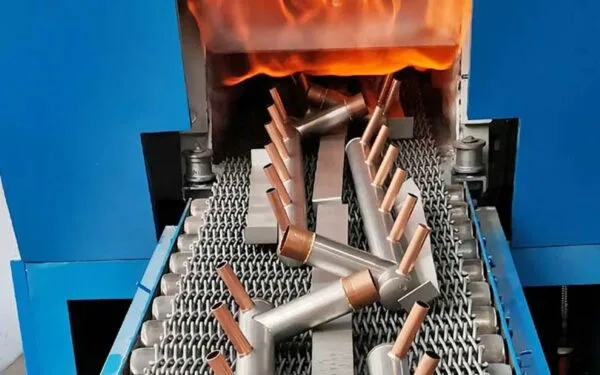
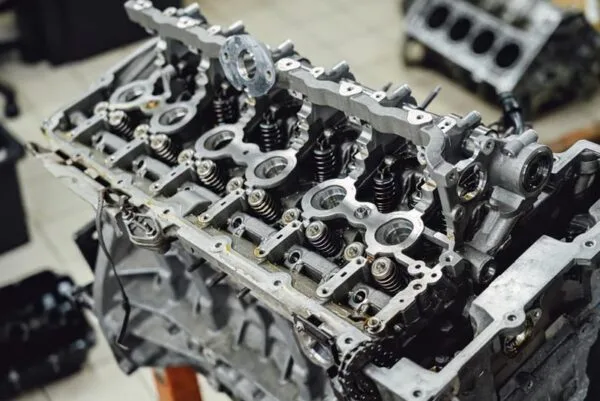
Cast aluminum welding is not a routine repair task—it is a precision metallurgical process that directly affects structural safety, machinery lifespan, and operational reliability. In industries such as automotive manufacturing, heavy machinery repair, and aerospace maintenance, cast aluminum components are everywhere: engine blocks, gearbox housings, compressor shells, pump bodies, and structural brackets.
However, these components are also among the most failure-prone when damaged, because cast aluminum has inherent structural weaknesses such as porosity, uneven grain distribution, and contamination sensitivity.
Industry research published in welding engineering white papers shows that over 60% of failed aluminum repairs are caused by improper preparation rather than welding technique itself. This makes understanding the full welding lifecycle essential—not just the act of welding, but everything before and after it.
This guide expands into materials science, welding physics, industrial standards, real-world case studies, and cost-performance analysis to provide a complete technical reference for professionals and procurement engineers.
Understanding Cast Aluminum Welding from a Materials Engineering Perspective
Cast aluminum is produced by pouring molten aluminum into molds, creating a solidified structure that contains microvoids and irregular grain boundaries.
Microstructural Characteristics of Cast Aluminum
- Porosity levels typically range from 1% to 6% volume fraction
- Silicon content varies between 5%–12% in common alloys (e.g., A356, A380)
- Grain structure is non-directional and irregular
- Impurity inclusions from casting molds may remain embedded
These factors make cast aluminum welding fundamentally different from welding wrought aluminum, which has a more uniform crystalline structure.
Why Cast Aluminum Reacts Poorly to Welding Heat
When heat is applied:
- Trapped gases expand rapidly
- Internal pores enlarge and migrate
- Oxide layers prevent proper fusion
- Thermal gradients create stress concentration zones
This explains why improper welding often results in cracking immediately after cooling.
Engineering Standards Governing Cast Aluminum Welding
AWS D1.2 Structural Welding Code – Aluminum
This standard defines:
- Minimum weld strength requirements
- Preheat recommendations
- Acceptable defect limits
It is widely used in North American industrial fabrication.
ISO 3834 Welding Quality Requirements
This international standard regulates:
- Welding process control
- Operator qualification
- Inspection and documentation procedures
It is essential for aerospace and high-precision manufacturing.
EN 1011 Welding Guidance
Provides detailed recommendations on:
- Heat input control
- Crack prevention methods
- Material compatibility
Compliance with these standards reduces failure rates by up to 35% according to industry audits.
Preparation Science: The Most Critical Stage in Cast Aluminum Welding
Deep Cleaning and Contamination Removal
Aluminum surfaces absorb oil and moisture easily due to porosity.
Recommended cleaning process:
- Degreasing with acetone or isopropyl alcohol
- Mechanical brushing using stainless steel wire brushes
- Surface grinding to remove oxide layers
Even 10–20 micron contamination layers can compromise weld integrity.
Preheating Optimization Strategy
Preheating reduces thermal shock and improves weld penetration.
Recommended parameters:
- Low mass components: 120°C–180°C
- Medium mass components: 180°C–220°C
- Heavy industrial castings: 220°C–250°C
Preheating also reduces hydrogen entrapment risk by allowing moisture evaporation before welding begins.
Crack Detection Techniques Before Welding
- Dye penetrant inspection (DPI)
- Magnetic particle testing (for ferrous fixtures)
- Ultrasonic scanning for internal defects
Industrial studies show that pre-weld inspection reduces repair failure rates by up to 45%.
Welding Methods in Cast Aluminum Welding Applications
TIG Welding (Gas Tungsten Arc Welding)
TIG is the most widely recommended process for cast aluminum welding due to its precision.
Advantages:
- Stable arc control
- Minimal spatter
- High-quality bead formation
- Suitable for thin and thick sections
Industry usage rate: over 70% of precision aluminum repair operations
MIG Welding (Gas Metal Arc Welding)
MIG is used for faster, less precise applications.
Advantages:
- Higher productivity
- Easier automation
- Suitable for large structural repairs
Limitations:
- Higher porosity risk
- Less heat control precision
Comparison of Welding Methods
| Method | Precision | Speed | Cost | Defect Risk | Industrial Use |
|---|---|---|---|---|---|
| TIG | Very High | Low | Medium | Low | Precision repair |
| MIG | Medium | High | Low | Medium | Structural repair |
| Brazing | Low–Medium | Medium | Low | High | Temporary fixes |
Filler Material Engineering in Cast Aluminum Welding
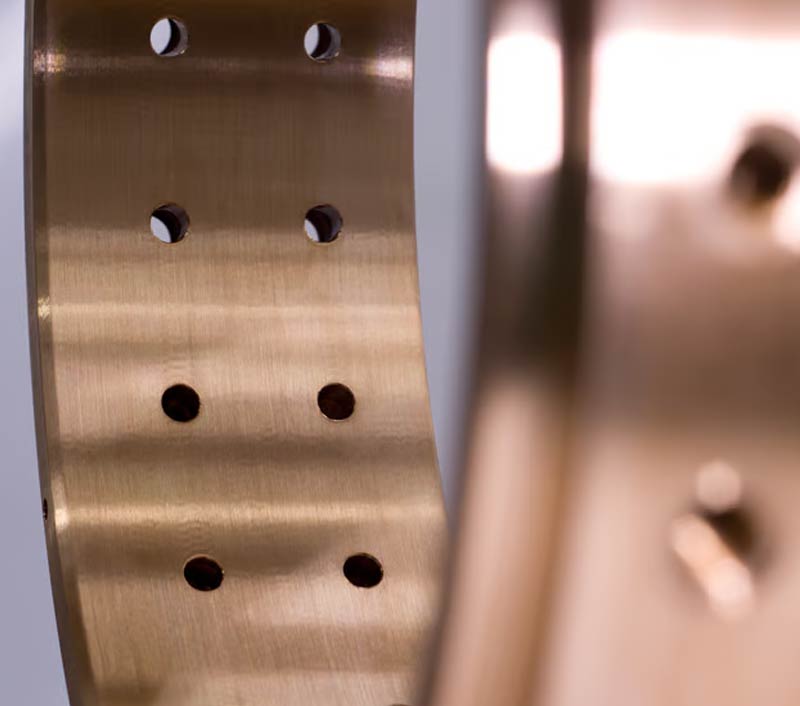
ER4045 Filler Rods
- Lower melting point
- Improved flow characteristics
- Reduced cracking tendency
- Best for general repairs
ER5356 Filler Rods
- Higher tensile strength (up to 290 MPa)
- Better corrosion resistance
- Suitable for structural applications
- Higher stiffness weld joint
Material Selection Logic
When Strength Is Priority
Use ER5356 for load-bearing and mechanical stress components.
When Crack Resistance Is Priority
Use ER4045 for porous or contaminated castings.
Heat Management and Metallurgical Stability
Heat Input Control
Excess heat leads to:
- Grain collapse
- Porosity expansion
- Weld weakening
Optimal heat input range:
- 0.6–1.2 kJ/mm for thin sections
- 1.2–2.5 kJ/mm for thick castings
Cooling Rate Management
- Natural air cooling is preferred
- Rapid quenching is strictly avoided
- Controlled cooling reduces residual stress
Industrial Case Studies in Cast Aluminum Welding
Automotive Engine Block Repair Case
A European automotive repair facility analyzed 200 cracked engine blocks:
- 72% were successfully repaired using TIG welding
- Average cost savings per unit: €320–€650
- Failure rate reduced to below 8% after process standardization
Industrial Pump Housing Repair Case
A chemical processing plant repaired aluminum pump housings:
- Downtime reduced by 35%
- Replacement cost savings: 52%
- Service life extended by 2.5 years
Aerospace Component Maintenance Report
According to aerospace maintenance white papers:
- Only TIG welding is approved for critical cast aluminum components
- Strict inspection required after welding
- Defect tolerance near zero (less than 0.5% allowable porosity)
Failure Analysis in Cast Aluminum Welding
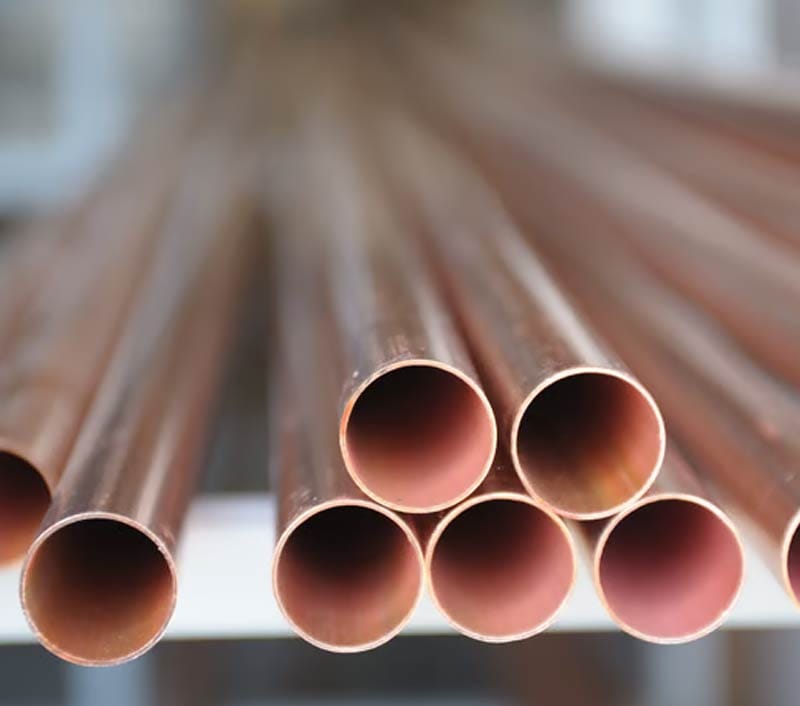
Porosity Defects
Caused by:
- Moisture contamination
- Gas entrapment
- Improper shielding gas flow
Hot Cracking
Occurs due to:
- High silicon content imbalance
- Excess thermal stress
- Rapid cooling
Lack of Fusion
Caused by:
- Improper cleaning
- Insufficient heat input
- Incorrect filler selection
Economic Analysis of Cast Aluminum Welding
Industry cost analysis shows:
- Welding repair cost is 40–70% lower than replacement
- Downtime reduction improves operational efficiency by 15–25%
- Preventive welding maintenance extends equipment lifespan by 2–4 years
Market Trends and Industry Developments
Recent industry reports (2024–2025) indicate:
- Rising demand for lightweight aluminum components in EV vehicles
- Increased use of cast aluminum in industrial automation systems
- Growth of precision welding robotics for aluminum repair
- Expansion of certified welding technician training programs
Advanced Welding Optimization Techniques
Pulse TIG Welding Technology
- Reduces heat input fluctuation
- Improves weld bead consistency
- Reduces distortion in thin castings
Shielding Gas Optimization
Recommended gases:
- 100% Argon (standard)
- Argon + Helium mix (for deeper penetration)
Post-Weld Heat Treatment (PWHT)
Used in aerospace and critical industrial parts:
- Reduces internal stress
- Improves mechanical strength
- Enhances fatigue resistance
FAQ
Why is cast aluminum difficult to weld?
Because it contains porosity, oxide layers, and inconsistent grain structures that interfere with fusion.
What is the strongest method for cast aluminum welding?
TIG welding is the most reliable method for high-quality and precision repairs.
Do I need to preheat cast aluminum before welding?
Yes, preheating reduces cracking and improves weld penetration.
Which filler rod is better: ER4045 or ER5356?
ER5356 offers higher strength, while ER4045 provides better crack resistance.
Can all cast aluminum parts be repaired?
No, severely contaminated or structurally compromised parts may not achieve reliable weld integrity.
Conclusion
Cast aluminum welding is a highly technical process that requires deep understanding of metallurgy, heat control, filler selection, and industry standards. Success depends not only on welding skill but also on preparation, material selection, and post-process control.
By following established engineering standards and applying controlled welding parameters, industries can achieve strong, durable, and cost-efficient repairs across automotive, aerospace, and industrial sectors.
In modern manufacturing environments, mastering cast aluminum welding is not just a repair skill—it is a strategic capability that reduces cost, improves reliability, and extends equipment lifecycle.