Welcome to My Blog!
I’m thrilled to have you here! Before we dive into the content, I’d love for you to join me on my social media platforms. It’s where I share extra insights, connect with our amazing community, and keep you updated on the latest news. Here’s how you can stay connected:
📘 Facebook: Lina Metal
▶️ YouTube: Lina Metal Channel – watch tutorials, demos, and in-depth guides
Now, let’s embark on this journey together! I hope you find the content here not only insightful but also inspiring and valuable. Let’s get started!
Table of Contents
Introduction
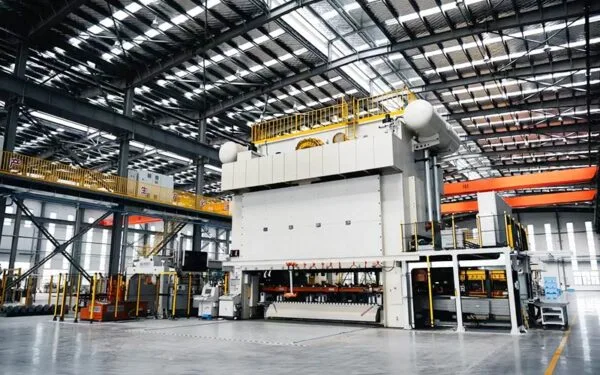
Short run metal stamping is often the missing link between prototype manufacturing and full-scale production.
A company may already have a validated product concept but still be uncertain about final demand, assembly performance, material choice, dimensional stability, or downstream market acceptance. Ordering thousands of parts immediately can create unnecessary inventory and tooling risk, while producing every component through CNC machining or manual fabrication may become inefficient once quantities begin to rise.
That is where short run metal stamping becomes valuable.
Instead of viewing stamping only as a high-volume manufacturing process, OEM buyers can use low-volume and short-run production strategically to validate real metal parts, support pilot builds, supply replacement components, launch niche products, or bridge the period before high-volume tooling becomes economically justified.
Lina Metalworks provides metal stamping services alongside sheet metal fabrication, machining, casting, forging, brazing, and other metalworking processes, allowing a project to move between manufacturing methods as its design and production volume develop.
Key takeaways:
- Short run metal stamping is especially useful for pilot production, product launches, aftermarket parts, design validation, and demand uncertainty.
- The best process depends on quantity, geometry, material, tolerance, tooling complexity, and future production plans rather than quantity alone.
- Aluminum, carbon steel, stainless steel, and copper each behave differently during stamping and should be evaluated before tooling is finalized.
- Low-volume tooling can reduce initial manufacturing commitment while still providing repeatable parts.
- A good short-run project should be designed with future scalability in mind so that production can later transition to progressive or automated stamping.
- CNC machining, laser cutting, bending, and stamping can often be combined within one OEM manufacturing program.
What Is Short Run Metal Stamping?
Short run metal stamping is the production of a relatively limited quantity of stamped metal components using presses, dies, punches, and forming tools selected for lower-volume manufacturing requirements.
The fundamental process is the same as conventional metal stamping: sheet or coil material is shaped, cut, bent, punched, drawn, embossed, or flanged through controlled interaction between tooling and a press.
The difference is mainly in production strategy.
Short Run vs High-Volume Stamping
High-volume stamping usually focuses on maximizing production speed and minimizing unit processing time across very large quantities. This often justifies complex progressive dies, automated feeding systems, dedicated tooling, and highly optimized production lines.
Short run metal stamping places more emphasis on flexibility.
Tooling may be simpler, production may involve fewer automated stages, and secondary operations may be used when they are more economical than building additional tooling.
The goal is not simply to produce fewer parts. The goal is to achieve an appropriate balance between tooling investment, repeatability, production speed, and design flexibility.
Where Prototype Metal Stamping Ends
Prototype sheet metal parts are often made through laser cutting, CNC punching, bending, machining, or other flexible processes.
Once a buyer needs repeated parts that must closely represent the intended production design, short run metal stamping can provide a more realistic manufacturing environment.
This is especially important when formed features, ribs, flanges, punched holes, drawn sections, or repeated bends influence how the finished component performs.
When Does Short Run Metal Stamping Make Sense?
There is no universal quantity at which a project automatically becomes suitable for short run stamping.
Production volume matters, but geometry, tooling complexity and future demand matter just as much.
A part with a simple blanking and bending operation may justify stamping at a much lower volume than a complicated deep-drawn component requiring several forming stages.
For OEM buyers, the following decision framework is more useful.
| Production Situation | Short Run Stamping Suitability | Why |
|---|---|---|
| Prototype validation | Good | Produces parts closer to future production conditions |
| Pilot production | Excellent | Supports assembly and market testing |
| Low annual demand | Good | Avoids overcommitting to high-volume tooling |
| Replacement or spare parts | Excellent | Useful when repeatability is required but quantities are limited |
| New product launch | Excellent | Reduces inventory risk before demand becomes predictable |
| Frequently changing design | Moderate | Works if tooling can remain simple and adaptable |
| Stable high-volume production | Limited as a long-term strategy | Progressive stamping may eventually become more efficient |
| Highly complex one-off component | Often limited | CNC machining or custom sheet metal fabrication may provide more flexibility |
A useful way to think about short run metal stamping is therefore not “How few parts can be stamped?” but “At what point does repeatable forming become more valuable than completely flexible fabrication?”
Why Short Run Metal Stamping Can Beat High-Volume Tooling
Lower Commitment During Product Development
High-volume tooling works best when the product design and demand forecast are already stable.
During development, however, buyers may still change mounting holes, material thickness, bend geometry, enclosure dimensions or assembly interfaces.
Committing to highly sophisticated tooling too early can make later revisions difficult.
Short run metal stamping provides an intermediate manufacturing stage in which engineers can evaluate production-style parts without immediately designing the entire process around maximum output.
Better Control of Inventory Risk
A new product may perform well technically but sell more slowly than forecast.
Short-run production allows companies to manufacture in controlled batches and replenish inventory according to actual demand.
This is particularly useful for industrial equipment, electrical products, custom machinery, specialty hardware and other markets where annual demand may be meaningful but far below consumer-product volumes.
Production-Representative Parts
A CNC-machined prototype can verify dimensions, but it may not always replicate the characteristics of a formed sheet metal part.
Stamping can help evaluate hole location, flange behavior, springback, edge conditions, formed ribs and assembly interfaces using the intended production material.
This makes short run metal stamping useful before a design is transferred into automated high-volume manufacturing.
Easier Transition to Scaled Manufacturing
Good low-volume tooling should not be designed in isolation.
Engineers should consider whether the part may later move toward automated feeding, compound dies, transfer dies or progressive stamping.
Planning for future production during the short-run stage can reduce redesign work when quantities increase.
Choosing Materials for Short Run Metal Stamping
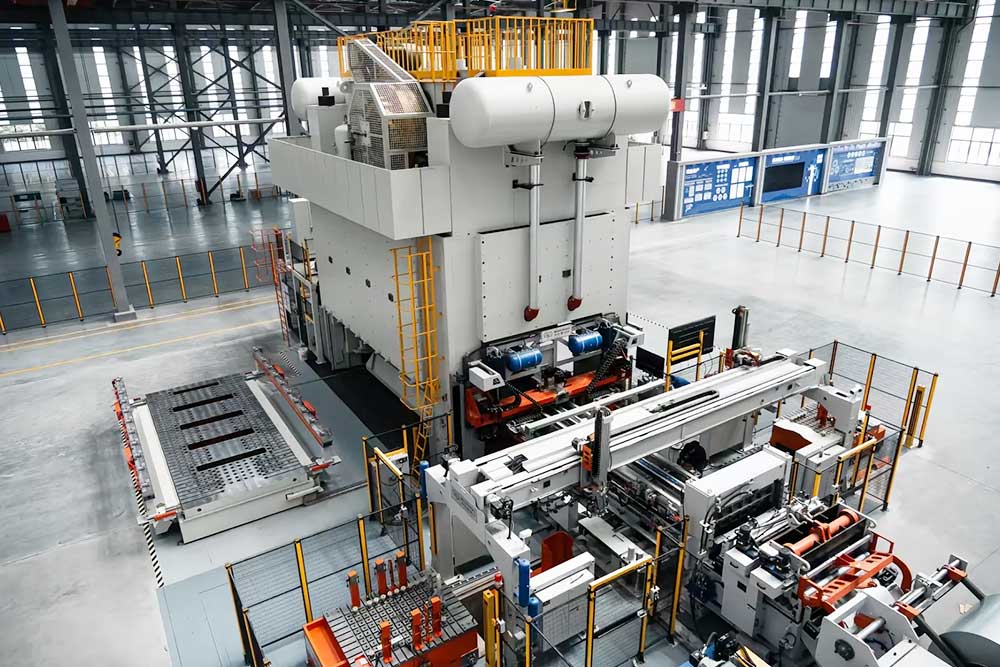
Material selection affects forming behavior, part strength, corrosion resistance, weight, electrical performance, tooling wear and secondary finishing.
Lina Metalworks processes aluminum, stainless steel, carbon steel, copper and other engineering metals across its metal materials capabilities.
Carbon Steel
Low-carbon steel is widely suited to stamped brackets, plates, supports, clips, structural components and industrial hardware.
Its combination of formability, strength and broad availability makes it a practical starting point for many short run metal stamping projects.
If the component will operate outdoors or in a corrosive environment, surface protection such as galvanizing, plating, painting or powder coating may also need to be considered.
Stainless Steel
Stainless steel is frequently selected where corrosion resistance, durability, cleanliness or appearance matters.
Applications may include equipment panels, medical components, outdoor hardware and industrial enclosures.
Because different stainless steel grades have different forming characteristics, material grade and temper should be discussed before tooling is produced.
Lina Metalworks’ Medical Devices product range is one example of an industry where stamped and fabricated stainless steel structural parts can be relevant.
Aluminum
Aluminum metal stamping is attractive for applications requiring lower weight and good corrosion resistance.
It is commonly considered for electronics, electrical enclosures, transportation components and lightweight industrial structures.
However, aluminum alloy selection matters. An alloy optimized for strength may behave differently during bending or forming than one selected primarily for formability.
Copper
Copper offers excellent electrical and thermal conductivity and can be used for terminals, contacts, connectors, busbar-related parts and electrical components.
Lina Metalworks’ Copper Flexible Connector solutions demonstrate how copper components can combine stamping with joining and finishing operations for electrical applications.
Short Run Metal Stamping Tooling Strategies
Tooling has one of the largest influences on whether a short-run project is economically sensible.
Simple Single-Operation Tooling
A straightforward part may require only blanking, punching or one forming step.
For this type of component, dedicated tooling can remain relatively simple while still providing much better repeatability than fully manual fabrication.
This approach is particularly suitable for brackets, clips, plates, washers, retainers and uncomplicated structural parts.
Multi-Stage Tooling
More complex components may require several separate forming operations.
Instead of immediately combining every operation into one expensive progressive die, manufacturers can use a sequence of simpler tools.
The tradeoff is additional handling, but the lower initial tooling complexity can make sense when production volumes remain modest.
Progressive Tooling for Growing Demand
When demand becomes stable and production volume increases, progressive tooling can become attractive.
In a progressive die, metal strip moves through multiple stations, with each station completing part of the operation until the final component is separated.
This production method is particularly valuable where a design remains stable and large numbers of repeatable components are required.
The important point for buyers is that short run metal stamping and progressive stamping do not need to be competing strategies. The short-run process can become the first stage of a planned manufacturing scale-up.
Short Run Metal Stamping vs CNC Machining
Not every low-volume metal component should be stamped.
CNC machining remains especially valuable for thick parts, complex three-dimensional geometry, extremely flexible prototype development, precision surfaces and features that are difficult to form from sheet material.
Lina Metalworks’ Machining services include milling, turning, drilling, grinding and other precision operations that can also support secondary processing after stamping.
| Factor | Short Run Metal Stamping | CNC Machining |
| Typical starting material | Sheet or coil metal | Bar, plate, block, casting or forging |
| Repeatability | High after tooling is established | High with programmed machining |
| Design changes | Moderate flexibility | High flexibility |
| Thin formed parts | Excellent | Usually inefficient |
| Deep 3D machined features | Limited | Excellent |
| Need for dedicated tooling | Usually yes | Usually lower |
| Scalability | Very strong | Moderate depending on cycle time |
| Material removal | Low for efficient layouts | Can be significant |
| Best use | Repetitive sheet metal components | Precision or complex machined components |
Many successful OEM projects use both methods.
A stamped blank may later require CNC drilling, tapping, milling or finishing to create features that are difficult or inefficient to incorporate into the stamping tool.
Short Run Stamping vs Custom Sheet Metal Fabrication
Another important comparison is between stamping and flexible fabrication.
Laser cutting followed by bending can be highly efficient for early prototypes and low quantities because no dedicated stamping die may be required.
However, as quantities grow, repeated cutting and bending operations can accumulate production time.
Short run metal stamping begins to make more sense when the geometry becomes stable and the same forming sequence must be reproduced consistently.
For a deeper explanation of flexible fabrication methods, Lina Metalworks’ Custom Sheet Metal Fabrication: Complete OEM Buyer’s Guide for 2026 explains material selection, cutting, forming, welding, surface treatment and design considerations in greater detail.
This internal relationship is important for buyers: the best manufacturing supplier should not force every drawing into one process. The method should follow the part.
Applications for Short Run Metal Stamping
Electrical Equipment
Electrical systems contain many components that can involve stamping, including mounting plates, brackets, clips, covers, terminals, ventilation features and enclosure parts.
For example, Lina Metalworks’ Transformer Control Cabinet solutions integrate stamped and sheet metal structures into larger electrical assemblies.
During new cabinet development, controlled production batches can help manufacturers verify hole patterns, component mounting, enclosure assembly and structural geometry before larger production quantities are released.
Electric Power Components
Power transmission and distribution equipment frequently uses stamped, bent, forged or welded metal fittings.
The company’s Electric Power Fittings category includes components used for connection, fixation and protection in electrical systems.
Short-run manufacturing can be useful when a fitting is developed for a particular installation condition, cable configuration or customer specification before standardized demand is established.
Automation Equipment
Machine builders frequently require customized covers, brackets, mounting plates, guides, clips and structural metal components.
Lina Metalworks’ Automated Equipment applications combine metal stamping and sheet metal structural parts with electromechanical systems.
Because non-standard automation equipment often changes from project to project, flexible production strategies can help reduce unnecessary tooling complexity.
Medical Equipment
Medical and rehabilitation equipment may require enclosures, brackets, supports, panels and other formed metal parts with consistent dimensions and controlled surface quality.
Short run metal stamping can support specialized equipment programs where quantities are lower than mainstream consumer products but repeatability remains important.
How to Design Parts for Short Run Metal Stamping
Keep Geometry Production-Friendly
Unnecessary forming operations make tooling more complicated.
Whenever possible, engineers should simplify bend sequences, avoid extremely narrow features and reduce geometry that requires additional dedicated forming stations.
The objective is not to remove useful features but to ensure every feature adds functional value.
Review Hole-to-Edge Distances
Holes positioned too close to an edge or bend can deform during forming.
Design review should therefore consider the entire manufacturing sequence rather than evaluating each feature individually.
Use Realistic Tolerances
One of the most common mistakes in custom metal manufacturing is applying precision tolerances everywhere because a CAD system allows them.
Tighter tolerances may require more accurate tooling, additional inspection, secondary machining or process adjustments.
Dimensions that affect fit, assembly, sealing or function deserve tighter control. Non-critical dimensions should generally use manufacturing-appropriate tolerances.
Consider Material Thickness Early
Changing sheet thickness after tooling has been developed can affect clearances, bending behavior, forming force and final geometry.
Material grade, temper and thickness should therefore be confirmed as early as possible.
The broader sheet metal manufacturing process includes punching, bending, stamping and other forming operations, all of which are influenced by material behavior.
Quality Control in Low-Volume Metal Stamping
Low volume does not mean low quality.
In fact, short-run programs often require careful inspection because the production stage may be validating a design that will later be scaled.
First Article Inspection
The first completed parts should be compared against drawings, critical dimensions and functional requirements before the complete batch is released.
This allows tooling, press parameters or secondary operations to be adjusted while the cost of correction remains manageable.
Material Consistency
Using the correct material grade, thickness and condition helps stabilize forming results across a batch.
Material substitutions should not be made without considering how changes may affect formability, corrosion resistance, strength or surface quality.
In-Process Inspection
Important dimensions can be checked during production rather than waiting until every part is complete.
This is particularly useful for dimensions affected by tool wear, springback or repeated forming operations.
For broader quality-system context, ISO 9001 defines internationally recognized requirements for establishing and continually improving a quality management system.
How Short Run Stamping Supports Future High-Volume Production
A good short-run project should generate manufacturing knowledge.
Engineers can learn how the metal behaves, whether the design forms reliably, where tolerance issues occur, how parts assemble and which tooling features require improvement.
This information becomes valuable when the product enters the next production stage.
Instead of beginning high-volume tooling based entirely on CAD models and assumptions, manufacturers can use real production data collected during low-volume manufacturing.
That can reduce risk when moving toward automated or progressive stamping.
For buyers evaluating stamping quality before scaling, Lina Metalworks’ existing Blog also contains additional content covering OEM metal stamping quality, automotive metal stamping, construction stamping and other metal manufacturing topics.
What Information Should You Send a Metal Stamping Manufacturer?
A useful quotation depends on more than sending a drawing.
Manufacturers need to understand the material, expected quantity, production frequency, tolerance requirements, surface finish, application conditions and future volume expectations.
For example, a buyer expecting 500 parts now but 100,000 parts annually after product approval should communicate that forecast.
The manufacturer can then evaluate whether the initial tool should simply solve the immediate low-volume requirement or whether it should be developed with future production scaling in mind.
Lina Metalworks supports projects from drawing and sample evaluation through tooling development, metal processing and production. Buyers can use the contact page to submit project information for manufacturing review.
Common Mistakes When Sourcing Short Run Metal Stamping
Selecting a Process Only by Quantity
A small order does not automatically mean laser cutting is best, just as a larger order does not automatically require progressive stamping.
Geometry, forming requirements, tolerance and expected future demand can change the answer.
Overengineering the First Tool
Building highly automated tooling before the product has proven stable can create avoidable redesign risk.
Short-run tooling should match the maturity of the project.
Ignoring Future Demand
The opposite mistake is designing low-volume tooling without considering what happens if demand grows rapidly.
An early discussion about expected future production can help engineers make better decisions about part orientation, material feed, feature layout and die structure.
Choosing Material After Tooling
Material behavior is part of the forming process.
Changing from carbon steel to stainless steel, or from one aluminum grade to another, can affect forming results.
The material should therefore be part of the tooling decision, not an afterthought.
Conclusion
Short run metal stamping is most valuable when a project needs greater repeatability than prototype fabrication but is not yet ready for a highly automated high-volume stamping system.
It can support product validation, pilot builds, specialized industrial products, replacement components, electrical hardware, medical equipment and other applications where controlled production quantities are required.
The strongest manufacturing strategy is rarely based on one process alone.
Stamping may be combined with sheet metal fabrication, CNC machining, surface finishing, welding or other secondary operations to create a complete component.
For OEM buyers, the key question is therefore not simply whether stamping is possible. It is whether the selected stamping strategy provides the right balance of tooling commitment, part consistency, production flexibility and future scalability.
By evaluating these factors before tooling begins, manufacturers can use short run metal stamping as an effective bridge from product development to stable commercial production.
FAQ
What is short run metal stamping?
Short run metal stamping is the production of limited or controlled quantities of sheet metal components using stamping presses and tooling. It is commonly used for pilot production, specialty products, replacement parts and projects that have not yet reached stable high-volume demand.
Is short run metal stamping suitable for prototypes?
Yes, especially when the prototype must closely represent the eventual stamped production part. Very early concept prototypes may still be more efficiently produced using laser cutting, bending or CNC machining.
What materials can be used for short run metal stamping?
Common options include carbon steel, stainless steel, aluminum and copper. The appropriate material depends on formability, strength, corrosion resistance, conductivity, weight, surface finish and operating environment.
Is short run metal stamping cheaper than CNC machining?
Neither process is universally cheaper. CNC machining can be more economical when quantities are very low or geometry changes frequently, while stamping can become more efficient when repeated sheet metal forming operations are required. Tooling complexity and total expected production should be evaluated together.
When should I switch from short run stamping to progressive stamping?
The transition usually becomes relevant when the design is stable, demand is predictable and the savings created by faster automated production justify more advanced tooling. The ideal transition point depends on part geometry, material, cycle time and tooling requirements.
Can stamped parts receive secondary machining?
Yes. Stamped parts can undergo drilling, tapping, milling, grinding, welding, brazing, plating, coating and other secondary operations when the finished design requires additional features.
What should I send for a short run metal stamping quote?
A complete drawing or 3D file should be accompanied by material specification, sheet thickness, required quantity, tolerances, surface finish, application information and expected future production volume. Samples can also be useful when an existing component needs to be reproduced or improved.
Can short run stamping later scale into mass production?
Yes. This is one of its most important advantages. When low-volume tooling and part design are planned with scalability in mind, production can later transition toward compound, transfer or progressive stamping as demand increases.