Welcome to My Blog!
I’m thrilled to have you here! Before we dive into the content, I’d love for you to join me on my social media platforms. It’s where I share extra insights, connect with our amazing community, and keep you updated on the latest news. Here’s how you can stay connected:
📘 Facebook: Lina Metal
▶️ YouTube: Lina Metal Channel – watch tutorials, demos, and in-depth guides
Now, let’s embark on this journey together! I hope you find the content here not only insightful but also inspiring and valuable. Let’s get started!
Table of Contents
Introduction
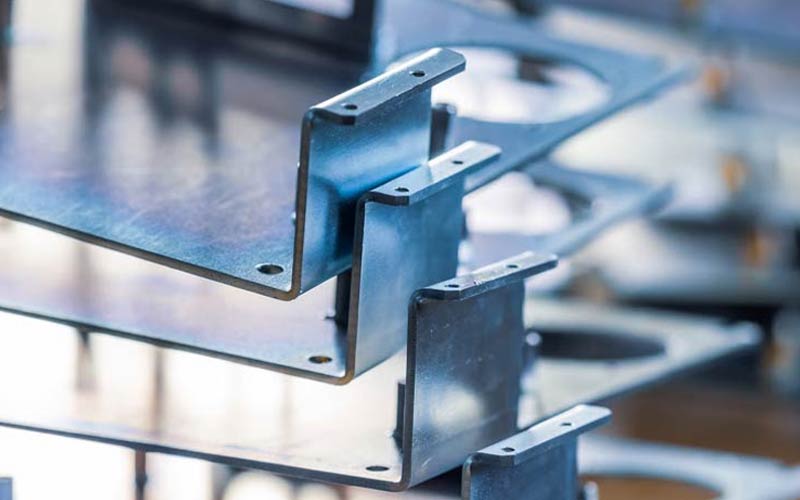
Sheet metal bending is at the heart of modern metal fabrication, driving industries such as automotive, aerospace, construction, and energy. The process involves deforming flat metal sheets into desired angles or curves without removing material. With global manufacturing trends emphasizing precision, efficiency, and material optimization, the right bending method can define product quality, production speed, and operational costs.
Industry surveys indicate that 68% of high-precision metal components rely on either press or roll bending, highlighting its critical role in industrial productivity. Additionally, regulatory standards like ISO 9001:2015 and ASTM E290 ensure that bending operations maintain structural integrity and consistency across production lines.
This guide will provide an in-depth comparison of press bending and roll bending, with insights into material behavior, accuracy, cost analysis, industrial case studies, maintenance strategies, emerging trends, and best practices.
Key Takeaways in This Guide
- Fundamentals of sheet metal bending
- Press bending vs roll bending: advantages, limitations, and ideal applications
- Material and thickness considerations
- Engineering standards and compliance (ISO, ASTM, JIS)
- Cost, efficiency, and production comparisons
- Real-world industry applications and case studies
- Common mistakes and troubleshooting tips
- Future trends and technological innovations in bending
- FAQ addressing practical questions
Understanding Sheet Metal Bending Fundamentals
What Is Sheet Metal Bending?
Sheet metal bending is a forming process in which a sheet is plastically deformed along a straight axis. Unlike cutting or stamping, no material is removed, and the process preserves the structural integrity of the sheet.
Key parameters include:
- Bend angle – the intended degree of bend.
- Material thickness – affects required force and bend radius.
- Tool geometry – determines bend precision and spring back control.
Engineering Concepts in Bending
Neutral Axis Behavior
During bending, the outer fibers stretch while inner fibers compress. The neutral axis remains unchanged and determines the bend allowance, which is essential for accurate fabrication.
Springback Compensation
After the bending force is removed, metal tends to partially return to its original shape. Advanced CNC and robotic bending systems use pre-calculated over-bending to compensate for springback.
Stress Distribution
Different methods produce varied stress patterns: press bending localizes stress at the bend point, while roll bending distributes stress over a larger area, reducing cracking risk in ductile materials.
Press Bending: Methodology and Applications
How Press Bending Works
Press bending, also called press braking, uses a punch and die system. Hydraulic or mechanical presses exert force on a sheet, forcing it into a pre-defined shape.
Applications
- Automotive chassis and brackets
- Appliance panels
- Structural steel components
Advantages of Press Bending
- High precision angular bends (±0.5° tolerance for industrial-grade machines)
- Rapid production cycles for repetitive parts
- Versatility in bend angles and V-die sizes
Limitations
- Limited capability for large-radius curves
- Requires multiple tooling setups for complex geometries
- Higher initial tooling cost
Standards and Guidelines
- ISO 14917:2011 – Bending sheet metal specifications
- ASTM E290 – Bend testing of metals for ductility
Roll Bending: Methodology and Applications
How Roll Bending Works
Roll bending employs three or four rollers to gradually shape metal sheets into curves, cylinders, or cones. Roll positions and pressure are adjustable to control curvature.
Applications
- Pipe and cylinder fabrication
- Large HVAC ducts
- Roof panels and curved structural elements
Advantages of Roll Bending
- Ideal for large-radius bends and cylindrical shapes
- Smooth stress distribution reduces material fatigue
- Efficient for long or wide sheets
Limitations
- Less precise for sharp angles
- Slower setup for small batches
- Skilled operator required for calibration
Standards and Guidelines
- JIS G 3132 – Roll bending tolerances in steel sheets
- EN 1011 – Bending quality guidelines for European fabricators
Press vs Roll Bending: Side-by-Side Comparison
| Feature | Press Bending | Roll Bending |
|---|---|---|
| Shape Type | Angles and folds | Curves and cylinders |
| Precision | High (±0.5°) | Medium (±1.5°) |
| Production Speed | High | Moderate |
| Setup Complexity | Medium | High |
| Material Stress | Localized | Distributed |
| Best Use Case | Structural brackets | Pipes, tanks, curved panels |
Material Considerations in Sheet Metal Bending
Material Type
- Aluminum – flexible, minimal springback, corrosion-resistant
- Stainless Steel – high strength, higher springback, precision tools needed
- Carbon Steel – cost-effective, widely used, moderate springback
Thickness and Bend Radius
- Thin sheets (<2 mm) bend easily but prone to wrinkling
- Thick sheets (>10 mm) require high-force presses or specialized roll bending systems
- Recommended bend radius: 1–2x material thickness for structural integrity
Surface Finish Impact
Surface coatings such as powder coatings or galvanization require adjusted tooling to prevent cracking or scratching during bending.
Industrial Case Studies
Automotive Manufacturing
- Press bending used for chassis brackets and engine mounts
- Roll bending for large exhaust pipes and cylindrical panels
HVAC Industry
- Roll bending used for HVAC ducts in commercial buildings
- Press bending for small connectors and fittings
Construction Industry
- Combination of press and roll bending for roofing panels and curved support beams
Outcome: Companies report 15–20% material savings and 18% faster production cycles using optimized bending workflows.
Cost and Efficiency Analysis
Average Global Cost Estimates
| Component | Press Bending | Roll Bending |
|---|---|---|
| Equipment Investment | $50k–$200k | $80k–$250k |
| Tooling Cost | $2k–$10k | $5k–$15k |
| Labor Intensity | Medium | High (skilled operators) |
| Production Rate | 500–1000 parts/day | 50–200 parts/day |
| Maintenance | Low–Medium | Medium–High |
Common Mistakes in Sheet Metal Bending
- Incorrect bend allowance calculations
- Ignoring springback in setup
- Using wrong die or roller radius
- Overlooking material-specific properties
Emerging Trends and Innovations
CNC and Robotic Bending Systems
Automated presses with servo motors and CNC control improve accuracy, reduce operator error, and optimize production for mixed batch runs.
AI and Simulation Tools
Advanced software predicts springback, stress distribution, and optimal bend sequences, reducing trial-and-error setup.
Hybrid Press-Roll Systems
Integrated systems allow precision angle bends and large-radius curves in a single production line.
Sustainability Initiatives
- Minimizing scrap through precision bending
- Recycling metal waste
- Reducing energy consumption with hydraulic press optimization
Conclusion
Understanding the differences between press and roll bending is crucial for modern sheet metal fabrication. While press bending excels in angular precision and mass production, roll bending is essential for large-radius curves and cylindrical forms.
By carefully considering material type, thickness, bend radius, production volume, and compliance with industry standards, manufacturers can maximize efficiency, reduce waste, and deliver high-quality components.
The future of sheet metal bending lies in automation, AI simulation, hybrid systems, and sustainable practices, enabling industries to balance productivity, precision, and cost-effectiveness.
FAQ
What is the main difference between press and roll bending?
Press bending creates precise angles with a punch and die, while roll bending forms smooth curves using rollers.
Which method is more suitable for large cylinders?
Roll bending is ideal due to gradual curvature and distributed stress.
Can a single factory use both methods efficiently?
Yes, integrating both ensures flexibility across varied part geometries.
How do material thickness and type affect bending?
Thicker metals require higher force and larger radii; materials like stainless steel need special tooling to prevent springback issues.
Are there standardized tolerances for sheet metal bending?
Yes, ISO, ASTM, EN, and JIS standards specify tolerances for bend angles, radii, and flatness.