Welcome to My Blog!
I’m thrilled to have you here! Before we dive into the content, I’d love for you to join me on my social media platforms. It’s where I share extra insights, connect with our amazing community, and keep you updated on the latest news. Here’s how you can stay connected:
📘 Facebook: Lina Metal
▶️ YouTube: Lina Metal Channel – watch tutorials, demos, and in-depth guides
Now, let’s embark on this journey together! I hope you find the content here not only insightful but also inspiring and valuable. Let’s get started!
Table of Contents
Introduction
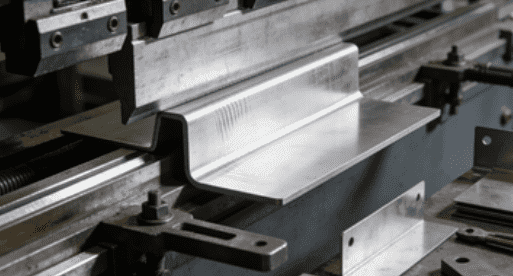
In 2026, sheet metal processing remains a cornerstone of modern manufacturing, powering industries from automotive to aerospace, electronics, and construction. Advanced techniques, automation, and innovative materials have dramatically improved efficiency, precision, and sustainability.
Sheet metal processing is no longer limited to basic cutting and bending; it now encompasses a wide array of technologies, including CNC laser cutting, water jet machining, robotic welding, and smart material handling systems. With global industrial trends leaning toward lightweight, high-strength components, manufacturers are constantly seeking the most effective methods to balance cost, speed, and quality.
According to MarketsandMarkets, the global sheet metal processing market is projected to reach $22.5 billion by 2026, with a compound annual growth rate (CAGR) of 6.5%. Demand is driven by the increasing adoption of electric vehicles, renewable energy infrastructure, and modular construction, all of which require precise, durable sheet metal components.
This comprehensive guide explores top sheet metal processing techniques, materials, automation, cost factors, technical standards, and real-world applications.
Key Concepts in Sheet Metal Processing
What is Sheet Metal Processing?
Sheet metal processing refers to the shaping, cutting, joining, and finishing of metal sheets to create components for industrial and commercial applications. Key metals include steel, stainless steel, aluminum, copper, brass, and titanium. The goal is to transform flat sheets into precise, functional parts with minimal waste and maximum structural integrity.
Objectives of Modern Processing
- Enhance material strength while maintaining precision
- Optimize production efficiency and reduce scrap
- Integrate automation and data-driven quality control
Standard Sheet Metal Thicknesses
| Material | Common Thickness (mm) | Use Cases |
|---|---|---|
| Steel | 0.5 – 12 | Automotive panels, enclosures |
| Aluminum | 0.5 – 6 | Aerospace, HVAC ducts |
| Stainless Steel | 0.8 – 10 | Food processing, industrial |
| Copper | 0.5 – 5 | Electrical, decorative panels |
Cutting Techniques
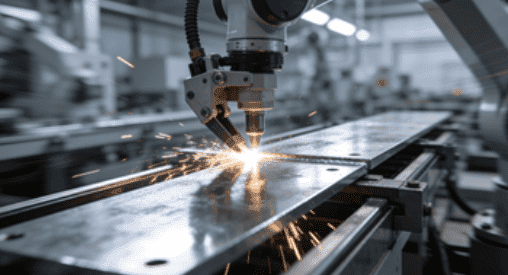
Laser Cutting
Laser cutting employs a high-powered beam of light to precisely cut sheet metal. The process is suitable for intricate patterns, small tolerances, and high-volume production.
Advantages:
- High precision with ±0.1 mm tolerance
- Minimal edge deformation
- Reduced material waste
- Compatible with steel, aluminum, and titanium
Example: BMW’s Munich plant uses fiber laser cutting machines for automotive body panels, achieving production speeds up to 15 meters per minute with zero heat-affected zones.
Water Jet Cutting
Water jet cutting utilizes a high-pressure stream of water mixed with abrasive materials to cut metal sheets. It is ideal for heat-sensitive materials or very thick sheets.
Advantages:
- No heat distortion or thermal stress
- Can cut thicknesses up to 200 mm
- Suitable for aluminum, stainless steel, and composites
Case Study: Airbus uses abrasive water jets for titanium fuselage panels, maintaining ±0.05 mm tolerance, ensuring safety-critical components meet aerospace standards.
Mechanical Shearing
Mechanical shearing involves straight cuts using high-strength blades. It is cost-effective for simple shapes and high-volume production of basic parts.
Comparison Table: Cutting Methods
| Method | Precision | Max Thickness | Cost Efficiency | Best Applications |
|---|---|---|---|---|
| Laser Cutting | High | 25 mm | Medium | Complex parts, automotive |
| Water Jet Cutting | Medium | 200 mm | Low | Thick, heat-sensitive |
| Mechanical Shear | Low | 12 mm | High | Simple straight cuts |
Forming and Bending Techniques
Press Braking
Press braking uses a punch and die to bend sheet metal accurately. Modern CNC press brakes automate angle adjustment and bending sequence to improve efficiency.
Advantages:
- High repeatability
- Handles large sheets
- Adjustable bending angles
Example: Toyota employs press brakes with servo-electric drives to bend chassis components with ±0.2° precision.
Roll Forming
Roll forming continuously bends metal sheets through a series of rollers, producing uniform profiles like channels and roofing panels.
Advantages:
- High-speed production
- Minimal scrap
- Smooth finish for long profiles
News Insight: In 2025, Kingspan Group expanded roll forming operations to produce eco-friendly insulated panels for modular construction in Europe, reducing production waste by 18%.
Stamping and Punching
Stamping involves pressing a die onto a metal sheet to cut or shape it. High-speed progressive stamping allows multiple features in one pass.
Applications: Automotive brackets, electronic enclosures, industrial machinery components
Joining Techniques
Spot Welding
Spot welding creates localized joints by passing high current through overlapping metal sheets. Widely used in automotive and appliance manufacturing.
Advantages:
- Quick, repeatable
- Strong localized weld
- Low material distortion
Riveting
Riveting mechanically fastens sheets without heat, suitable for dissimilar metals or aerospace structures.
Advantages:
- No heat distortion
- Reliable in high-stress environments
- Can join aluminum, steel, and composites
Advanced Sheet Metal Processing Innovations
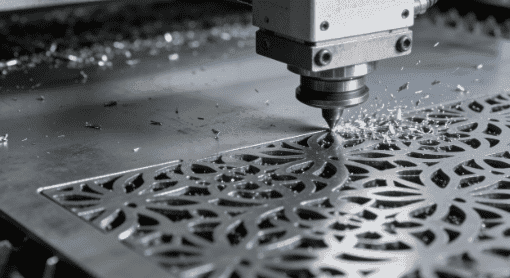
CNC Automation
CNC (Computer Numerical Control) machines provide precise control for cutting, bending, and drilling. Integration with CAD/CAM software ensures parts match exact design specifications.
Robotic Integration
Industrial robots perform spot welding, loading/unloading, and bending, increasing efficiency and worker safety.
Example: Hyundai’s assembly lines use robotic welding cells, achieving 99.8% weld consistency while reducing labor costs by 25%.
IoT and Smart Manufacturing
Sensors monitor force, temperature, and vibration in real-time. Predictive maintenance prevents downtime and ensures consistent quality.
Statistic: According to a 2025 McKinsey report, IoT-enabled sheet metal processing reduces downtime by 20% and scrap by 12%.
Material Considerations
Choosing the Right Metal
- Steel: Durable, cost-effective, ideal for structural applications
- Aluminum: Lightweight, corrosion-resistant, used in aerospace and automotive
- Stainless Steel: Hygienic, corrosion-resistant, used in food processing and medical devices
- Copper: Excellent conductivity, decorative and electrical applications
Material-Machine Compatibility
- Laser cutting steel requires high-power fiber lasers
- Water jet cutting aluminum prevents heat warping
- CNC press brakes for stainless steel ensure accurate bends without cracking
Cost Analysis and Market Trends
Key Cost Factors
- Material type and thickness
- Processing technique selection
- Automation level
- Labor costs and energy consumption
- Waste management and recycling
2026 Market Pricing (USD/m²)
| Material | Laser Cutting | Water Jet Cutting | Mechanical Shear |
|---|---|---|---|
| Stainless Steel | 25–40 | 30–50 | 15–25 |
| Aluminum | 20–35 | 25–45 | 12–20 |
| Steel | 18–30 | 22–40 | 10–18 |
| Copper | 30–50 | 35–60 | 20–35 |
Insight: Although advanced cutting methods like laser or water jet are more expensive upfront, they reduce waste, increase precision, and shorten lead time in high-volume production.
Quality Standards and Certifications
Global Standards for Sheet Metal Processing
- ISO 9001: Quality management systems
- ASTM A480/A480M: Stainless steel sheet specifications
- EN 10130: Cold-rolled low-carbon steel sheets
- AWS D17.1: Aerospace welding standards
- RoHS & REACH Compliance: Environmental safety for chemical use
Adhering to these standards ensures components meet international safety and performance criteria.
Case Studies
Automotive Component Manufacturer
- Implemented fiber laser cutting and robotic welding
- Reduced assembly time by 30%
- Reduced scrap metal by 15%
- Achieved ±0.1 mm tolerance for all critical parts
Aerospace Sheet Metal Fabrication
- Water jet cutting of titanium panels
- No heat-affected zones
- Achieved ±0.05 mm tolerance
- Enhanced flight safety and component reliability
Modular Construction Panels
- Roll-formed steel panels for sustainable buildings
- Reduced production waste by 18%
- Increased panel uniformity and assembly efficiency
Future Trends in Sheet Metal Processing
- Integration of AI for predictive maintenance
- Hybrid cutting technologies combining laser and water jet
- Lightweight materials for EVs and aerospace
- Circular economy approaches with recycled metal sheets
Industry Insight: According to 2025 IndustryWeek, 70% of sheet metal processing companies plan to implement AI-driven quality control systems by 2027.
FAQ
Q1: Which method is best for high-precision parts?
A1: Laser cutting provides the highest precision and is ideal for intricate designs.
Q2: Can water jet cut very thick metal?
A2: Yes, up to 200 mm depending on material and abrasive type.
Q3: How to minimize waste in sheet metal processing?
A3: Use nesting software, automated cutting, and optimize material selection.
Q4: Is CNC bending better than manual press brakes?
A4: CNC ensures repeatability, accuracy, and is ideal for high-volume production.
Q5: What safety precautions are recommended?
A5: Wear protective equipment, maintain clear safety zones, and follow machine manufacturer protocols.
Q6: Are sheet metal processing technologies eco-friendly?
A6: New systems with minimal scrap, energy-efficient lasers, and recycled materials reduce environmental impact.
Conclusion
Sheet metal processing in 2026 combines precision, efficiency, and sustainability. By understanding cutting, forming, and joining methods, integrating automation, and adhering to standards, manufacturers can produce high-quality components for automotive, aerospace, construction, and industrial applications.
Investing in advanced techniques and smart manufacturing ensures competitive advantage, reduced costs, and reliable production. With ongoing innovation, the sheet metal processing industry is poised for continued growth, improved quality, and environmental responsibility.