Welcome to My Blog!
I’m thrilled to have you here! Before we dive into the content, I’d love for you to join me on my social media platforms. It’s where I share extra insights, connect with our amazing community, and keep you updated on the latest news. Here’s how you can stay connected:
📘 Facebook: Lina Metal
Now, let’s embark on this journey together! I hope you find the content here not only insightful but also inspiring and valuable. Let’s get started!
Table of Contents
Introduction
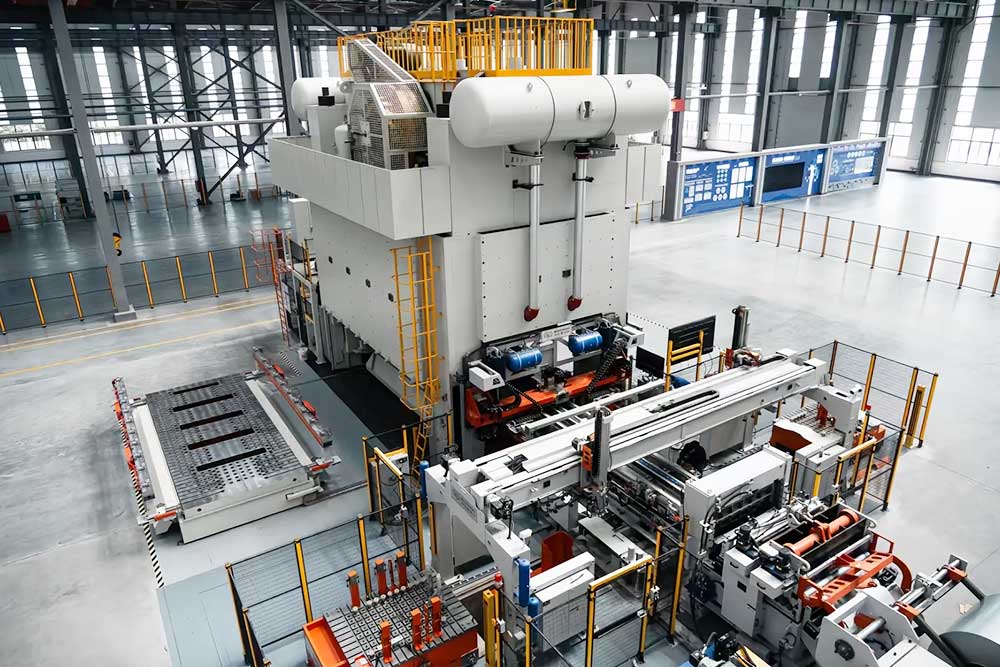
In today’s competitive manufacturing environment, achieving high precision and consistent quality in metal parts is no longer a luxury — it is a requirement. Whether you are producing automotive components, aerospace parts, medical devices, or industrial machinery, mastering machining metalworking techniques can significantly reduce costs, improve product lifespan, and increase production efficiency.
According to industry reports, companies that implement modern machining metalworking best practices can reduce scrap rates by up to 30% and improve machining throughput by more than 25% within the first year of optimization. With growing demand for customized and high-tolerance parts, understanding these tips and concepts is essential for machinists, engineers, and production managers.
This comprehensive guide explores methodologies, real-world examples, process optimization tips, common mistakes, material considerations, and decision-making strategies for modern machining metalworking.
Key Takeaways from This Article
- Learn essential machining metalworking techniques used in industry
- Understand materials and their impact on machining performance
- Compare traditional and modern machining metalworking solutions
- Discover safety and efficiency recommendations
- Explore real-world data and case studies
- Answer common FAQ for both beginners and professionals
Core Machining Metalworking Processes
Machining metalworking is a broad discipline that encompasses a variety of material removal techniques. The most common include:
Turning
Turning is a process in which a workpiece rotates while a cutting tool moves along its surface to remove material. Typical applications include shafts, pins, and cylindrical components.
Key Features:
- Excellent for rotational parts
- Can achieve tight tolerances (±0.01 mm)
- Frequently used with lathes
Industry Case: In automotive crankshaft production, turning operations often achieve cycle times under 10 minutes per piece with CNC lathes while maintaining surface finish below Ra 0.8 μm.
Milling
Milling uses one or more rotating cutting tools to remove material from a workpiece. It’s especially effective for flat surfaces, slots, and complex geometries.
Key Features:
- Highly versatile
- Works on prismatic parts
- Ideal for both prototype and production machining
Example: Aerospace structural components often require 3-axis or 5-axis milling to achieve intricate features and maintain structural integrity.
Drilling and Tapping
Drilling produces holes using rotary drill bits, while tapping cuts threads inside those holes for bolts and screws.
Use Case: In railway brake system components, drilling and tapping operations are sequenced to maintain alignment tolerance within ±0.02 mm.
Material-Specific Machining Metalworking Guidance
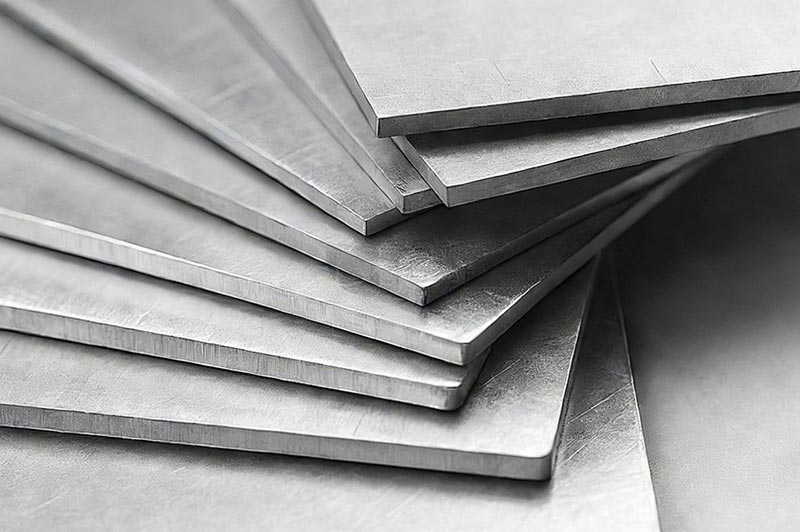
Materials dictate the choice of tools, cutting speeds, lubrication methods, and expected surface finish. Below are key comparisons for common materials:
Aluminum
Characteristics:
- Light weight
- Good thermal conductivity
- Easy to machine
Best Practices:
- Higher cutting speeds (up to 500 m/min)
- Carbide tools with polished coatings
- Flood coolant to prevent chip welding
Steel
Characteristics:
- Strong and durable
- Work-hardens during machining
- Requires more robust tooling
Best Practices:
- Lower cutting speeds (60–180 m/min)
- Use of coated carbide or ceramic inserts
- Controlled feed rates to reduce vibration
Stainless Steels
Characteristics:
- Corrosion-resistant
- Work-hardening tendency
- Challenging to machine
Best Practices:
- Moderate speeds with high feed
- Rigid fixturing to reduce chatter
- High-pressure coolant to clear chips
Case Example — Machining Metalworking of Titanium
Titanium parts (used in aerospace) are notoriously difficult to machine due to low thermal conductivity. Best practices include:
- Use of sharp, rigid tools
- Minimized tool engagement time
- Cryogenic cooling in some advanced machining centers
Traditional vs. Modern Machining Metalworking Comparison
| Feature | Traditional Machining | Modern CNC Machining |
|---|---|---|
| Accuracy | Medium (±0.05 mm) | High (±0.005 mm) |
| Repeatability | Moderate | Excellent |
| Speed | Slower | Faster |
| Flexibility | Limited | Highly Flexible |
| Automation | Manual | Computer-controlled |
| Labor Dependency | High | Lower |
3.1 When to Use Traditional Machining
- Small batch runs
- Low budget projects
- Simple geometries
Traditional machining still plays a vital role in maintenance operations, prototyping, and specialized manual adjustments.
3.2 When to Use CNC Machining
- High-volume production
- Tight tolerance requirements
- Complex part geometries
CNC machining centers allow automated toolpaths, real-time error correction, and integration with CAD/CAM systems for optimized results.
Tooling and Equipment Selection
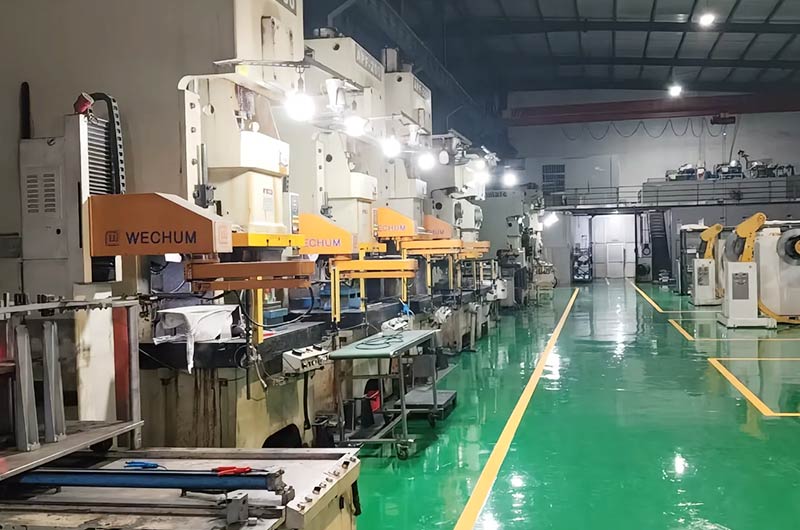
Choosing the right tooling and equipment is one of the most impactful decisions in machining metalworking. Below are essential considerations:
Cutting Tools
- High-speed steel (HSS): Good for basic drilling and threading
- Carbide: Best for high-speed milling and turning
- Ceramic/PCD/CBN: Ideal for hard materials and precision finishes
Tool Coatings
Common coatings include:
- TiN (Titanium Nitride): Improves wear resistance
- TiAlN (Titanium Aluminum Nitride): Best for high-temperature applications
- Diamond-like coatings: Used for abrasive materials like composites
Machine Tools
Modern machining centers often integrate:
- Multi-axis control (3-axis, 4-axis, 5-axis)
- Automatic tool changers
- High-precision feedback systems
Process Control and Quality Assurance
Achieving precision in machining metalworking relies heavily on measurement and feedback systems:
5.1 Metrology Equipment
Common tools used include:
- Calipers and micrometers
- Coordinate Measuring Machines (CMM)
- Surface roughness testers
5.2 Statistical Process Control (SPC)
SPC helps monitor key measurements and reduce variation. A typical SPC chart tracks part dimensions over time to ensure stability.
5.3 Case Study — Reducing Scrap in Production
A machining shop producing custom gears implemented SPC and reduced scrap by 28% within three months by fine-tuning feed rates and inspection intervals.
Safety Protocols in Machining Metalworking
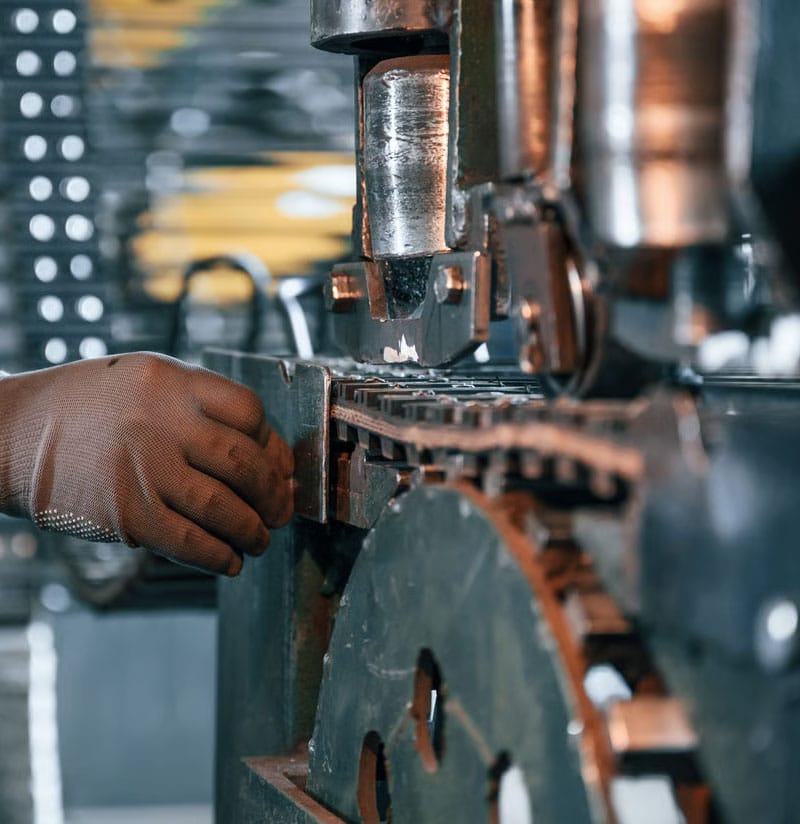
Proper safety practices protect workers and prevent costly downtime.
6.1 Personal Protective Equipment (PPE)
Essential PPE includes:
- Safety glasses
- Gloves resistant to cuts
- Hearing protection
6.2 Machine Guarding
Ensure all guards are properly installed and interlocked. Guarding prevents accidental contact with moving parts.
6.3 Chip Management
Hot, sharp chips can cause injuries. Using chip conveyors, high-pressure coolant, and regular cleaning reduces hazards.
Common Mistakes & How to Fix Them
Even seasoned professionals encounter challenges. Below are frequent mistakes with solutions:
Mistake 1: Poor Tool Selection
Solution: Match the tool material and geometry to the workpiece. For example, use CBN tools for hardened steels.
Mistake 2: Ignoring Machine Calibration
Solution: Calibrate axes and spindles regularly to maintain accuracy.
Mistake 3: Incorrect Machining Parameters
Solution: Reference cutting data charts and adjust speeds/feeds based on material properties.
Glossary — Key Machining Metalworking Terms
- Feed Rate: The distance a tool advances per revolution or per minute
- Cutting Speed: Surface speed between tool and workpiece, usually in m/min
- Tolerance: Permissible variation in part dimension
- Surface Finish: Texture of the machined surface, often measured as Ra
Conclusion
Mastering machining metalworking is essential for producing high-quality, precision metal components across industries. By understanding material behavior, tooling strategies, process controls, and safety protocols, manufacturers can achieve better performance, reduced costs, and improved competitiveness. Whether you are a beginner or seasoned professional, continuous learning and process improvement will keep your operations at the forefront of modern machining metalworking.
FAQ
What is the best way to start learning machining metalworking?
Begin with basic machine tools (lathe and mill), understand cutting fundamentals, and practice with softer materials like aluminum before moving to harder steels.
How do I choose between milling and turning?
Use milling for flat surfaces, slots, and complex shapes; turning is best for symmetric, cylindrical parts.
Is automation necessary for small shops?
Automation helps improve repeatability and reduce errors, but small shops can balance cost and complexity by combining manual and CNC operations.
How do I reduce tool wear in machining metalworking?
Use appropriate coatings, proper coolant, and correct cutting parameters aligned with material properties.