Welcome to My Blog!
I’m thrilled to have you here! Before we dive into the content, I’d love for you to join me on my social media platforms. It’s where I share extra insights, connect with our amazing community, and keep you updated on the latest news. Here’s how you can stay connected:
📘 Facebook: Lina Metal
▶️ YouTube: Lina Metal Channel – watch tutorials, demos, and in-depth guides
Now, let’s embark on this journey together! I hope you find the content here not only insightful but also inspiring and valuable. Let’s get started!
Table of Contents
Blog Key Points
- Understand CNC machining part tolerances and their critical role in manufacturing.
- Learn the differences between linear, geometric, and surface finish tolerances.
- Explore how tolerances impact cost, material selection, and part functionality.
- Discover standards, best practices, and real-world case studies.
- Compare CNC tolerances for metals, plastics, and composites.
- Gain insight into inspection methods, measurement tools, and quality control.
- Answer frequently asked questions on tolerances for engineers, designers, and procurement professionals.
Introduction
In modern manufacturing, precision is not optional—it’s mandatory. Whether you’re producing aerospace components, medical devices, automotive parts, or industrial machinery, CNC machining part tolerances dictate whether components will assemble correctly and function safely.
Even a seemingly small deviation of 0.05 mm can lead to part misalignment, increased wear, or system failure in high-performance applications. According to a 2023 white paper by the International Journal of Precision Engineering, nearly 30% of rejected CNC parts fail due to improper tolerance specifications.
In this guide, we’ll explore everything you need to know about CNC machining part tolerances, including types, measurement methods, standards, cost implications, and practical recommendations for designers and engineers.
What Are CNC Machining Part Tolerances?
Concept of Tolerance in CNC Machining
Tolerance is the permissible deviation from the nominal dimension of a part. No machine or material is perfect, so tolerances define the acceptable range for manufacturing variability.
- Ensures parts fit, function, and last.
- Critical for assemblies where multiple components interact.
- Provides a benchmark for quality control and inspection.
Functional vs Manufacturing Tolerances
- Functional tolerance: Defines the limits for a part to operate properly in an assembly.
- Manufacturing tolerance: Reflects the achievable precision of the machining process. Often influenced by machine type, tooling, and operator skill.
Types of CNC Machining Part Tolerances
Linear Tolerances
Linear tolerances control length, width, height, and diameter dimensions.
- Example: A CNC machined shaft of 50 mm ±0.02 mm ensures it fits into a bearing without excessive play.
- Measured using calipers, micrometers, or CMMs (Coordinate Measuring Machines).
- Common in mechanical assemblies where precise alignment is critical.
Geometric Tolerances
Geometric tolerances control shape, orientation, and positional accuracy rather than size alone.
- Includes flatness, straightness, perpendicularity, concentricity, and parallelism.
- Essential in aerospace, automotive, and robotics industries where precise motion or alignment is necessary.
- Geometric Dimensioning & Tolerancing (GD&T) is the standard language used globally.
Surface Finish Tolerances
Surface finish tolerances define how smooth or rough a part’s surface is, measured in Ra (roughness average) in micrometers or microinches.
- Critical for bearing surfaces, sealing interfaces, and fluid dynamics.
- CNC processes like milling, turning, and grinding can achieve surface roughness as low as Ra 0.2 µm.
How CNC Machining Part Tolerances Affect Cost and Manufacturing
Tight vs Loose Tolerances
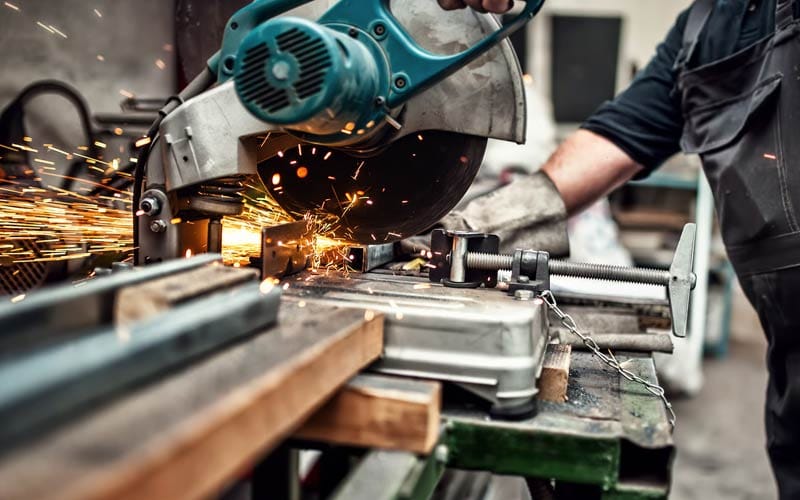
Tolerances impact both manufacturing feasibility and cost:
- Tight tolerances (±0.01 mm): Require high-end CNC machines, frequent inspection, and skilled operators. Suitable for aerospace, medical, and defense applications.
- Loose tolerances (±0.1 mm): Faster production, less expensive, sufficient for non-critical parts like structural brackets.
Material Influence on Tolerances
Material type significantly affects achievable tolerances:
| Material | Typical Linear Tolerance | Surface Finish | Notes |
|---|---|---|---|
| Aluminum | ±0.02 mm | Ra 0.4–0.8 µm | Lightweight, corrosion-resistant, ideal for aerospace |
| Stainless Steel | ±0.01–0.02 mm | Ra 0.2–0.6 µm | Harder material requires precise tool selection |
| Plastic | ±0.05–0.1 mm | Ra 0.8–1.6 µm | Shrinkage and thermal expansion must be considered |
| Carbon Fiber | ±0.05 mm | Ra 0.5–1.0 µm | Requires careful fixturing to prevent warping |
CNC Tolerance Standards and Guidelines
ISO and ASME Standards
- ISO 2768: General tolerances for linear and angular dimensions, widely used internationally.
- ASME Y14.5: Comprehensive standard for geometric dimensioning and tolerancing (GD&T) in the US.
Following these standards ensures:
- Interchangeable parts across suppliers and regions.
- Reduced rework and material waste.
- Compliance with industry regulations for safety-critical applications.
Industry Case Studies
- Aerospace turbines: ±0.01 mm flatness tolerance improves efficiency and reduces vibration.
- Medical implants: Orthopedic implants require ±0.005 mm for perfect fit and safety.
- Automotive gears: Tight concentricity tolerance reduces noise and improves transmission efficiency.
CNC Machining Part Inspection and Measurement
Coordinate Measuring Machines (CMM)
CMMs provide highly accurate 3D measurements of part geometry.
- Useful for verifying linear and geometric tolerances.
- Can detect deviations down to microns.
- Enables reporting for quality documentation and traceability.
Laser Scanning and Optical Methods
- Laser scanning is used for complex geometries or large parts.
- Provides a full 3D model to compare against CAD design.
- Faster than traditional measurement tools for production inspection.
Manual Tools
- Calipers, micrometers, height gauges, and surface roughness testers.
- Suitable for simple dimensions or when CMM access is limited.
Best Practices for Specifying CNC Machining Part Tolerances
Design Recommendations
- Begin with functional requirements, not machine capabilities.
- Apply tight tolerances only where necessary. Over-tightening increases cost.
- Use GD&T to define critical features efficiently.
Collaboration With Manufacturers
- Discuss capabilities and limitations with CNC suppliers.
- Share CAD files with tolerance notes.
- Align inspection methods with production plans.
Material and Tooling Selection
- Choose materials that maintain dimensional stability.
- Use high-quality cutting tools for consistent results.
- Monitor tool wear and machine calibration to maintain tolerances.
Real-World Examples of CNC Machining Part Tolerances
| Component | Material | Linear Tolerance | Geometric Tolerance | Surface Finish | Notes |
|---|---|---|---|---|---|
| Gear housing | Aluminum | ±0.02 mm | Flatness 0.01 mm | Ra 0.4 µm | Aerospace application |
| Hydraulic pump | Stainless Steel | ±0.015 mm | Perpendicularity 0.01 mm | Ra 0.2 µm | High-pressure system |
| Medical implant | Titanium | ±0.005 mm | Concentricity 0.002 mm | Ra 0.1 µm | Surgical precision |
| Plastic bracket | ABS | ±0.05 mm | Straightness 0.03 mm | Ra 1.0 µm | Structural non-critical |
CNC Machining Part Tolerances: Advanced Concepts
Thermal Expansion and Shrinkage
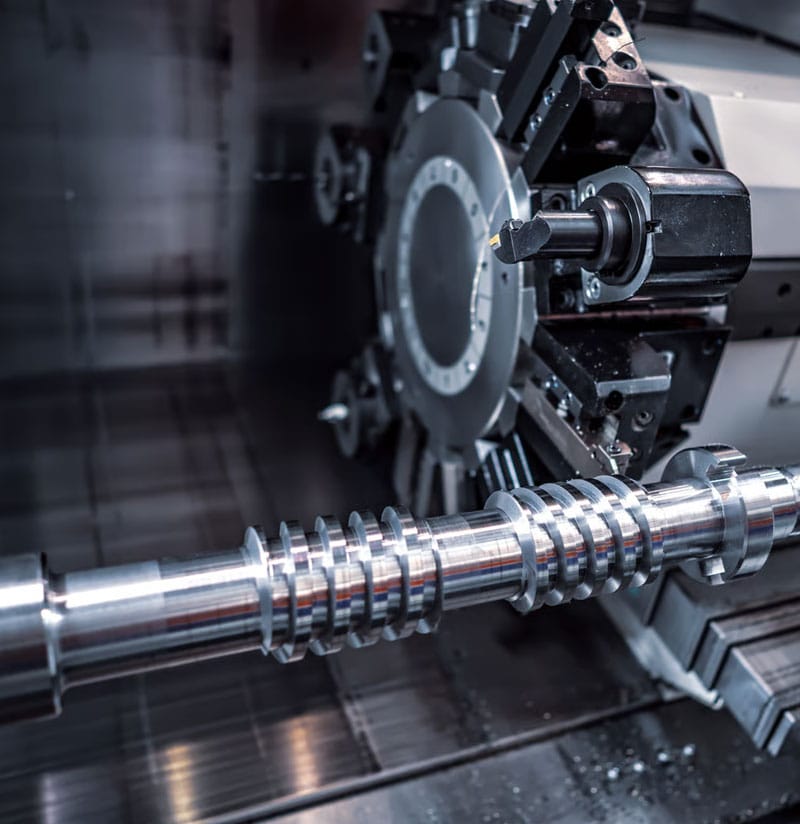
- Metals expand under heat; plastics and composites may shrink.
- Tolerances must account for temperature effects during machining and operation.
Tool Wear Compensation
- CNC machines can adjust tool paths to maintain accuracy.
- Predictive maintenance of tools prevents out-of-tolerance parts.
Multi-Axis Machining Challenges
- 5-axis or 6-axis CNC machines allow complex geometries.
- Tight tolerances require precise synchronization between axes.
Conclusion
Mastering CNC machining part tolerances is key to:
- High-quality, functional components
- Reduced production waste and cost
- Reliable assembly and long-term performance
By understanding linear, geometric, and surface finish tolerances, following ISO and ASME standards, and collaborating with experienced CNC suppliers, engineers can ensure their parts meet precision requirements without unnecessary expense.
High-precision CNC machining, paired with proper tolerance specification, remains a cornerstone of modern manufacturing across aerospace, automotive, medical, and industrial applications.
FAQ
Q1: What tolerance is standard for CNC machined parts?
A1: Depends on industry and application. Non-critical parts may allow ±0.1 mm; aerospace or medical may require ±0.005–0.01 mm.
Q2: How do I measure geometric tolerances?
A2: Typically using CMMs, laser scanning, or optical measurement systems for shape, position, and orientation verification.
Q3: Does tighter tolerance always mean better quality?
A3: Not necessarily. Tighter tolerances increase cost, machining time, and tool wear. Only tighten where functionality demands it.
Q4: Can plastics achieve tight CNC tolerances?
A4: Yes, but shrinkage and thermal effects must be considered during design and machining.
Q5: What standards ensure CNC tolerance compliance?
A5: ISO 2768 for general tolerances, ASME Y14.5 for geometric tolerances (GD&T), and material-specific guidelines.