Sheet metal bending is suitable for the precise forming and manufacturing of structural components from thin sheet metal.
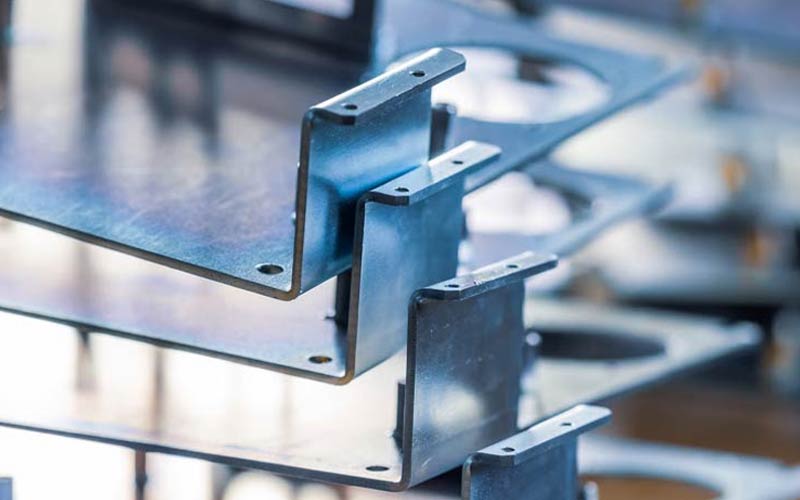
Sheet metal bending is a forming process that uses a bending machine and specialized dies to apply pressure to metal sheets, causing them to undergo plastic deformation at predetermined locations to form angles, U-shapes, V-shapes, or complex cross-sections.
Sheet metal bending is suitable for structural components, housings, support parts, and multi-angle formed parts made primarily from thin sheets, offering a balance of precision, efficiency, and flexibility. It is particularly well-suited for small-batch, high-mix, and rapid delivery scenarios.
Chassis, cabinets, covers, brackets, mounting plates, bases
Equipment housings, electrical enclosures, instrument casings, control panel fronts
Support frames, reinforcing beams, borders, mounting structures
Brackets, mounting plates, support brackets, connecting plates
Z-shaped, U-shaped, L-shaped, and stepped bent parts
Decorative panels, metal covers, door panels, side panels
Rolled cylinders, curved protective panels, curved housings
Aluminum alloy, stainless steel, galvanized sheet metal parts
Small-batch prototypes, custom structural components
Stable angles and controllable dimensions.
Suitable for small-batch and multi-variety production.
Lower initial costs compared to stamping.
Capable of producing parts with multiple bends and angles.
Suitable for subsequent painting, plating, or anodizing of cosmetic parts.
Get a free consultation from our casting experts now.
Commonly used materials include cold-rolled steel sheets, galvanized sheets, stainless steel, aluminum alloys, copper, and copper alloy sheets.
It is generally suitable for thin sheet materials from 0.5 to 6 mm, and the thickness range can be adjusted according to equipment capabilities.
Various structures such as L-shaped, U-shaped, Z-shaped, multi-angle stepped shapes, curved shapes, and surfaces can be achieved.
Bending angles and dimensions are controllable, and CNC bending machines and molds are used to ensure consistency in mass production.
Usually, there will be no significant damage; the surface is smooth and can be directly treated with processes such as spraying, electroplating, or anodizing.