Welcome to My Blog!
I’m thrilled to have you here! Before we dive into the content, I’d love for you to join me on my social media platforms. It’s where I share extra insights, connect with our amazing community, and keep you updated on the latest news. Here’s how you can stay connected:
📘 Facebook: Lina Metal
▶️ YouTube: Lina Metal Channel – watch tutorials, demos, and in-depth guides
Now, let’s embark on this journey together! I hope you find the content here not only insightful but also inspiring and valuable. Let’s get started!
Table of Contents
Key Takeaways of This Guide
- Sheet metal bending services are essential for precision metal forming in modern manufacturing
- Multiple bending processes exist, each suited to different engineering structures
- Accuracy depends on material behavior, tooling design, and CNC control systems
- Industry standards such as ISO and DIN define tolerance and quality benchmarks
- Real industrial applications span automotive, construction, electronics, and machinery
- Procurement decisions require evaluation of cost, precision, and production scalability
Introduction
Sheet metal bending services refer to precision manufacturing processes that transform flat metal sheets into functional three-dimensional components through controlled plastic deformation.
In modern industrial systems, sheet metal bending services are no longer simple manual forming operations. Instead, they are driven by CNC-controlled press brakes, digital angle measurement systems, and standardized tooling libraries that ensure repeatable accuracy across production batches.
According to global fabrication industry reports (2024–2025 manufacturing white papers), sheet metal forming accounts for over 35% of all industrial metal part production in mechanical and structural applications.
Engineering Fundamentals of Sheet Metal Bending Services
Plastic Deformation Mechanics (Core Engineering Principle)
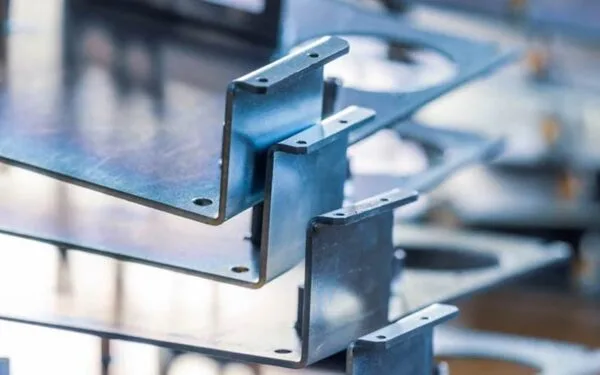
Sheet metal bending relies on plastic deformation, where material permanently changes shape under stress without fracturing.
During this process:
- Outer layers experience tensile stress
- Inner layers experience compressive stress
- The neutral axis remains stable without deformation
This stress distribution determines:
- Final bending angle accuracy
- Crack resistance performance
- Structural integrity of finished parts
Neutral Axis Shift Theory
In advanced sheet metal bending services, the neutral axis is not fixed; it shifts depending on material thickness, tensile strength, and bending radius.
For example:
- Thicker sheets shift the neutral axis outward
- High-strength alloys increase springback effect
- Smaller bend radii increase internal stress concentration
Understanding this concept is essential for precision manufacturing in aerospace, automotive, and high-end equipment industries.
Springback Compensation Engineering Model
Springback is one of the most critical challenges in sheet metal bending services.
Industry benchmarks show:
- Mild steel: moderate springback
- Stainless steel: high springback
- Aluminum alloys: variable springback depending on grade
To compensate, engineers adjust:
- Over-bending angle correction
- Die geometry optimization
- Press force calibration
Modern CNC systems can automatically calculate springback compensation using material databases integrated into production software.
Global Standards in Sheet Metal Bending Services
ISO 2768 General Tolerance Standard
ISO 2768 defines general tolerances for linear and angular dimensions in metal fabrication.
Key impact:
- Ensures interchangeability of parts
- Standardizes global manufacturing output
- Reduces assembly errors in international supply chains
DIN 6935 Sheet Metal Forming Standard
DIN 6935 provides guidelines for bending radii and material deformation limits.
It defines:
- Minimum bending radius per material type
- Maximum allowable stress thresholds
- Recommended tooling configurations
ASTM Metal Forming Guidelines
ASTM standards are widely used in North America for:
- Material stress testing
- Structural integrity validation
- Industrial manufacturing compliance
Advanced Sheet Metal Bending Services Processes
V-Bending (Industrial Standard Process)
V-bending remains the most widely used process globally.
Typical applications include:
- Structural brackets
- Machine frames
- Industrial housings
Industry data shows V-bending accounts for over 60% of all CNC bending operations due to its flexibility and low tooling cost.
U-Bending (Structural Reinforcement Design)
U-bending is used to create high-rigidity structural components.
Engineering advantages:
- Increased load-bearing capacity
- Better torsional resistance
- Improved assembly integration
Z-Bending (Offset Structural Engineering)
Z-bending is commonly used in precision assembly systems.
It is essential for:
- Multi-layer panel spacing
- Electrical enclosure design
- Mechanical alignment systems
Roll Bending (Large Radius Forming Technology)
Roll bending enables the production of curved or cylindrical geometries.
Used in:
- Pressure vessel shells
- Industrial tanks
- Architectural curved panels
Sheet Metal Bending Services Process Flow (Industrial Standard)
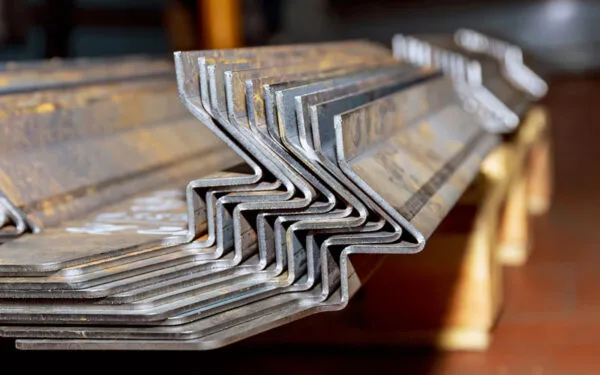
Full Manufacturing Workflow
- Engineering design and CAD modeling
- Material selection and procurement
- Laser cutting or precision shearing
- CNC bending operation
- Dimensional inspection
- Surface finishing (powder coating, anodizing, plating)
- Packaging and logistics delivery
Quality Inspection System (Industrial QA Model)
Modern sheet metal bending services rely on multi-layer inspection systems:
- First article inspection (FAI)
- In-process dimensional monitoring
- Final batch sampling inspection
Advanced factories also use:
- 3D scanning systems
- Laser angle measurement tools
- Automated coordinate measuring machines (CMM)
Sheet Metal Bending Services Technical Comparison Table
| Parameter | Mild Steel | Stainless Steel | Aluminum Alloy | Galvanized Steel |
|---|---|---|---|---|
| Formability | High | Medium | Very High | Medium |
| Springback | Medium | High | Low–Medium | Medium |
| Cost Efficiency | High | Low | Medium | High |
| Corrosion Resistance | Low | High | Medium | High |
| Industrial Use | Structural parts | Food & medical | Lightweight structures | HVAC & enclosures |
Sheet Metal Bending Services vs Other Fabrication Methods
Bending vs Stamping
- Bending: flexible, low tooling cost, ideal for custom production
- Stamping: high-speed mass production, high tooling investment
Industry analysis shows stamping becomes cost-effective only after very large batch volumes.
Bending vs Welding
- Bending maintains material integrity without joints
- Welding introduces heat-affected zones and potential deformation
Sheet metal bending services are preferred in precision industries due to:
- Higher structural consistency
- Cleaner surface finish
- Lower defect rate
Engineering Case Studies (Real Industrial Applications)
Case Study 1: Industrial Control Cabinet Manufacturing
A European equipment manufacturer adopted CNC sheet metal bending services to replace traditional welding-based enclosure production.
Results:
- 28% reduction in production time
- 35% improvement in dimensional accuracy
- Significant reduction in post-processing requirements
Case Study 2: Automotive Bracket System Optimization
Automotive suppliers use precision bending to produce structural brackets for chassis systems.
Outcome improvements:
- Reduced component weight by up to 18%
- Improved vibration resistance
- Faster assembly line integration
Case Study 3: HVAC System Structural Panels
Sheet metal bending services are widely used in HVAC duct and panel production.
Benefits:
- Consistent airflow channel geometry
- Reduced leakage points
- Improved system efficiency
Industry Trends & Market Insights (2025–2026)
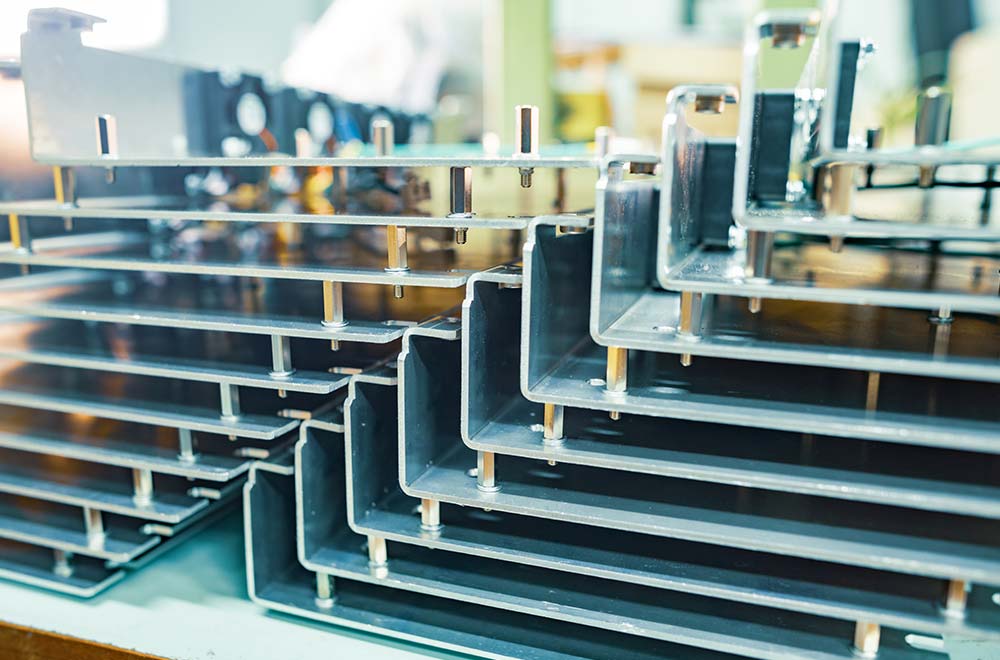
Trend 1: CNC Automation Expansion
Over 70% of industrial bending operations are expected to be CNC-driven by 2026.
Trend 2: AI-Based Bending Optimization
AI systems are now used to:
- Predict springback behavior
- Optimize tool selection
- Reduce material waste
Trend 3: Lightweight Manufacturing Demand
Industries are shifting toward:
- Aluminum alloy structures
- Thin-wall high-strength steel
- Hybrid material design systems
Procurement Guide for Sheet Metal Bending Services
Key Buyer Evaluation Factors
When sourcing sheet metal bending services, buyers should evaluate:
- Machine precision capability (± tolerance range)
- Material processing experience
- Production capacity and lead time
- Surface finishing capabilities
- Quality certification (ISO 9001, etc.)
Cost Structure Analysis
Cost depends on:
- Material type and thickness
- Complexity of bending geometry
- Batch size
- Post-processing requirements
Small batch production typically favors CNC bending due to low tooling cost.
Supplier Selection Strategy
High-quality suppliers typically offer:
- CNC press brake systems
- Digital simulation capability
- Engineering design support
- Quality inspection reports
FAQ
What industries use sheet metal bending services most?
Automotive, construction, electronics, HVAC, and industrial machinery manufacturing.
What is the most common bending method?
V-bending is the most widely used due to its flexibility and low cost.
How precise are CNC sheet metal bending services?
Modern systems can achieve high-precision angular control depending on material and thickness.
What affects bending accuracy the most?
Material type, thickness variation, die selection, and springback behavior.
Can sheet metal bending replace welding?
In many structural applications, bending can reduce or eliminate welding requirements.