Welcome to My Blog!
I’m thrilled to have you here! Before we dive into the content, I’d love for you to join me on my social media platforms. It’s where I share extra insights, connect with our amazing community, and keep you updated on the latest news. Here’s how you can stay connected:
📘 Facebook: Lina Metal
▶️ YouTube: Lina Metal Channel – watch tutorials, demos, and in-depth guides
Now, let’s embark on this journey together! I hope you find the content here not only insightful but also inspiring and valuable. Let’s get started!
Table of Contents
Key Takeaways
- The construction metal stamping process is a high-efficiency method for producing structural components
- Metal stamped construction parts are widely used in buildings, bridges, and infrastructure systems
- Precision stamping improves strength, consistency, and production scalability
- Material selection directly affects durability and load-bearing performance
- Progressive stamping and deep drawing are key manufacturing techniques
- Quality control standards ensure dimensional accuracy and structural reliability
Introduction
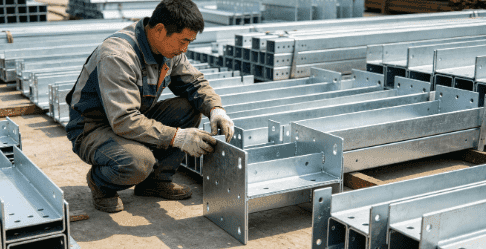
The demand for high-performance metal stamped construction parts continues to grow as modern construction projects require stronger, lighter, and more cost-efficient components. From structural brackets to load-bearing connectors, stamped metal parts are essential in large-scale infrastructure and building systems.
The construction metal stamping process enables mass production of identical components with high precision, reducing fabrication time while improving structural consistency.
Construction Metal Stamping Process Overview
What Is the Construction Metal Stamping Process?
The construction metal stamping process is a cold-forming manufacturing method that shapes metal sheets into specific geometries using high-pressure dies and stamping presses.
Concept: Plastic Deformation Engineering
Metal is reshaped under controlled force without melting, allowing grain structure alignment that improves mechanical strength.
This method is widely used to produce metal stamped construction parts for structural, mechanical, and architectural applications.
Why Metal Stamped Construction Parts Are Important
Metal stamped components provide:
- High structural consistency
- Low production cost per unit
- Excellent repeatability
- Scalable manufacturing capability
These advantages make them essential in modern construction supply chains.
Construction Metal Stamping Process Stages
Stage 1: Material Selection
Concept: Material Property Optimization
Choosing the correct material ensures the final part meets load-bearing and corrosion resistance requirements.
Common materials include:
- Carbon steel
- Stainless steel
- Aluminum alloys
- Galvanized steel
Each material affects the performance of metal stamped construction parts in different environments.
Stage 2: Die Design and Engineering
Concept: Die Geometry Control System
Dies determine final shape, tolerance, and dimensional accuracy.
Key considerations include:
- Punch clearance
- Die wear resistance
- Load distribution design
Stage 3: Stamping Operation
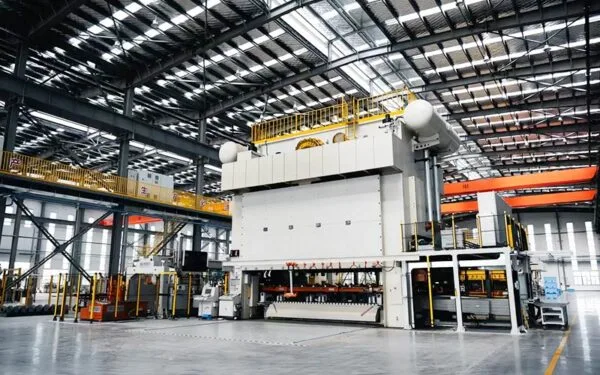
The stamping press applies controlled force ranging from 20 to 800 tons depending on part complexity.
Processes include:
- Blanking
- Bending
- Punching
- Deep drawing
Stage 4: Finishing and Surface Treatment
Surface treatments improve corrosion resistance and durability.
Common finishes:
- Galvanizing
- Powder coating
- Electroplating
Types of Metal Stamped Construction Parts
Structural Brackets
Used for load distribution and framework assembly in buildings.
They must maintain high strength-to-weight ratio and precise dimensional alignment.
Connection Plates
Concept: Load Transfer Interface Design
These components transfer force between structural elements such as beams and columns.
They are critical for ensuring structural stability in construction systems.
Fastening Components
Includes clips, clamps, and reinforcement connectors used in modular construction systems.
Comparison: Stamping vs Other Manufacturing Methods
| Method | Precision | Cost Efficiency | Production Speed | Best Use Case |
|---|---|---|---|---|
| Metal Stamping | High | High | Very Fast | Mass production parts |
| Casting | Medium | Medium | Slow | Complex shapes |
| CNC Machining | Very High | Low | Slow | Custom components |
| Welding Fabrication | Medium | Medium | Medium | Structural assemblies |
Metal stamped construction parts outperform other methods in high-volume manufacturing environments.
Material Performance in Construction Metal Stamping Process
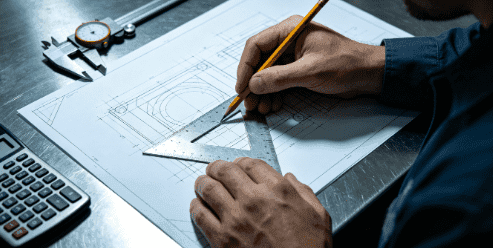
Carbon Steel Applications
Carbon steel offers:
- High strength
- Cost efficiency
- Easy formability
It is widely used in load-bearing construction components.
Stainless Steel Applications
Concept: Corrosion Resistance Engineering
Stainless steel contains chromium, which forms a passive layer protecting against oxidation.
It is used in:
- Coastal infrastructure
- Chemical environments
- High-moisture construction zones
Aluminum Alloy Applications
Aluminum is lightweight and corrosion-resistant, making it suitable for modern modular construction systems.
Quality Control in Metal Stamped Construction Parts
Dimensional Accuracy Testing
Tolerance levels are typically maintained within ±0.1 mm for precision structural parts.
Strength Testing Standards
Common standards include:
- ISO 9001 quality systems
- ASTM structural testing guidelines
- EN construction material compliance
Concept: Statistical Process Control (SPC)
SPC is used to monitor production consistency and detect deviations in real time, ensuring stable output quality.
Applications of Metal Stamped Construction Parts
Building Structures
Used in:
- Steel frame buildings
- Modular housing systems
- Curtain wall systems
Infrastructure Projects
Includes:
- Bridges
- Rail systems
- Roadway support structures
Industrial Construction
Used in:
- Factories
- Warehouses
- Energy plants
Manufacturing Efficiency and Industry Trends
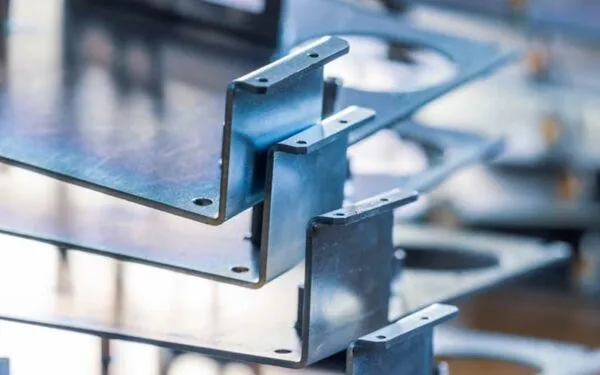
Automation in Stamping Lines
Modern stamping systems integrate:
- Robotic feeding
- AI-based quality inspection
- Automated die adjustment
Smart Manufacturing Development
Concept: Digital Twin Production Systems
Digital simulation models are used to optimize die design and predict production behavior before physical manufacturing begins.
Sustainability in Metal Stamping
Industry trends include:
- Material recycling optimization
- Energy-efficient presses
- Waste reduction systems
Cost Structure of Metal Stamped Construction Parts
Production Cost Breakdown
| Cost Factor | Percentage |
|---|---|
| Raw materials | 40% |
| Tooling/dies | 25% |
| Labor | 15% |
| Energy consumption | 10% |
| Quality control | 10% |
Concept: Economies of Scale
As production volume increases, unit cost of metal stamped construction parts decreases significantly due to fixed tooling distribution.
Conclusion
The construction metal stamping process plays a critical role in producing reliable and cost-effective metal stamped construction parts for modern infrastructure. With advanced die engineering, automation, and material optimization, stamping technology continues to support large-scale construction efficiency and structural innovation.
As global demand for faster and more sustainable construction grows, metal stamping remains one of the most essential manufacturing technologies in the industry.
FAQ
What are metal stamped construction parts used for?
They are used in structural systems, connectors, brackets, and load-bearing components in construction projects.
Is metal stamping better than welding?
For mass production, stamping is more efficient and consistent, while welding is better for custom structures.
How strong are stamped metal parts?
Strength depends on material type and stamping process but can match or exceed welded components.
What industries use construction metal stamping?
Construction, infrastructure, automotive, and industrial manufacturing sectors.
Can stamped parts be customized?
Yes, die design allows full customization of shape, thickness, and structural properties.