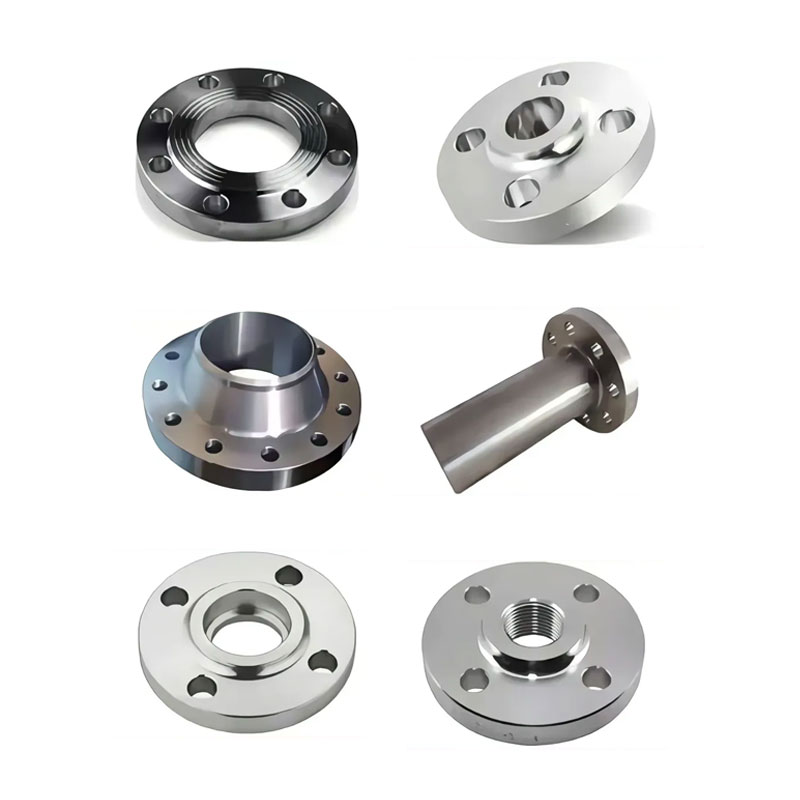
Forging is a high-performance manufacturing process suitable for large and complex structural parts.
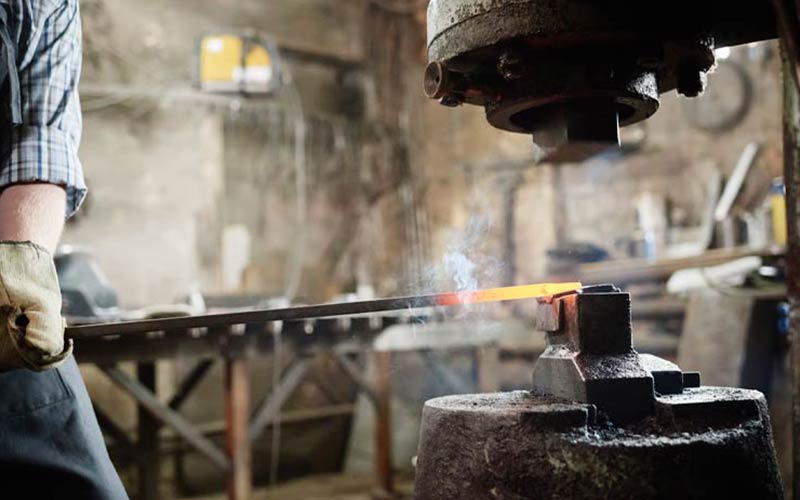
Forging is a manufacturing process that involves applying pressure to metal, causing it to undergo plastic deformation at elevated or ambient temperatures, thereby obtaining parts with the desired shape and mechanical properties. It effectively improves the internal structure of the metal, resulting in parts with high strength, toughness, and fatigue resistance.
Forging is suitable for high-strength, fatigue-resistant, large-sized, and load-bearing parts, covering industries such as machinery, automotive, aerospace, energy, construction machinery, and tools and hardware. It is suitable for both single-piece customization and mass production.
Drive shafts, crankshafts, rolling bearing shafts
Flywheels, gear discs, flanges
Connecting rods, support rods, pins
Gears, rings, hubs
High-strength load-bearing components, fatigue-resistant parts
Metal parts with large single-piece weight and high load-bearing requirements
Dense internal grain structure, resulting in high strength, toughness, and fatigue resistance.
Strong directional metal structure, leading to high load-bearing capacity.
Die forging allows for high precision and stable dimensions.
Capable of processing shafts, discs, rods, and rings.
Suitable for steel, non-ferrous metals, and special alloys.
Die forging is ideal for medium to large-scale production.
Get a free consultation from our casting experts now.
Commonly used materials include carbon steel, alloy steel, stainless steel, high-strength steel, aluminum alloys, copper alloys, magnesium alloys, and titanium alloys.
Forging can process small, medium, and large parts ranging from a few hundred grams to several tons, suitable for shafts, discs, rods, and rings.
Shafts, discs, rods, rings, and load-bearing structural components; large-sized or complex structural parts can all be processed.
Open die forging is suitable for single pieces or small batches; closed die forging is suitable for medium to large-scale production.
The surface after hot or cold forging is usually relatively smooth; surface treatments such as polishing, sandblasting, coating, or electroplating can be applied if necessary.